
An insider’s guide to Split, Croatia
5 October 2026
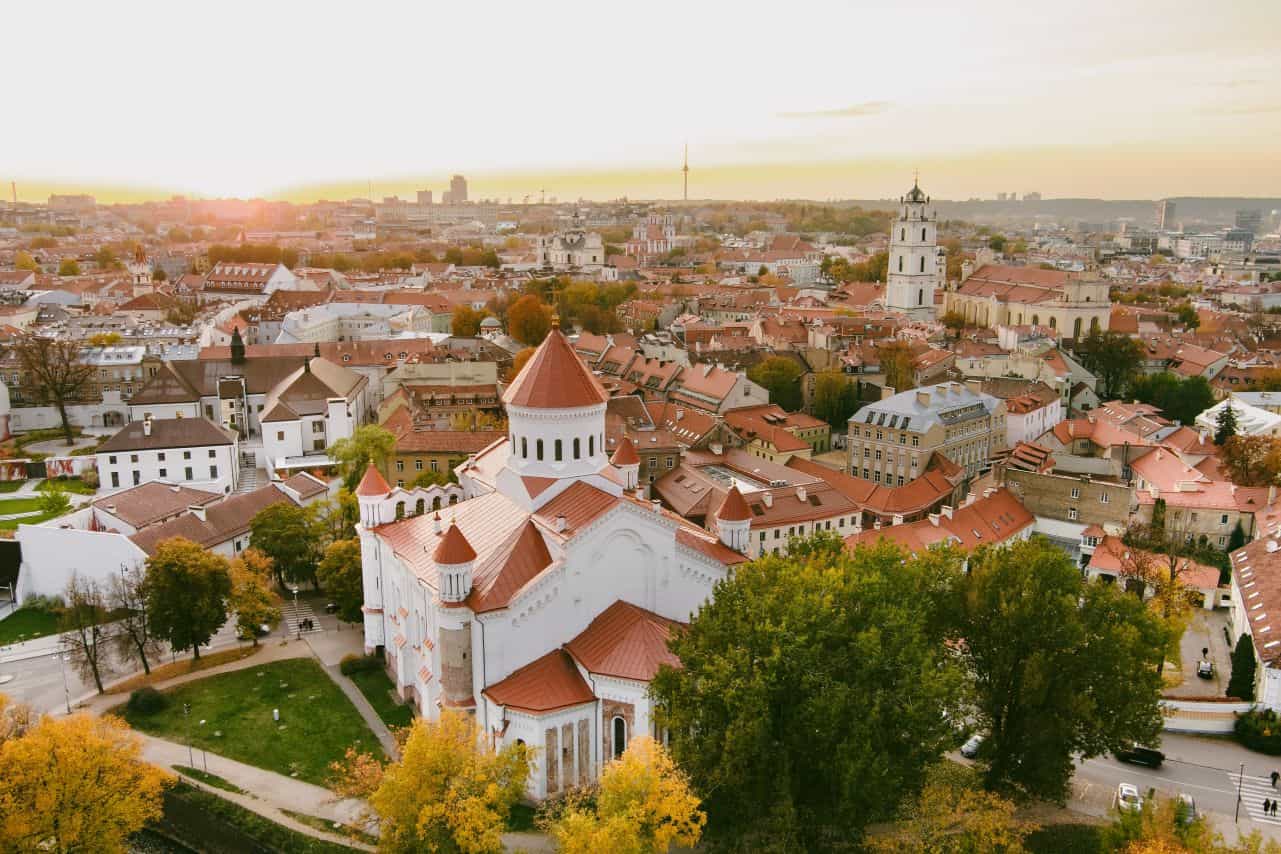
Introducing Vilnius: the artistic, historic and compact capital of Lithuania. This city sits in a charming corner of the Baltics in eastern Europe, oft-overlooked by mainstream tourism—but if you’re on a trip to Lithuania, this thriving city will likely be your entry point. Here’s our guide to the best things to do in Vilnius, so you can take the time to discover just how enchanting it is.
Vilnius has a layered and interesting history; founded in the 14th century as the capital of the Grand Duchy of Lithuania, it grew into a major political and cultural center. Over the centuries it has seen Polish-Lithuanian rule, Russian colonial powers, Jewish influence, and later, Soviet occupation, which have all left their mark on the storied buildings and architecture you can see today.

Vilnius is known for its remarkably intact Baroque Old Town, its Orthodox and Catholic churches, and its independent, quirky energy that permeates modern life. It’s also very walkable, and a treat to wander its slightly uneven streets just to see where you end up.
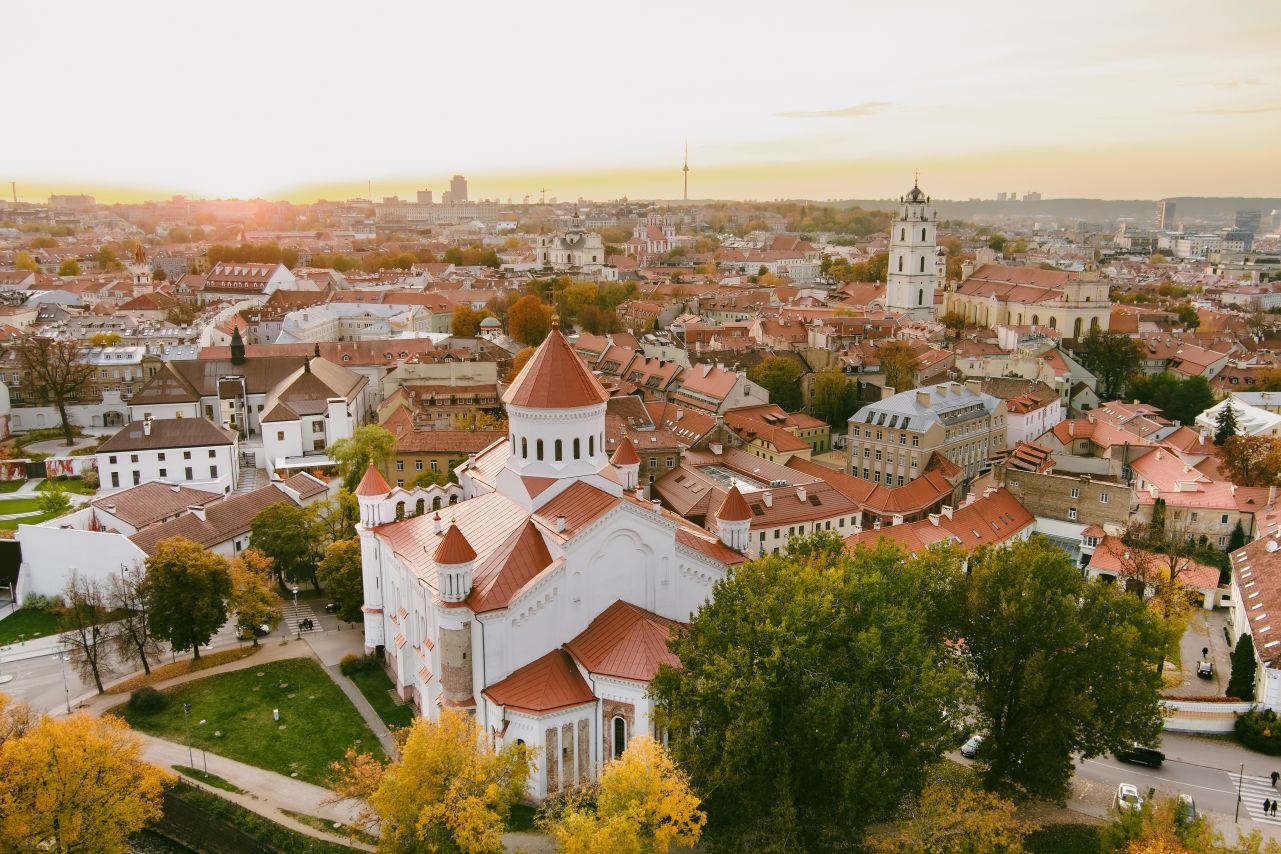
Eastern Europe is resplendent with medieval Old Towns, and Vilnius’s is particularly lovely. The cobblestones around Pilies Street are lined with Gothic, Renaissance, Baroque and Neoclassical architecture; a chocolate box of impressive facades that earn their UNESCO status. Cafes, boutique shops and street performers fuel the atmosphere here, so it’s the perfect place to slowly wander and soak up the charm.
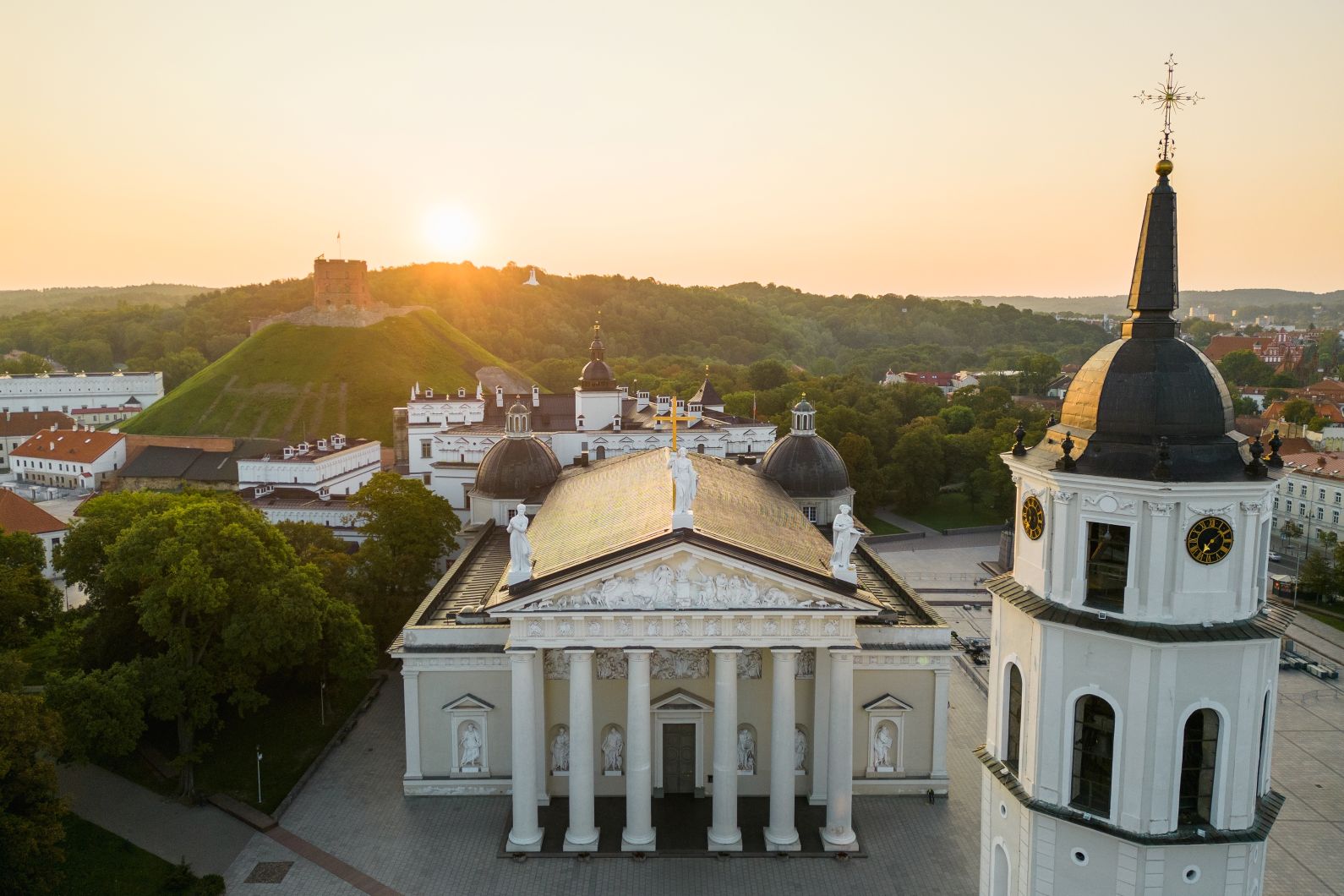
In proximity to the Old Town, Gediminas Castle and Tower overlooks the city rooftops—a refined, rust-colored stronghold sitting atop a hill in the historic center. In the 14th century, this castle was the symbol of Lithuania’s power, and housed the ruling nobility. The upper castle and tower is the only part now open to the public, so you can climb its spiral staircase and look out onto the city below as royals once did.
As you walk from the Old Town, the Neoclassical facade of Vilnius Cathedral stands out as the former hub of coronations and royal ceremonies. Wander inside to see stunning artworks, and a crypt housing the remains of Lithuania’s most powerful rulers.
A short stroll away, St. Anne’s Church is famed for its red-brick facade which was once admired by Napoleon (he supposedly wanted to ‘take it back to Paris in a single piece’). Beside it, don’t miss the Bernardine Ensemble, a quiet monastery and church complex with picturesque cloisters and peaceful, secluded gardens.
In addition to the Cathedral complex, there are a great number of stunning religious buildings in Vilnius, many of which you can enter to admire the elegant, opulent interiors.
The 17th-century Church of St. Peter and St. Paul has over 2,000 stucco figures of angels, sacred figures and cherubs covering its walls and ceilings, a true accomplishment of artistic expression. It’s locally referred to as the ‘Pearl of Vilnius’ and it’s easy to see why—this place is considered a masterpiece of Lithuanian Baroque architecture.
This medieval gateway, the only remaining gate of the city’s former military defenses, is referred to as the Gate of Dawn due to its sacred significance. It’s considered a pilgrimage site for many, mainly due to its small chapel which houses a Blessed Virgin Mary. For centuries, travelers and locals alike have stopped here to pray and pay their respects.
This 14th-century religious building has a rich history, dating back to before the Christianization of Lithuania. Over the centuries it has witnessed many of the country’s most significant historic events, and has been damaged, abandoned and reconstructed many times due to the Kościuszko Uprising, World War II, and destructive fires. Today its striking white walls and red-domed roofs look immaculate, despite its history.
Read more: A beginner’s guide to Lithuania
Centuries of shifting occupations and cultural influences (Polish, Russian, Jewish and more) have left Vilnius with a layered, eclectic character. Artists, writers, and intellectuals have long gravitated here, resulting in spirited art districts like the Užupis.
The once-deprived area now known as the Užupis district sits on the right bank of the Vilnia River, and is a must-visit. This neighborhood was re-energized as the ‘Republic of Artists’ in 1997 when locals declared their own ‘Independence Day’ on April 1st—which is still celebrated every year.
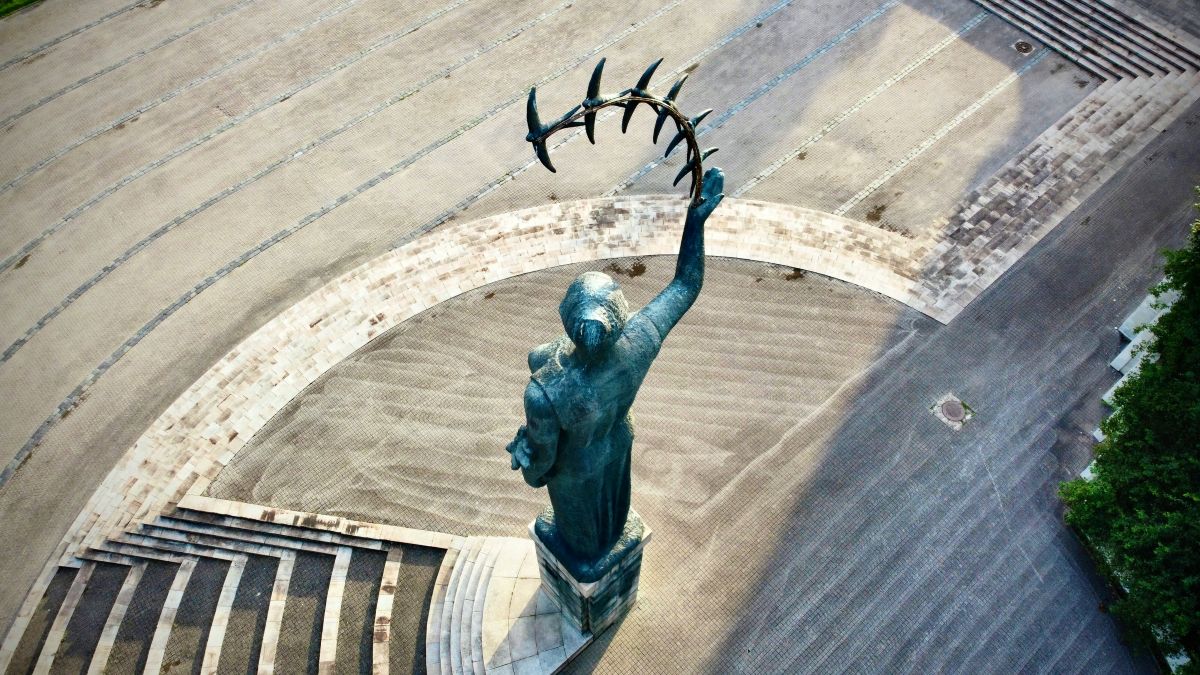
Take time to explore the area’s galleries, street art and cafes, and peruse their playful constitution, complete with articles such as ‘A dog has a right to be a dog’ and ‘The river has the right to flow past people’. Keep an eye out for the statues, the Angel of Užupis and the Mermaid of Užupis, and stop to watch local artists and sculptors hard at work.
To get a sense of contemporary living in Vilnius, the TV Tower sits alongside the city business district; a cluster of high-rise buildings and glass structures that tell the story of Lithuania’s modern progress. You can climb to the top to access a viewing platform, and even a rotating restaurant with excellent views.
The TV tower itself is the tallest structure in Lithuania (over 326m/1,070ft); but has also become a symbol of resistance, as in 1991, several civilians were killed nearby, standing against the Soviet military.
As a city with such a history of creative rebellion, Vilnius has an unsurprisingly vibrant arts scene. The classic museums offer a full history of the country, including the National Museum of Lithuania, the National Gallery of Art and the Lithuanian National Museum of Art. For something more modern and experimental, try the Contemporary Art Center; and don’t forget indie art spaces such as AP Galerija, and the grassroots galleries scattered through the Užupis.
For a sobering glimpse into the history of Lithuania’s fight for independence, check out the Museum of Occupations and Freedom Fights (also called the KGB Museum). This is housed in the former KGB headquarters, and represents Lithuania’s struggles under Nazi and Soviet occupations. Special focus is given to the resistance against Soviet secret police; complete with preserved prison cells and interrogation rooms.
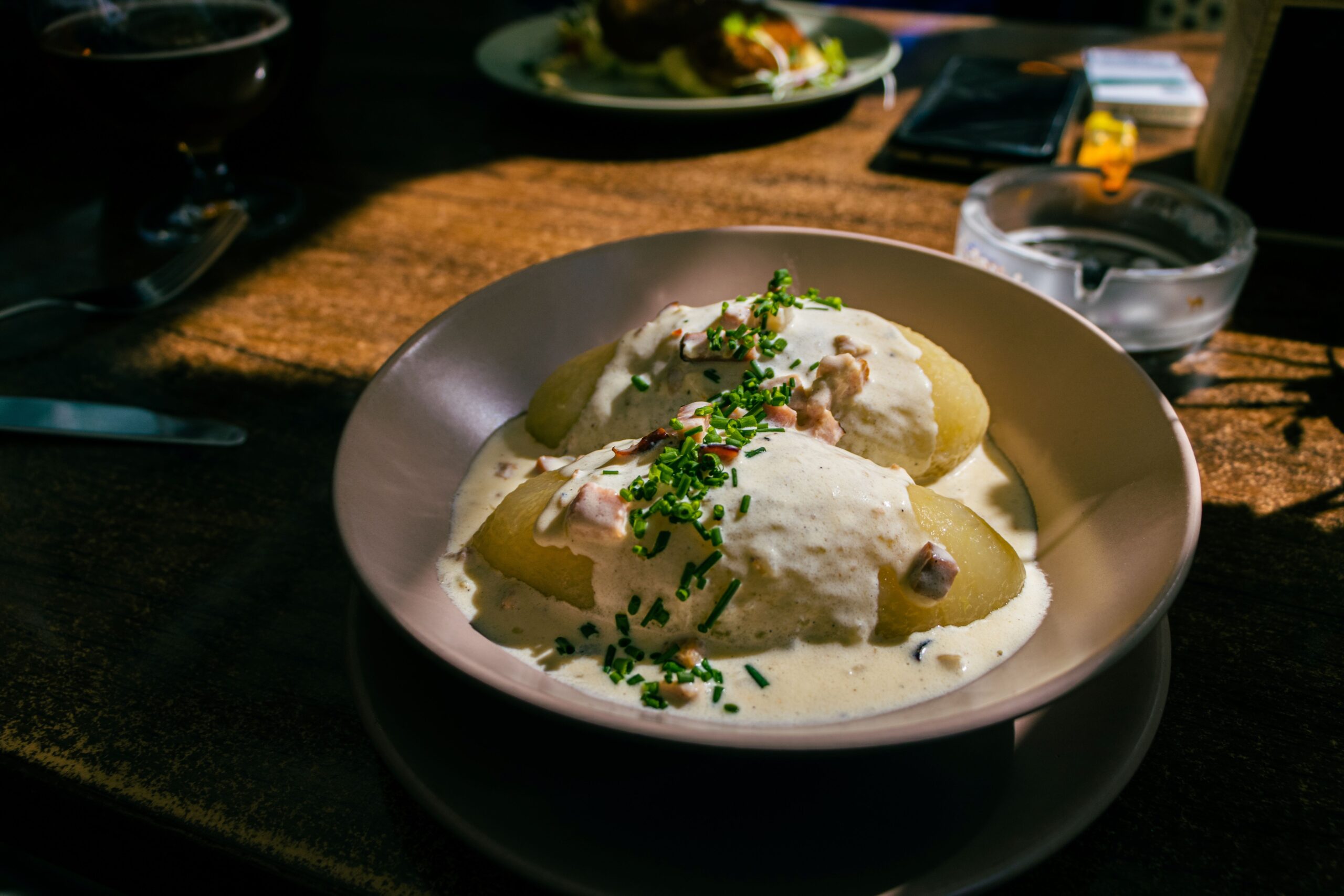
If you’re one to dive into the local culinary scene, the food in this part of Lithuania is deliciously hearty and filling. The most iconic dish is cepelinai. Named after ‘zeppelins’, these are big, oblong-shaped potato dumplings usually stuffed with meat, cheese or mushrooms, and served with sour cream and crispy bacon bits. Definitely comfort food and very filling!
You’ll probably spot refreshing bowls of šaltibarščiai, a bright pink beetroot soup, served cold and often with boiled potatoes and kugelis (potato pudding). There’s also plenty of rye black bread to be had here, a staple side dish for Lithuanians.
As the capital of Lithuania, Vilnius is the top spot for trying all kinds of modern culinary experiences; where top chefs reimagine local cuisine with a contemporary twist. Locally-foraged foods including mushrooms, beetroot, fresh fish and game are commonly used in modern menus of small plates. Amandus and Puaro are celebrated fine dining spots, among others; but even just perusing local markets can bring surprise foodie delights.
If you’re heading here in November, don’t miss Gastronomy Week—a yearly food festival where you can try inspired dishes from Michelin-recognized chefs, and sample locally-foraged produce and snacks. Unmissable for foodies!
Before you book your custom Lithuania vacation, here is some ‘good-to-know’ information about visiting Vilnius…
As a Baltic State, Lithuania sees chilly winters (November-February) with average temperatures of around 23-32 degrees Fahrenheit (-5 to 0 degrees Celsius)—but winter is a great time for Christmas market trips, and November hosts Gastronomy Week.
In summer (June-August), considered peak time, it’s a lot warmer, hovering around 71-74 degrees Fahrenheit (22-23 Celsius) in July and August. Consider the shoulder seasons (March-April and September-October) to miss the peak-time crowds and experience refreshing, mild temperatures and reduced costs!
Vilnius is very walkable, and compact enough to get to most of the highlights (and hidden gems!) on foot. If you’d rather take public transport, you’ll find an affordable and reliable bus network and trolleybus system.
Vilnius Airport is the international gateway to Lithuania and just 6km from the city center, with direct bus and taxi connections into town. On a multi-stop tour of the Baltics, you’ll likely have a locally-guided tour booked in to take you to the highlights of Vilnius easily.
Read more: The landscapes of Lithuania: a guide for nature lovers

If you’re ready to explore Lithuania’s charming capital city, get in touch with our local travel experts. They’re based on the ground in Lithuania, with all the in-depth local knowledge required to build your dream tour of the Baltics.
Explore all featured destinations