
Where to go in 2027
4 November 2026
Nestled right on the equator, Ecuador sees sunrise and sunset at the same time year-round, with weather that shifts between its regions and microclimates, rather than seasonally. If you’ve considered a trip to this effervescent nation, you may have wondered; what’s the best time to visit Ecuador for the best weather—for the Galapagos, the Andes, the Pacific Coast, and the rest of its natural and ancient wonders? In this article, we’ll explain the climate zones and weather of Ecuador so you can plan activities around the best conditions—whether that’s wildlife tracking, jungle hiking, culture-seeking or beaching.
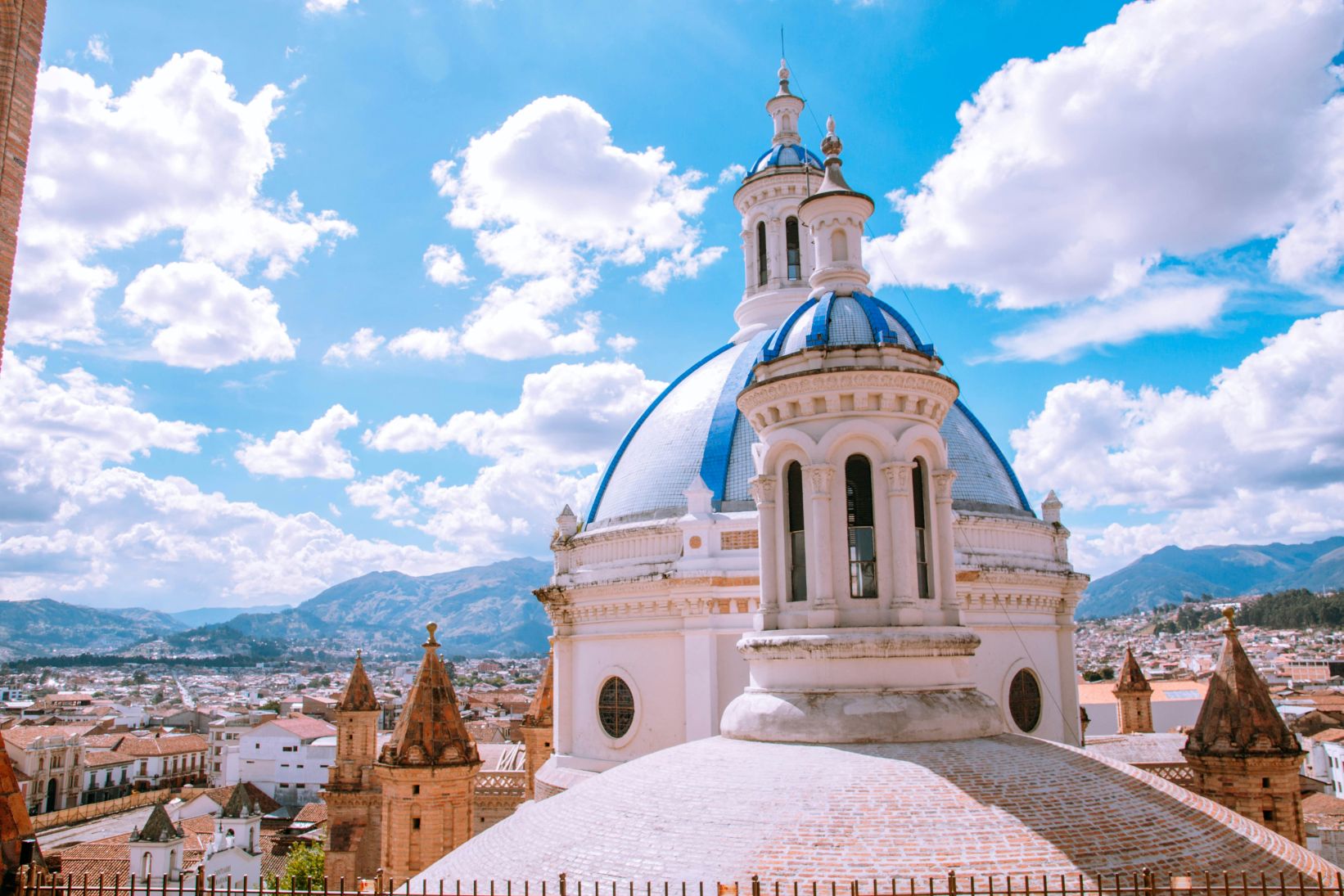
Ecuador may be a tiny country, but its position on the equator, and its diverse topography of coast, islands and mountains, means it sees strong weather shifts depending on where you go.
The easiest way to describe Ecuador’s weather is to split it into four zones:
Here is what weather to expect in these four regions of Ecuador…
A trip to the Galapagos Islands is on so many traveler bucket lists for a reason; this is the place that changed how we understand life on Earth, and it’s still teeming with the iconic species that made it famous over a hundred years ago.

Weather in the Galapagos is unusual, as it shifts between tropical and semi-arid conditions depending on the island and time of year.
The islands in general are cooler than mainland Ecuador, largely due to ocean currents—especially the Humboldt Current, which brings cold water up from the south and shapes the region’s distinctive climate.
December to January and June to September tend to be peak tourist months, but all times of year have their perks in the Galapagos. The wet season is perfect for observing marine iguanas, sea turtles, and lush vegetation; while blue-footed boobies and sea lions are more active in the dry season, and snorkeling and diving conditions are generally clearer.
Read more: The Galapagos Islands: wildlife and historic wonder
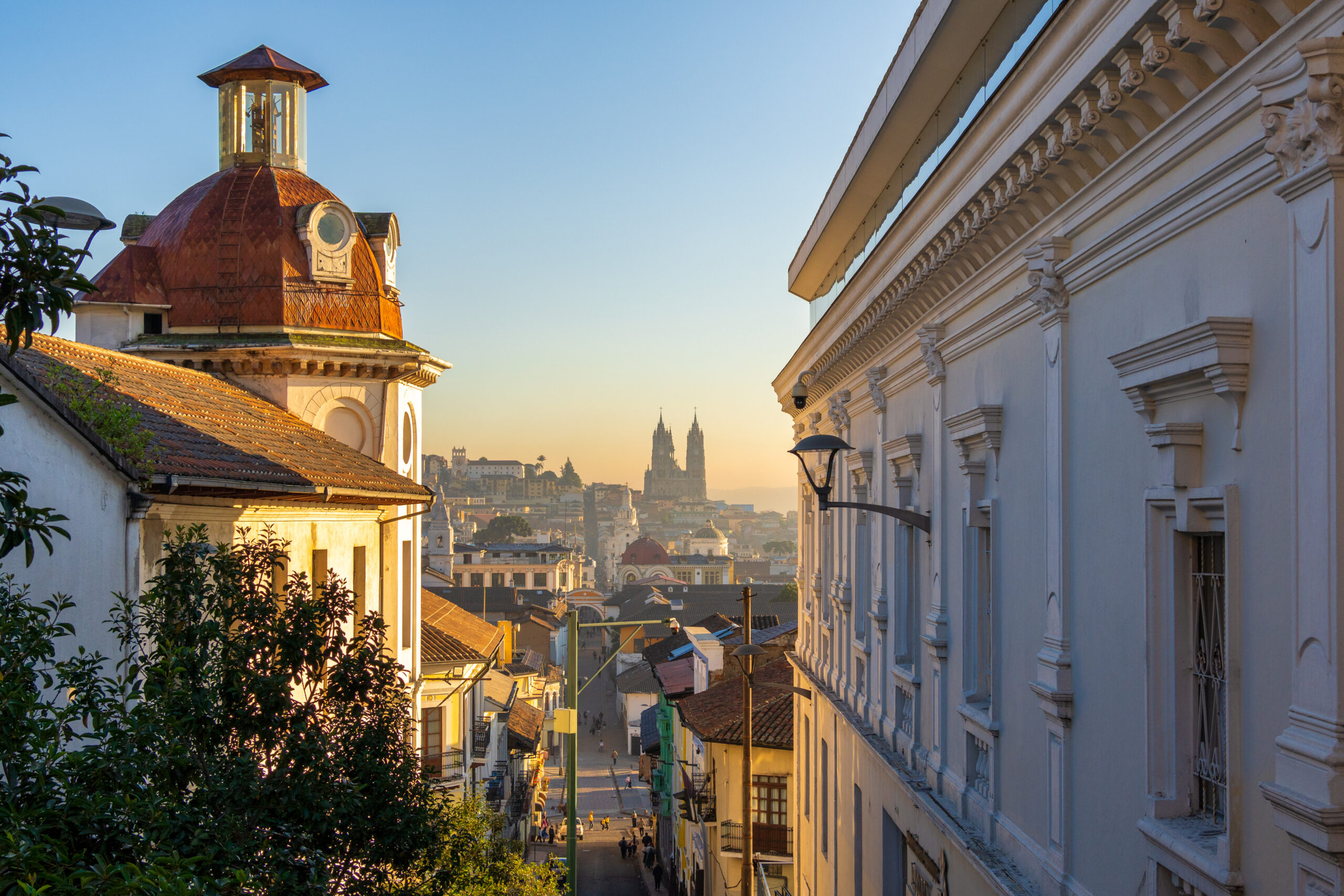
Ecuador’s capital, Quito sits at an elevation of 9,000 ft in the middle of the Andes; a city of fresh mountain air, volcano views and ornate Colonial-era streets. The Andes Highlands rise up just outside the city, easy to venture onto for day hikes and longer treks, through gloriously scenic landscapes.
As a city at altitude, Quito stays spring-like year-round, with highs of around 66-68°F (19-20°C) by day and lows of 48-50°F (9-10°C) at night. However it does get rainier between October and May; usually there are sunny mornings with afternoon showers. June through September doesn’t see as much rain, and July and August tend to be the only months that are reliably dry, sunny and clear for most of the day.
For the loveliest hiking conditions, June through September offers bright skies and dry weather, especially July to August. June is a great time to visit, just before peak season hits. Visiting in October to May isn’t a dealbreaker, though—the afternoon showers tend to be short, so there’s plenty of scope for sightseeing. Remember: it’ll get chillier the higher up the mountain trails you go, so pack layers.
Read more: Seven great things to do in and around Quito
A contrast to Ecuador’s fresh mountains, La Costa promises palm trees and sun-splashed beach towns. This long western stretch of Pacific coastline brings tropical tides, excellent surf breaks, and some of the country’s most laid-back stops.
The wet season on Ecuador’s coast brings warm, humid days with regular afternoon showers, and runs roughly December to June in the north, and January to April in the south (the wet season is shorter in the south). The dry season (June to December) is cooler, cloudier and often misty, thanks to the cold Humboldt Current flowing up from the south. The further south on the coast you go, it gets progressively drier and less humid.
Guayaquil, Ecuador’s main coastal city is pretty warm and humid year round, with August and September being the coolest months. Manta, sitting more centrally on the coast where the Humboldt Current has a cooling effect, stays milder and drier year-round. Highs hit around 81-82°F (27-28°C).
December through April is peak beach season in Ecuador—the sea is at its warmest, the sun is shining more, and although this overlaps with the rainy season, showers tend to be short and confined to the afternoons. If you want to avoid humidity, June through September sees less sunshine but cooler, calmer weather.
Read more: Eight things that define Ecuador, a South American gem

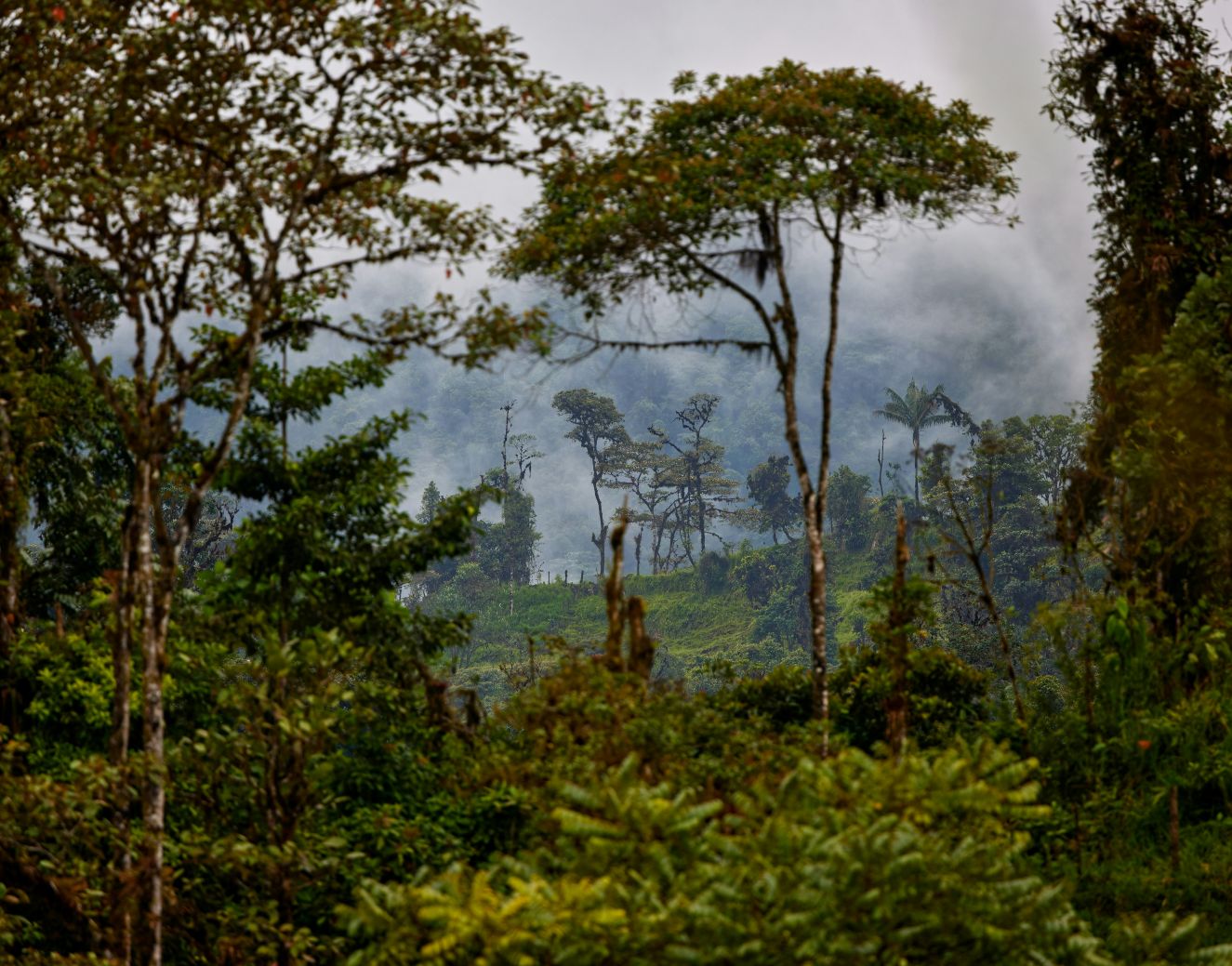
Ecuador’s Amazon lies east of the Andes, opening out into one of the most biodiverse places on Earth; dense rainforest, winding rivers, and storybook wildlife. Towns like Tena, Coca and Lago Agrio are the main gateways into the jungle, where you can venture along rivers to eco-lodges deep in the canopy.
The Amazon is hot and humid all through the year, with temperatures ranging from 73-90°F (23-32°C), though it can feel hotter due to the humidity.
Put simply, it always rains here! There are wetter months and drier months, with March to July seeing more frequent, heavy rain, high humidity, and engorged rivers. The drier months of August to February are still wet, humid and lush, but with longer breaks in the rain, making it easier to hike and get around. Rain is usually heavy and tropical followed by bright sunshine.
You can visit the Amazon in Ecuador year-round, but August through February is generally more comfortable for exploring as there are longer sunshine breaks, jungle trails are clearer, and wildlife is visible. That said, the wet season is truly atmospheric—wildlife is still active and river journeys are easy. Whatever the case, bring reliable waterproofs!
Read more: Many worlds in one small country: Ecuador tips from a local expert
The best time depends on the region, but generally June to September offers the driest and most stable weather, especially for the Andes and Galapagos Islands. Though showers still occur, it’s the ideal period for hiking and outdoor activities.
Ecuador doesn’t have a solid wet and dry season due to its varied geography. The Andes tend to be wetter from October to May, while the Amazon is wet year-round, with slightly less rain August to February. Ask your local travel expert for detailed weather information about the places you want to visit.
Again, temperatures in Ecuador vary by region—the coastal and Amazon areas can reach 86-90°F (30-32°C) between February and April, while high-altitude cities like Quito stay much cooler at around 66-68°F (19-20°C). It’s generally hotter during the rainy seasons when humidity peaks.
There isn’t a ‘winter’ as such in Ecuador, it’s more about wet and dry seasons, but conditions also vary significantly between regions. The dry season is slightly cooler as humidity drops, with lows in the Andes dipping to around 48-50°F (9-10°C) at night. In the Andes, it gets cooler the higher up you go, so bring layers if you’re staying around Quito and the mountains.
It’s mostly heavy rainfall that occurs in Ecuador, and the effects of that heavy rain that could be deemed ‘extreme’. Occasionally there is flooding and landslides during very wet periods, particularly in the Andes and Amazon. It’s also in a seismically active region, so earthquakes can happen, though this is quite rare.
Ready to plan your trip to Ecuador and the Galapagos Islands? Explore our trip ideas or get in touch right away with our local travel experts. They’re based on the ground in Ecuador, with all the in-depth information needed about the best time to visit Ecuador to help build a trip that’s perfect for you.
Explore all featured destinations