Our travelers’ favorite cultural journeys around the world
23 September 2026
Hidden away in the high Himalayas, the culture of Bhutan has experienced minimal influence from the outside world, helping to keep its traditional Buddhist roots largely intact. Those lucky enough to visit this captivating country will find sublime mountain scenery and fascinating traditions that permeate all aspects of life.
Visitors often find themselves inspired and rejuvenated after spending time in Bhutan, the Land of the Thunder Dragon. This is partly due to the immense beauty of the mountains, but there’s also an unmistakable aura of peace and calm that pervades society here… life just feels simpler in Bhutan, which you can discover for yourself on a tailor-made trip planned by local experts. Before reaching out, read on for an introduction to Bhutanese culture and tips on how to best explore it…
The expression of culture in Bhutan is rich and multi-layered, with deep roots in Buddhist traditions. Out of a tiny population of around 800,000 souls, the majority of Bhutanese people are practicing Buddhists.
Life here revolves around the pillars of family and religion. Respect for elders, tradition and the environment is woven into the constitution, along with the Bhutan government’s famous gauge of success, GDH (Gross Domestic Happiness), rather than the more ubiquitous GDP (Gross Domestic Product). Humility, peace, and dedication to spiritual life are highly valued in Bhutanese culture.
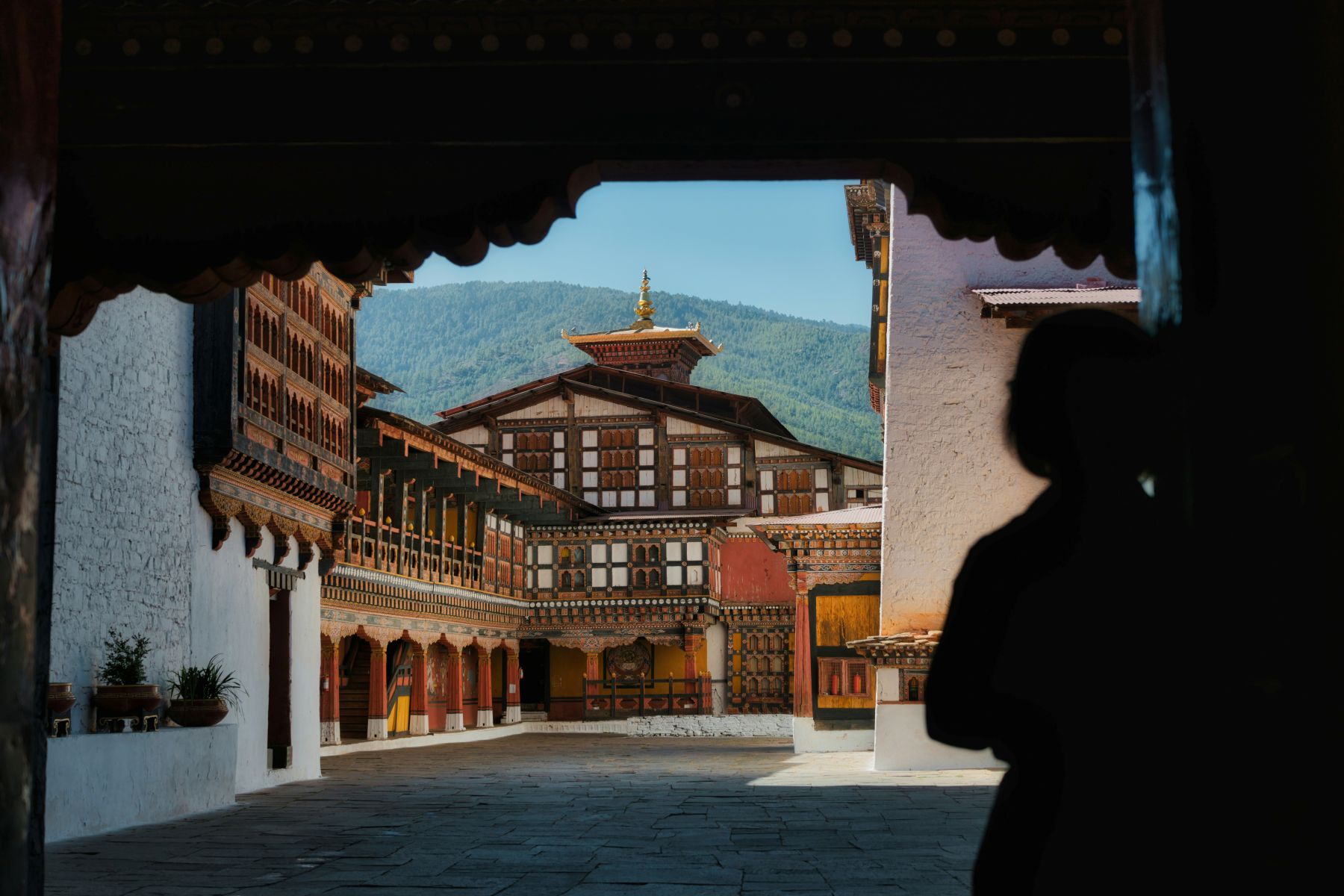
Himalayan peaks dominate the landscape, making everything else feel small in comparison. But dotted throughout this landscape, in fertile valleys, reflected in alpine lakes and clinging to cliff sides, Bhutan’s religious buildings stand out for their lyrical beauty.
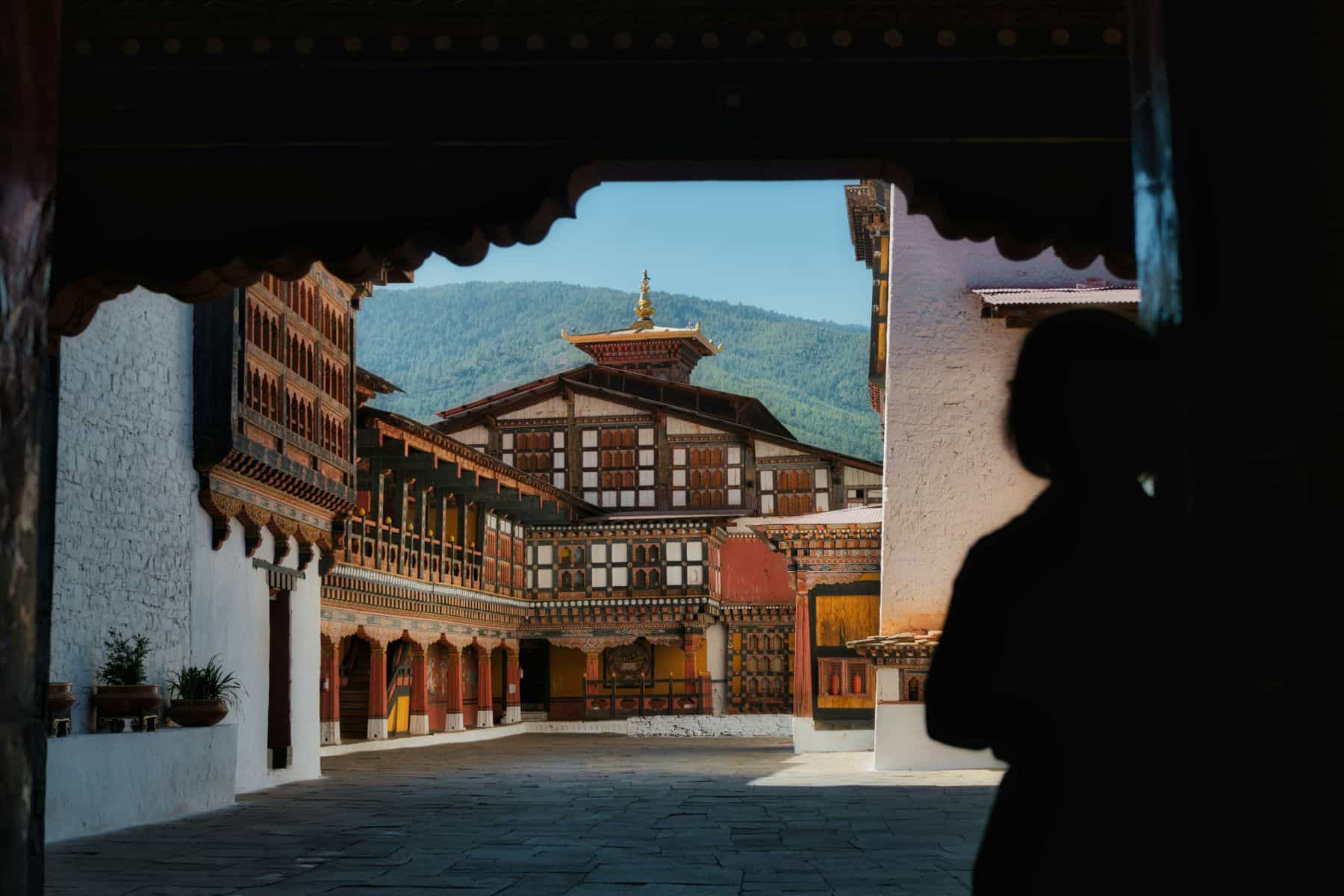
Elaborately carved entranceways, golden stupas, and brightly painted facades in pure white, crimson and ochre contrast with blue skies and majestic backdrops. These buildings, the monasteries, dzongs (fortress monasteries), and lhakhangs (temples), are the heart of the nation, intricately built, beautifully kept and frequented by all.
Legend has it that the Guru Rinpoche brought Buddhism to Bhutan in the 8th century, having flown in with Yeshe Tsogyal, the wise ‘mother’ of Tibetan Buddhism. He proceeded to meditate in the Bhutanese mountains, and so began the country’s deep affinity with the religion and its philosophy.
Read more: Where to go in Bhutan
Bhutan follows a social calendar of religious festivals, offering regular opportunities for locals to come together as a community. Visitors are welcomed with big smiles and genuine enthusiasm at these events, offering a wonderful window into the multi-layered and colorful culture of Bhutan.
Organized by local monasteries and religious schools, tshechu are regular religious celebrations that serve to reaffirm faith and bring rural communities together. The events have a festival-like atmosphere filled with singing, dancing, costumes, and music. Distant neighbors socialize and share picnics, nurturing friendships and helping to maintain the harmonious society that Bhutan is so famous for.

Tshechu follow the Tibetan lunar calendar, falling on the 10th day of the month and lasting three to four days. This means the dates shift a little each year on the Western Gregorian calendar. They do fall around the same time, though, and your local expert can help plan your Bhutan itinerary to coincide.
Read more: A full guide to the Thimphu Tshechu festival in Bhutan

Traditional crafts and art forms are alive and flourishing in Bhutan, with 13 skilled professions that are highly respected and taught at dedicated schools and on apprenticeships. Many of these art forms, known as Zorig Chusum, are used in the construction and decoration of religious sites, and in traditional dress and artefacts for ceremonies and festivals.
The Thangka is a religious scroll intricately painted onto silk cloth or cotton. Depicting religious scenes, symbols and deities, these paintings aid meditation and religious contemplation. Clay sculptures are also used for religious contemplation, to decorate home altars and in religious spaces.
The textile arts are amongst Bhutan’s most ancient traditional art forms, and its people (mainly women) are known for their skills in handloom weaving and design. The kaleidoscope of textile patterns and designs they create are used in traditional dress, costume, ceremony and decoration.
Bhutanese culture emphasizes the use of natural materials in the built environment, with most constructions finished in wood and stone. Elaborately carved and painted wooden facades, entranceways, and roof facia create a homogeneous style across religious buildings and bridges.

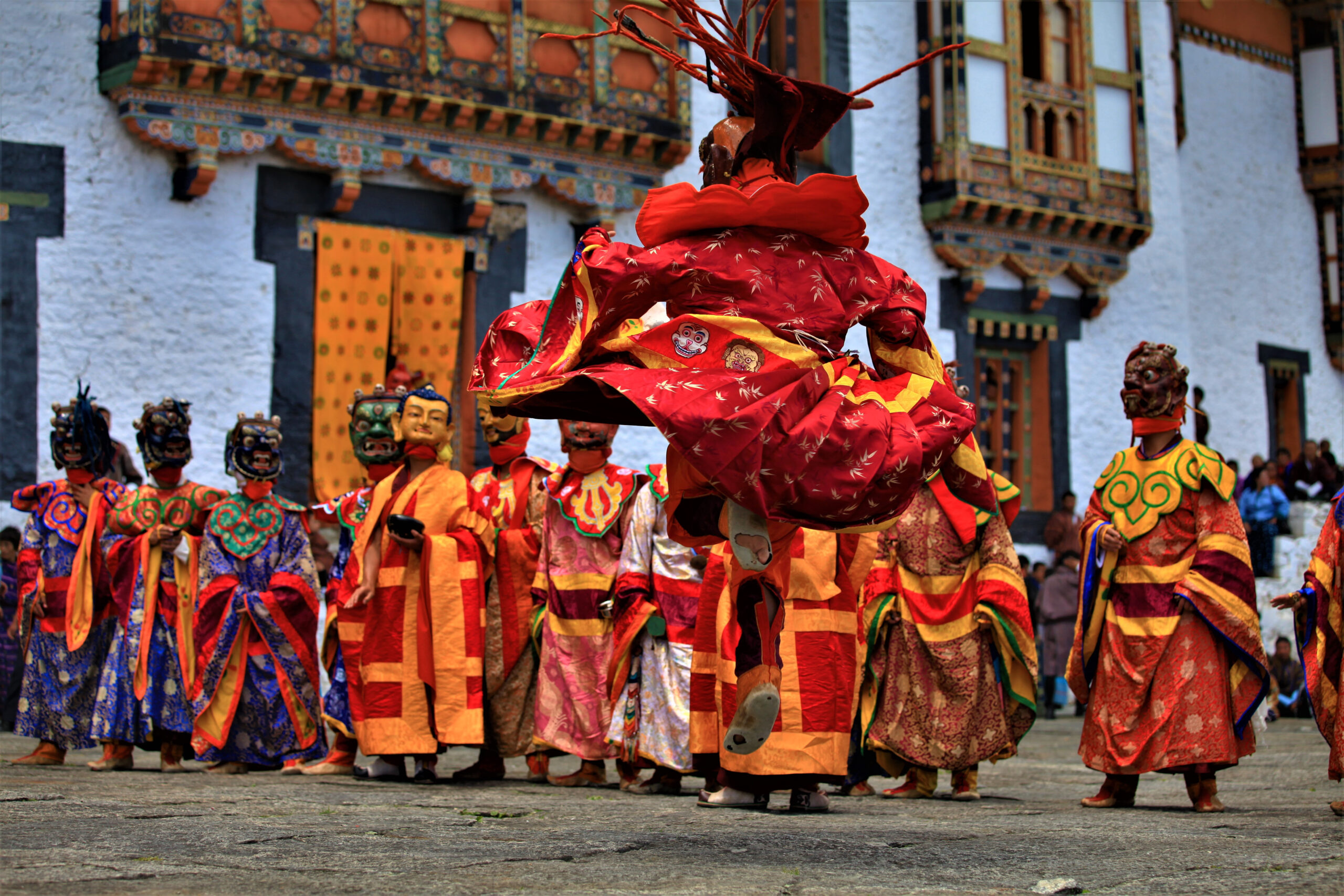
Traditional dance, music and performance are integral to life and celebration in Bhutan. These dances, usually witnessed at festivals, are enhanced with elaborate costumes and brightly painted masks. Rich with symbolism and storytelling, experiencing the mesmerizing whirl of costume, movement and sound can be truly transportative.
Chilies feature highly in the Bhutanese kitchen, along with simple staples like rice, meat and cooked vegetables. The most famous dish, and one you’re likely to eat most days, is ema dashi – chilies stewed or fried with mild Bhutanese cheese and butter. Rice also features at most mealtimes, sometimes replaced with noodles and with steamed momo dumplings on the side.
Arriving in Bhutan can feel like stepping back in time. The pace is slow, the urban environment calm, and everywhere you look, local people wear traditional dress. For men, it’s the gho, a knee-length robe with white cuffs and a useful pouch around the waist. Usually made from cotton or wool, the colors and patterns will often indicate the wearer’s region of origin.
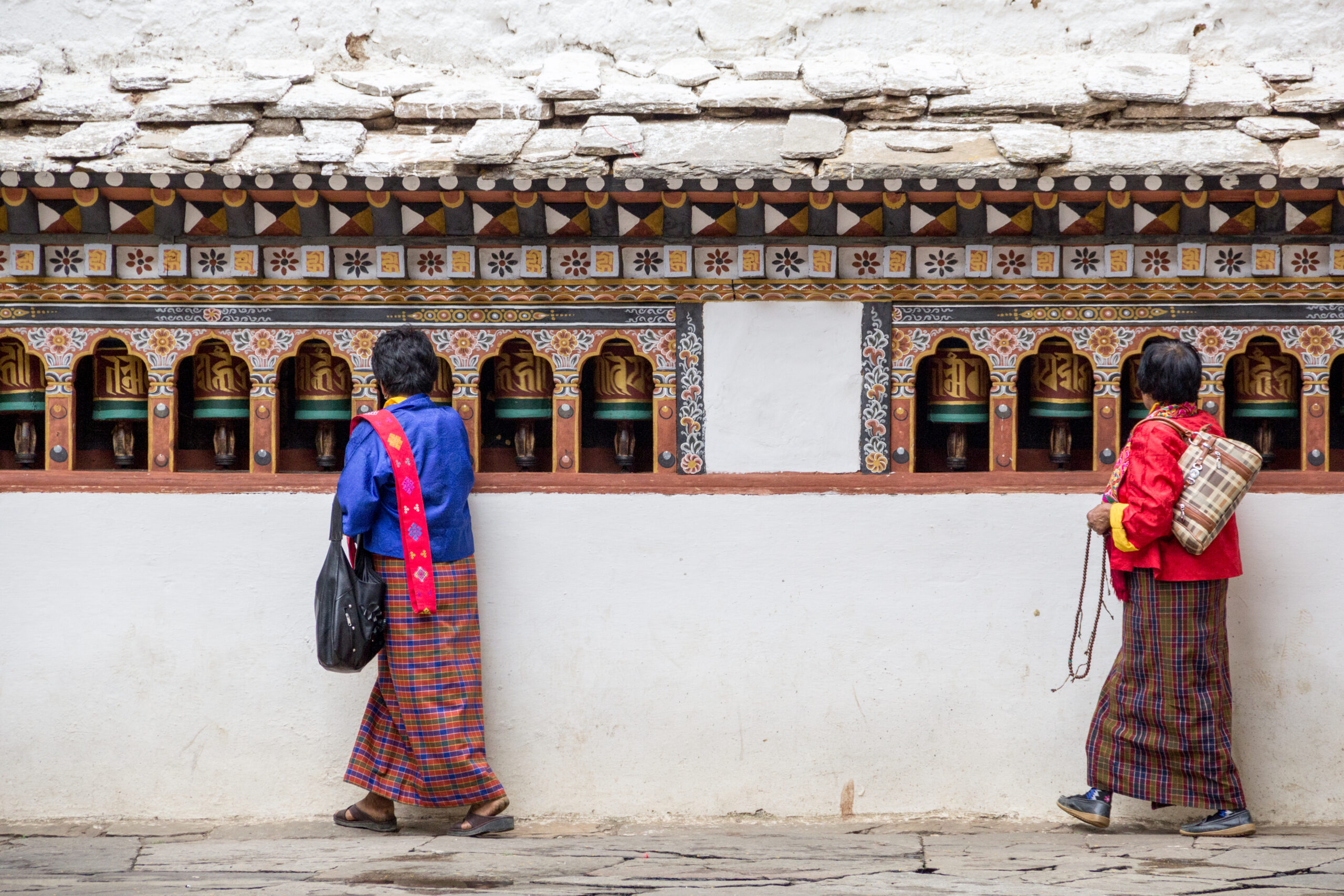
Women don the elegant kira, a delicately woven, ankle-length silk skirt with a blouse and a cropped jacket. It is the tradition in Bhutan to wear this attire every day, often with finely woven silk scarves draped across the shoulders during religious celebrations. The gho and kira are integral to the Bhutan cultural code, and wearing them is expected. The richly colored and patterned fabrics are deeply rooted in national identity and are worn with pride.
Read more: Breathe, reflect, reconnect: expert Bhutan travel tips
Experience the many facets of the culture of Bhutan for yourself, on a tailor-made trip built with passion and dedication: connect with our English-speaking local experts today to get started with your epic adventure.
Explore all featured destinations