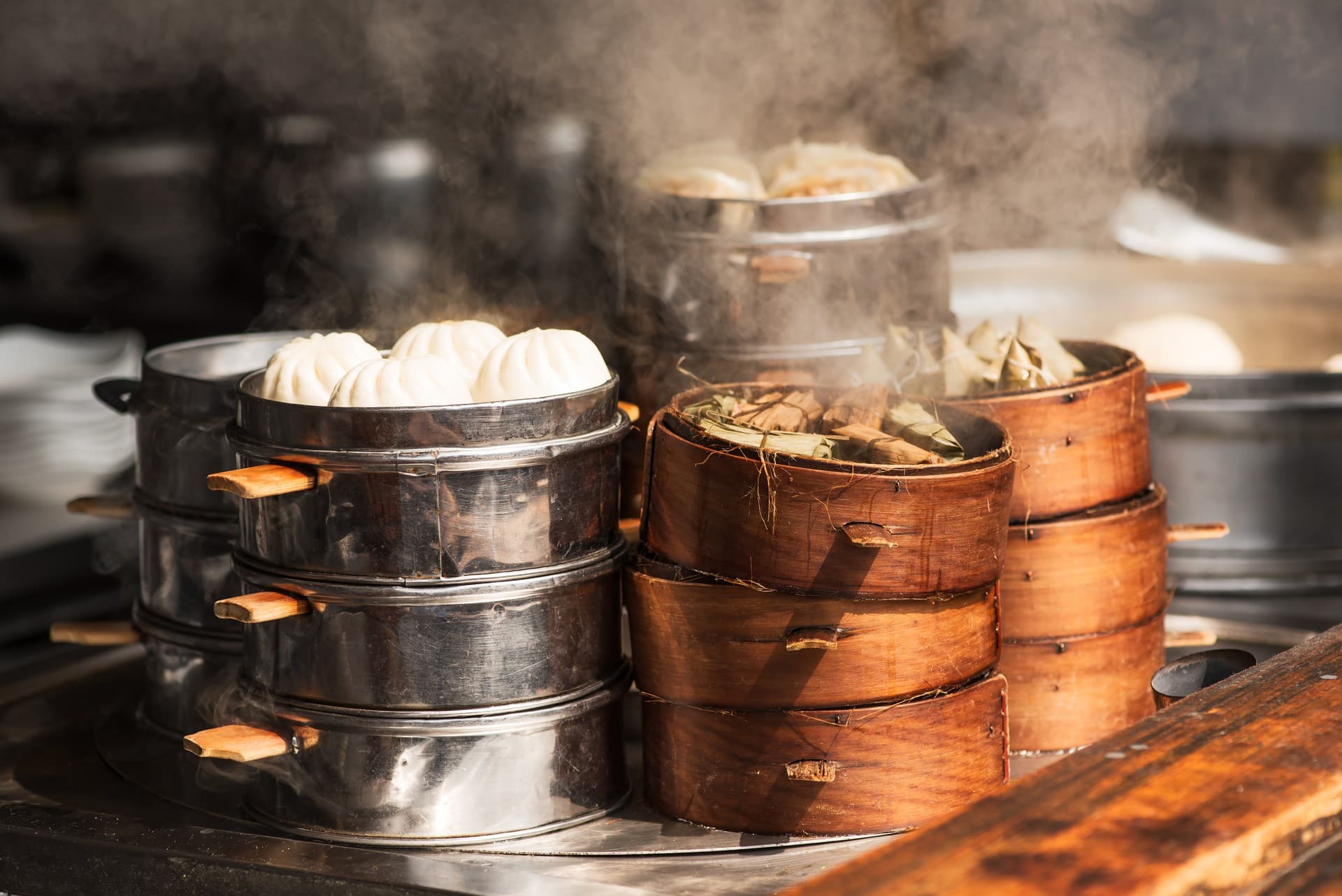
11-day ultimate China tour for foodies
This culinary escape is perfect for foodies and cooking enthusiasts. You will have plenty of time to explore the wonderful sites in Beijing, Xian, Chendgu and Shanghai, including a visit to the Great Wall. Throughout your tour, spend time tasting extraordinary varied local dishes, enjoying unique cooking lessons and getting a better understanding of Chinese culture.
Services
Included:
- English speaking guide on excursions
- Air-conditioned car with private, Chinese speaking driver
- 9 nights accommodation on twin share with daily breakfast included
- 7 x lunch,2 x dinner
- Main Entrance fees for all included scenic sites, museums, parks, etc.
- Domestic flights on economic class: Chengdu-Shanghai
- Domestic train on 2nd class seat: Beijing-Xian, Xian-Chengdu
Excluded:
- Transports to Beijing on Day 01 and from Shanghai on Day 11
- Travel and medical insurance
Optional:
- Kungfu Show in Beijing (from USD45 per person)
- Peking Opera in Beijing (from USD45 per person)
- Sichuan Opera Show in Chengdu (from USD 50 per person)
- ERA Intersection of Time Acrobatics show (from USD 50 per person)
Itinerary at a Glance
Transfer from Beijing airport to your hotel
Beijing
Visit Tiananmen Square And The Forbidden City - Pedicab Ride In Beijing Hutongs & Siheyuans - Street Food Culture On Wangfujing Snack Street
Beijing
Visit A Lesser Visited Section Of The Great Wall: Huanghuacheng - Stroll Around The Summer Palace
Beijing
Watch Locals Practice T'ai Chi At The Temple Of Heaven - Private Transfer To Beijing Rail Station - Take High Speed Train From Beijing To Xian
Beijing - Xian
Visit Qin Shi Huang's Terracotta Army - Visit The Small Wild Goose Pagoda And Xi’an Museum - Xi'an Evening Food Tour
Xian
Have A Leisurely Walk On The City Wall - Private Transfer From Xian Hotel To Train Station - Take High Speed Train From Xian To Chengdu
Xian - Chengdu
Visit Sichuan Cuisine Museum And Take Part In A Cooking Class - Explore Kuanzhai Alley - Explore Jinli Ancient Street
Chengdu
Visit The Giant Panda Breeding Research Base - Stroll In People's Park And Visit He Ming Teahouse - Fly From Chengdu To Shanghai
Chengdu - Shanghai
Visit Yu Garden And The Nearby Market - Explore Nanjing Road And The Bund - Visit Shanghai Tower
Shanghai
Visit To Zhujiajiao Water Town - Afternoon at leisure in Shanghai
Shanghai
Transfer from your hotel to Shanghai airport
Detailed Itinerary
Transfer from Beijing airport to your hotel
Day 1: Beijing
Transfer from Beijing airport to your hotel
Other Transfer: Upon your arrival at Beijing Capital Airport (PEK), you will be met by your local guide and transferred to your hotel for check-in.
Estimated travel time: 20 minutes.
Visit Tiananmen Square And The Forbidden City - Pedicab Ride In Beijing Hutongs & Siheyuans - Street Food Culture On Wangfujing Snack Street
Day 2: Beijing
Visit Tiananmen Square and the Forbidden City
Excursion: You will pass through the infamous Tiananmen Square, the largest city square in the world, to explore the Forbidden City to the north, the largest palace complex in the world. This is truly a head-on collision between China’s dynastic past and its communist modernity: both spaces share similarities, being arranged rectangularly and flanked east to west by grand halls, but the imposing Soviet buildings and white-washed fences of the square are a world away from the vibrant Ming architecture of the palaces. Transition between these spaces and feel the weight of change.
Even entering the Forbidden City is a huge divergence from its past: for 500 years, ordinary citizens were executed for crossing its threshold. Now, you will be able to explore its 980 buildings at leisure, and discover the various galleries, halls, gardens, bridges and courtyards freely. Emperors, eunuchs, concubines and officials have resided in this vast city of palaces. As well as exploring the immense Three Great Halls at the centre of the city, be sure to spend some time in the smaller buildings at its periphery, with their excellent galleries dedicated to painting and calligraphy. Other small courtyards house exhibitions that offer an excellent glimpse of everyday life in the city, with interesting treasures ranging from courtly musical instruments to gifts offered to the emperor by visiting dignitaries.
Pedicab ride: hutongs & siheyuans
Excursion: Taking a pedicab through the city is great fun and a must-do while in Beijing. Experience the unique crisscrossing design of the streets: old narrow paths ('hutong') with courtyard houses ('siheyuan') built on each side. As you rumble past locals and daily goings-on, this trip can be regarded as a window into Beijing folk life. A pedicab is like an open-air carriage pulled by a bicycle with a driver. The ride will last about 30 minutes.
Street food culture on Wangfujing Snack Street
Excursion: Wangfujing Snack Street is set on a narrow alley off the main walking street. Along the 810-meter pedestrianised street, you will find many kinds of food along the roadsides, such as the deep fried insects.
Roast Duck meal at well known Hua’s Restaurant
Excursion: Hua's Restaurant is one of the best places to eat roast duck in Beijing. This small traditional eatery is simple and humble, letting the food speak for itself - and is situated among the hutongs for that extra atmosphere. Enjoy this lip-smacking local delicacy in historic surroundings.
Visit A Lesser Visited Section Of The Great Wall: Huanghuacheng - Stroll Around The Summer Palace
Day 3: Beijing
Visit a lesser visited section of the Great Wall: Huanghuacheng
Excursion: Huanghuacheng is a wild section of the Great Wall. This part of the Wall is called Yellow Flower Fortress and is a good place for hiking. There are very few tourists to be found here, but it is becoming popular with hikers. There is a lake and a crescent-shaped reservoir nearby. The lake breaks this section of the Great Wall into three segments naturally. Part of the wall is underwater and becomes submerged at high tide, meaning the Huanghuacheng Great Wall is nicknamed "Water Great Wall". The scenery here is surprising and unique.
Stroll around the Summer Palace
Excursion: Spend some time exploring Bejing's Summer Palace, the largest and best-preserved royal garden in China. It has been used as the emperor's summer retreat to escape from the heat of the city for over 800 years, and was considerably embellished in the 18th century, when Emperor Quianlong commissioned 100,000 workers to deepen and expand the Kunming Lake that now spans two thirds of the 300-hectare park.
The lake is overlooked by Longevity Hill, studded with Buddhist Temples, and topped with the tallest building of the park, the Tower of Buddhist Incense. Climb the hill to see spectacular vistas of the surrounding gardens. The principle structure of the park is the Hall of Benevolence and Longevity, where the emperor's court sessions were held. Walk around the outside and explore its courtyard filled with bronze creatures, including the mythical, chimerical 'qilin', a beast thought to herald the arrival of sages or wise leaders and to signal times of prosperity and harmony.
Other highlights include the Long Corridor, stretching from east to west along the northern shore of the lake, filled with elegant landscapes and scenes of mythology painted across its wooden panels and beams. If you have time, walk around the lake to distance yourself from the crowds, and come closer to the tranquillity of what the imperial household might have experienced here.
Watch Locals Practice T'ai Chi At The Temple Of Heaven - Private Transfer To Beijing Rail Station - Take High Speed Train From Beijing To Xian
Day 4: Beijing - Xian
Watch locals practice t'ai chi at the Temple of Heaven
Excursion: Perhaps the best example of Confucian-inspired design in the city, the Temple of Heaven Park is a marvel of geometric symmetry and order, prevailing throughout the landscape as well as the architecture. Look out for symbols of the notion 'tianyuang difang', or 'Heaven is round, Earth is square', within the layout of the temples, as well as the whole park itself.
The temples here originally staged the solemn rituals of the Ming and Qing emperors, who would come here to pray for good harvests and heavenly guidance. You will tread their same path among the temples and twisted cypresses (the oldest dating back 800 years, prior even to the temples) through the 267-hectare park. The Hall of Prayer For Good Harvests is certainly the highlight, but do also look to the south for the smaller Imperial Vault of Heaven, whose encircling Echo Wall allows a whisper to travel clearly from one side to the other. Make sure to test this when you can between the visiting crowds.
You will be visiting in the morning, so will be able to spot people practising their t'ai chi and swing dance outside the temple, a rather unique sight. Watch their movements carefully and pick up some t'ai chi techniques of your own!
Try local snacks
Excursion: As one of the biggest cities in China, Beijing has plenty of popular snacks on offer, many of which are especially loved by locals. Our local experts will treat you to some of their favourites. Some you'll surely love, some might not be to your taste, but overall it's a great experience to eat like a local! Some of the treats you'll try include mung bean milk and 'rolling donkey' (a type of dessert). 好胃口
Private transfer from Beijing to Beijing rail station
Car Transfer: You will be met by your guide and transferred to the train station.
Estimated travel time: 1 hour.
High speed bullet train from Beijing to Xi’an
Shared Train Transfer: You will take the high speed bullet train from Beijing to Xi’an.
Estimated travel time: 5 hours 50 minutes.
Rail station pick up service in Xi'an
Car Transfer: Upon your arrival at Xi'an rail station, you will be met and transferred to your hotel.
Estimated transfer time: 1 hour
Enjoy a dumpling banquet for dinner
Excursion: You will be taken to one of the best dumpling restaurants to have traditional dumplings for dinner.
Visit Qin Shi Huang's Terracotta Army - Visit The Small Wild Goose Pagoda And Xi’an Museum - Xi'an Evening Food Tour
Day 5: Xian
Visit Qin Shi Huang's Terracotta Army
Excursion: Xi'an (pronounced shee-an) is one of China's most ancient cities. Marking the end point of the civilisation-spanning Silk Road, it has witnessed the succession of four different imperial capitals, as new dynasties each attempted to stamp their claim on world history by constructing their own grand city, within sight of the ruins that came before. The first capital was constructed as far back as 3,000 years ago by the Zhou dynasty, although the traditional founding date of Xi'an, or Chang'an as it was first known, is 202 BCE, when the Han dynasty made their contribution to what was now the third capital of the area. This first Han emperor chose Chang'an to be the site of the biggest palace ever to be constructed in the world, six times the size of the Forbidden City.
However, it is from the second capital that the most enduring physical legacy can be witnessed. Qin Shi Huang, the first Chinese Emperor, having united the warring states for the first time in 221 BCE, founded the new Chinese Empire's capital just north of Xi'an, at Xianyang. Almost as soon as he ascended to the throne, he ordered construction to begin on his elaborate mausoleum and burial mound, famously home to what is now known as the Terracotta Army.
You will visit this enormous burial chamber and explore the 8,000 individual figures, celebrated for their fascinating level of detail: it is reputed that the form of each head (which were crafted separately to the torso and assembled after) is completely unique. Other subtleties include the individual rivet heads that fleck their armour, and tread patterns carved onto the raised soles of the seated archer figures' shoes. Try and imagine the stern rows of soldiers in bright, vivid colours, as they would have appeared when first created. Also look out for repeating motifs such as hairstyle or armour type, and notice their heights, all of which denote the rank of the individual. There have even been skeletons discovered around the tomb, thought to be some of the 700,000 labourers involved in its construction who were executed to preserve the secrecy of its location.
However, it is the least visible part of the site that could be the most interesting. The emperor's tomb itself remains untouched beneath its burial mound, and is reported by a Han dynasty court historian to contain models of palaces and pavilions, local rivers and streams made of pure mercury flowing into an ocean between mountains of bronze, with pearls and precious stones denoting the sun, moon and stars. Archaeologists have since used remote-sensing technology to reveal four underground chambers, and soil testing has shown unusually high concentrations of mercury. The results are tantalising, but experts have no plans to risk a dig, and await further developments in technology to lead to new discoveries. In the meantime, explore this fascinating site and imagine what could be waiting below the soil.
Visit the Small Wild Goose Pagoda and Xi’an Museum
Excursion: Situated in the gardens of Jianfu Temple, the Small Wild Goose Pagoda was built between 707-9 CE to house the canonical sutra scripts brought from India to the temple by monk Xuan Zang. The temple, and Chang'an as a whole, played a key role in the integration of Buddhism into Chinese culture: it had long been an important centre for translating Buddhist scripts, and pilgrims such as Xuan Zang frequently brought their findings here.
You will look around the pagoda and the temple before visiting the Xi'an Museum, housed as well within the temple grounds. It contains relics unearthed around Xi'an, as well as dynastic treasures from across China's history. A particular highlight is the large-scale model of ancient Xi'an, found in the basement floor of the museum. Study the exhibitions and imagine the past of this ancient city.
Xi'an evening food tour
Shared Excursion: Enjoy unlimited food & drinks this evening on a food tour to discover delicious cuisine with the locals. You'll be whisked around the city’s bustling streets and quaint alleys by tuktuk. Feel the flames as they grill your meat, try Xian’s famous noodles, and finish at a local brewery along Xian’s famous city wall to try the only craft beer in Xian, plus a lot more!
Have A Leisurely Walk On The City Wall - Private Transfer From Xian Hotel To Train Station - Take High Speed Train From Xian To Chengdu
Day 6: Xian - Chengdu
Have a leisurely walk on the City Wall
Excursion: Once an ancient capital of China, Xian is renowned for having one of the oldest, largest and best preserved walls in the country. The wall was originally built by the the first Emperor of the Ming Dynasty, Zhu Yuanzhang after a sage advised him to to build a high fortified wall around the city in order to store food, establish his empire and unify all the other states. Upon taking this advice he looked to expand the already built walls, constructed by the Tang dynasty into a 14km rectangular stretch, standing 12m tall with a deep moat. Spend your time walking on the wall and soak in the phenomenal panoramic cityscape.
Private transfer from Xian hotel to train station
Car Transfer: You'll be driven to Xian train station for your onwards journey. Estimated transfer time: 1 hour.
Take high speed train from Xian to Chengdu
Shared Train Transfer: You will take high speed train from Xian to Chengdu (about 4 hours)
Rail station pick up service in Chengdu
Car Transfer: Upon your arrival at Chengdu rail station, you will be met and transfered to your hotel.
Estimated travel time - 40 minutes-1 hour.
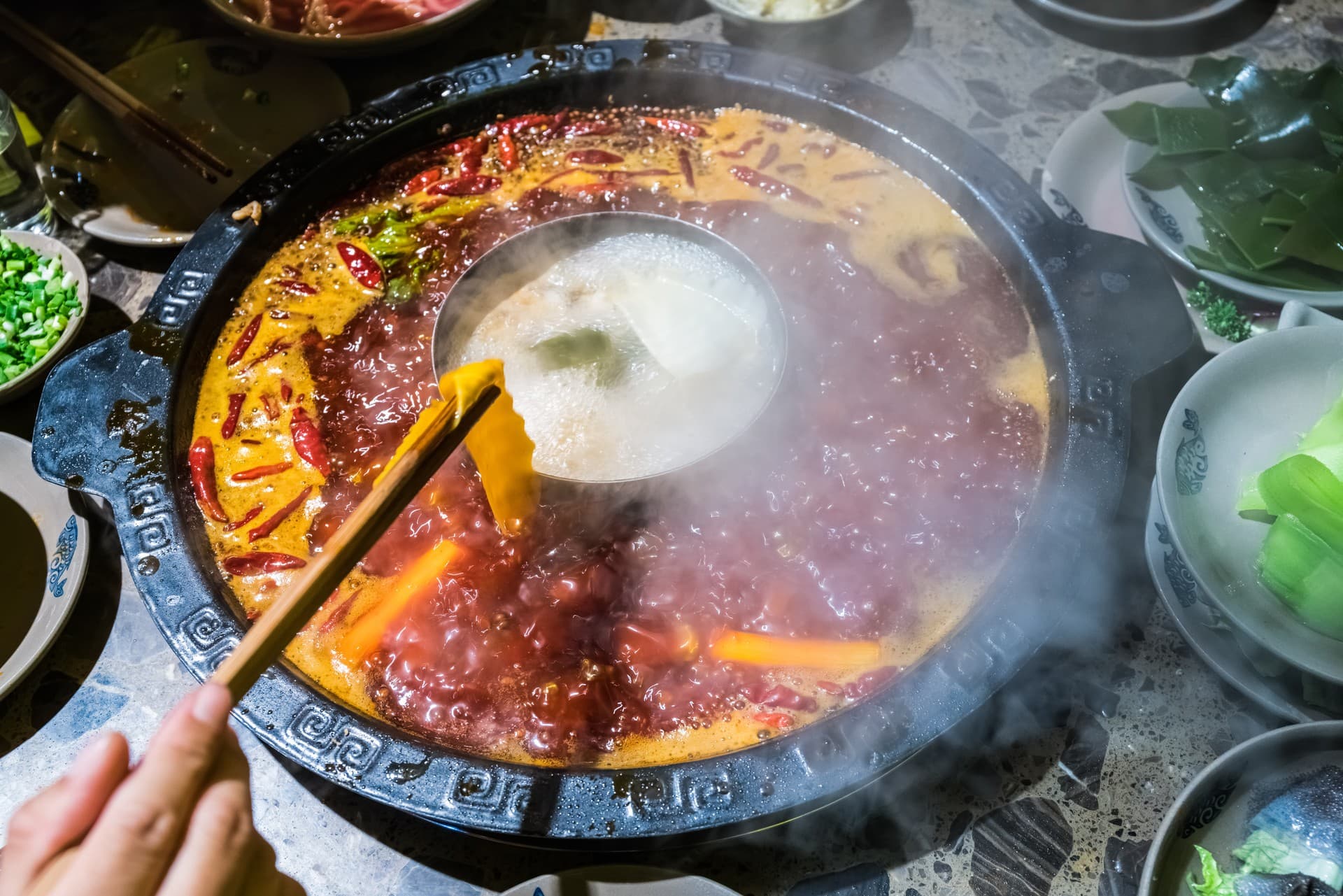
Visit Sichuan Cuisine Museum And Take Part In A Cooking Class - Explore Kuanzhai Alley - Explore Jinli Ancient Street
Day 7: Chengdu
Visit Sichuan Cuisine Museum and take part in a cooking class
Shared Excursion: Designated by UNESCO as a city of gastronomy, Chengdu is a cradle of Sichuan cuisine. Around an hour drive away from Chengdu, the Sichuan Cuisine Museum aims to celebrate the history and cultural value of this iconic cuisine (while also letting visitors sample the highlights!) At the end of the tour, take part in a cooking class led by a local chef before tasting your creations.
Explore Kuanzhai Alley
Excursion: Explore this ancient maze of Chengdu. Made up of Kuan (wide), Zhai (narrow) and Jing (well) alleyways, the three kinds of streets run parallel and have 45 different courtyards between them. The alleys date back to the Qing dynasty, and were originally part of an inner city within Chengdu, called Mancheng City, where troops were garrisoned. Now only Kuan and Zhai bear any semblance to their historical selves, having been extensively renovated since 2003.
The area is now situated in the Qingyang district, and has become rather touristy, with the appearance of some Western restaurants. It is still worth a stroll down the two alley's lengths to seek out the traditional street snacks on offer, as well as the many inviting teahouses. Perhaps you will encounter some of the street performances that can often be seen here, including Sichuan opera, embroidery, fortune-telling, folk music and even shadow puppetry. Or look out for Kuan alley's open house exhibition that displays what everyday life would have looked like during the Republic of China (1912-1949). Wander down these atmospheric streets and see what grabs your attention.
Explore Jinli Ancient Street
Excursion: Explore the ancient street of Jinli, a 350m stretch on the east of the Temple of Wuhou featuring mansions, halls, dwellings, inns, and shops. With green stoned-paved paths it retains its traditional style - you'll feel like you've been transported back in time as you saunter along. Whilst here, make the most of local Sichuan cuisine, drinks, opera and ancient culture.
Visit The Giant Panda Breeding Research Base - Stroll In People's Park And Visit He Ming Teahouse - Fly From Chengdu To Shanghai
Day 8: Chengdu - Shanghai
Visit the Giant Panda Breeding Research Base
Excursion: Giant pandas, a national symbol of China and a global symbol of species conservation, are housed at this famous reserve and research base. It opened in 1987 with just 6 pandas; this population has now swelled to 126, testament to the success of the breeding programme. Additional rare species such as red pandas, black-necked cranes and white storks are now kept in other sections of the reserve as well. As the name suggests, the main focus here is panda breeding, which generally occurs between March and May. If you visit in the autumn or winter, you may be lucky enough to see newborns in the nursery.
The Base is just 18km north of Chengdu, so is easily accessible. You will also visit in the morning to catch the pandas when they are at their most active. Especially in the summer months, they can be known to sleep all day, sometimes in their indoor and air-conditioned enclosures. It is estimated there are 2,000 left in the wild, mostly in Sichuan province, but also in neighbouring Shaanxi, so your best chances of seeing them outside a zoo is probably here at the research base.
Please note: pictures with the pandas are available on site, however, this is not obligatory and you can opt out if the opportunity arises.
Stroll in People's Park and visit He Ming Teahouse
Excursion: Stroll through the People's Park and get a real sense of local life in Chengdu. With a small willow-lined boating lake at its centre, you can aimlessly wander around its perimeters and pathways for as long as you want to escape the hustle and bustle. Local residents can often be seen dancing, practising tai'chi, flying kites or enjoying some light afternoon refreshments in one of the many Teahouses that line the park. When you have finished exploring, you can rest at the traditional and atmospheric He Ming Teahouse, famed for its tea for over a century.
Transfer from Chengdu to airport
Car Transfer: You will be transferred to the airport for your flight to next destination.
Estimated travel time - 1 hour.
Fly from Chengdu to Shanghai
Shared Scheduled flight Transfer: Flight time of around 3hrs.
Transfer from Shanghai airport to your hotel
Car Transfer: Upon landing at Shanghai airport (PVG), you will be met by your driver and then transferred to your hotel for check-in.
Estimated travel time: 40 minutes.
Visit Yu Garden And The Nearby Market - Explore Nanjing Road And The Bund - Visit Shanghai Tower
Day 9: Shanghai
Visit Yu Garden and the nearby market
Excursion: You will visit the Yu Yuan Gardens (‘Happiness Garden’), one of Shanghai's principal sites. Wander along its five acres of beautifully ornate halls and meandering bridges, past pools of flashing fish, soft cherry blossom, spiky pine needles, twisted gingkos trees, porous rocks, dramatic archways and gilded pavilions. If you are visiting in spring or summer, you will be rewarded with an especially fragrant, botanical experience. Look out for the white petals of the Magnolia grandiflora, Shanghai’s signature flower. Furthermore, during your wander, make sure to keep an eye out for the subtler details of the gardens, such as the delicate clay sculpture, brick carving, elegant calligraphy and painting that profuse its grounds.
Around the gardens, you will find the bustling Yu Market. Hundreds of stores can be found here, selling all manner of handicrafts, antiques and second-hand goods. Exploring the narrow alleyways and ducking into eclectic shops is a quintessential Shanghai experience and you are sure to find a mix of tourists and locals alike.
Explore Nanjing Road and The Bund
Excursion: Traverse Nanjing Road, the world's longest shopping district and China's most visited street, attracting around one million visitors daily. The road is split between Nanjing Road East and Nanjing Road West, totaling at 5.5km. Although a history of the road can be dated back to 1845, its fame began to grow around the 1920s when the first department stores in China were opened on the East side, ushering in new products of the machine age, automobiles, and art deco design. Shanghai's reputation as China's most fashionable city was partly forged here. Nowadays, it is a vast whirl of dazzling neon lights and enormous shops. Although no longer the very best shopping in Shanghai, it is well worth exploring for its reputation and fame.
When you've had enough of shopping, you can visit Shanghai's famous waterfront area on the western bank of the Huangpu River, called the Bund. Originally a tow path for dragging rice barges into port, it slowly grew into the world financial centre it is today. During the French Concession-era in Shanghai, the Bund became the city's Wall Street, and was home to the most powerful banks and trading houses of the country, in various art deco and neoclassical constructions. These impressive buildings can still be explored, and most of them act as originally intended. In recent times, the Bund has become home to Shanghai's designer restaurants and boutiques. Explore these venues and contrast the twentieth-century colonial architecture with the futuristic skyline of the Pudong district across the water.
Visit the Tianzifang Old Quarters
Excursion: Formerly a residential area in the French concession of Shanghai, Tianzifang has evolved to become a hub of modern arts and crafts, attracting many artists in the late 20th century. In the labyrinthine of alleyways, a number of studios were set up and an influx of small craft stores, boutique shops, cafes and restaurants followed. Spend your time meandering through the the passageways, perusing the artwork and stop for a coffee and some food along the way!
Enjoy a Dim Sum lunch
Excursion: Dim Sum is more and more popular in China and the people of Shanghai are really good at making exquisite dim sum. Tasting several kinds of Dim Sum in a nice restaurant will be a memorable experience for you here.
View Shanghai from the tallest building in China, the Shanghai Tower
Excursion: One of the largest skyscrapers in the world, and China's tallest building, the Shanghai Tower offers unparalleled views of the city from its observation decks on the 118th, 119th and 121st floors. The tower takes the form of nine cylindrical buildings stacked atop each of other, totalling 128 floors, all enclosed by the inner layer of the glass facade. You will take the express elevator, taking only a minute to reach the observation deck on floor 119 - look out over the buzzing city and spot The Bund, the Huangpu River, and the Oriental Pearl Tower.
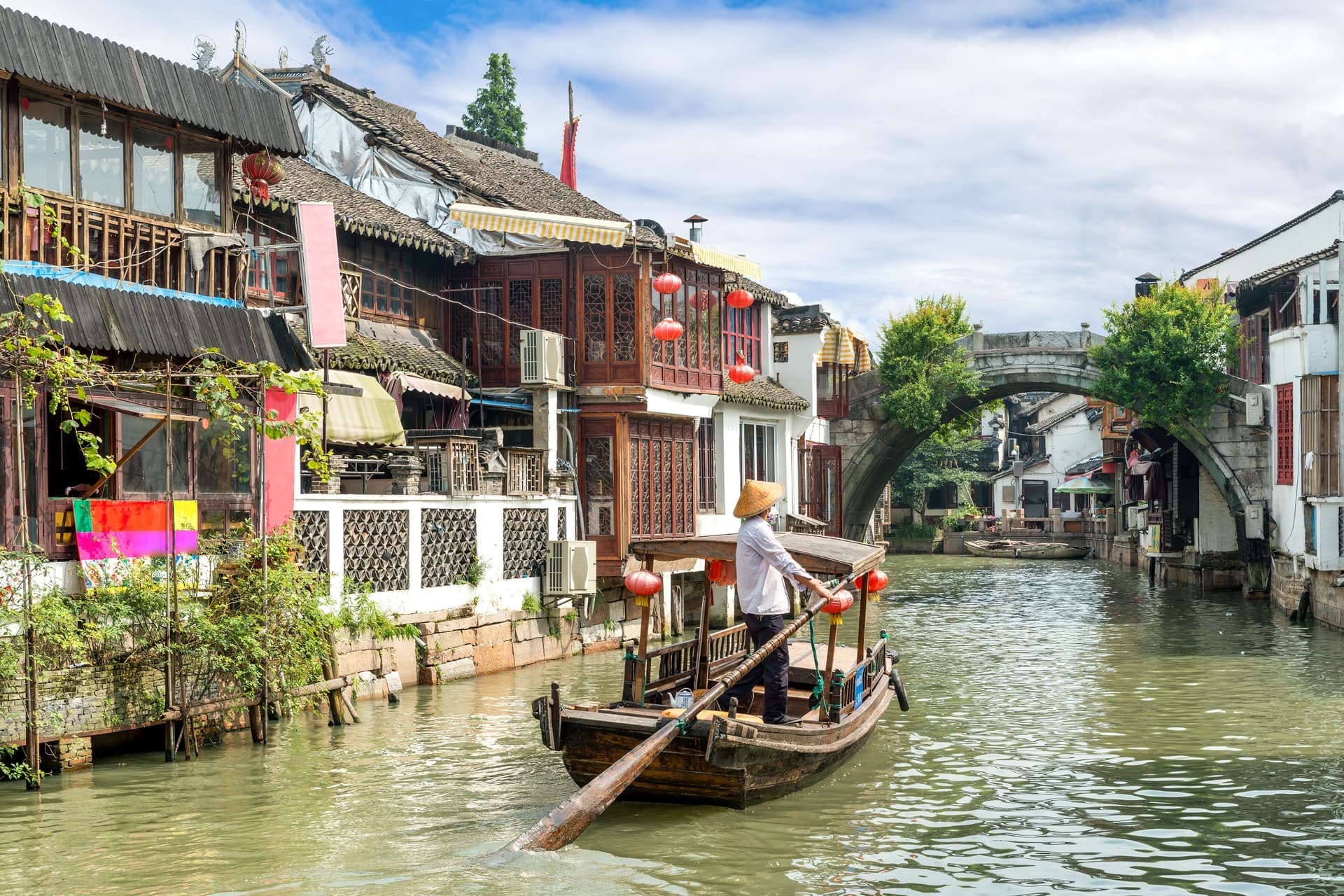
Visit To Zhujiajiao Water Town - Afternoon at leisure in Shanghai
Day 10: Shanghai
Visit to Zhujiajiao Water Town
Excursion: Located in a suburb of Shanghai city, Zhujiajiao is the nearest ancient water town around Shanghai, with a history of over 1,700 years. Endowed with another elegant name - 'Pearl Stream' - the small town is the best-preserved among the four ancient towns in Shanghai. Unique old bridges across bubbling streams, small rivers are shaded by willow trees, and houses with courtyards bring people who have been living amidst the bustle and hustle of the modern big city to a brand-new world full of antiquity, leisure and tranquility.
Afternoon at leisure in Shanghai
Excursion: Take some time to explore your surroundings in "the pearl of Asia".
Transfer from your hotel to Shanghai airport
Day 11:
Transfer from your hotel to Shanghai airport
Car Transfer: Be met at your hotel in Shanghai and transferred to the airport from your onwards flight. Estimated transfer time 45 minutes.


