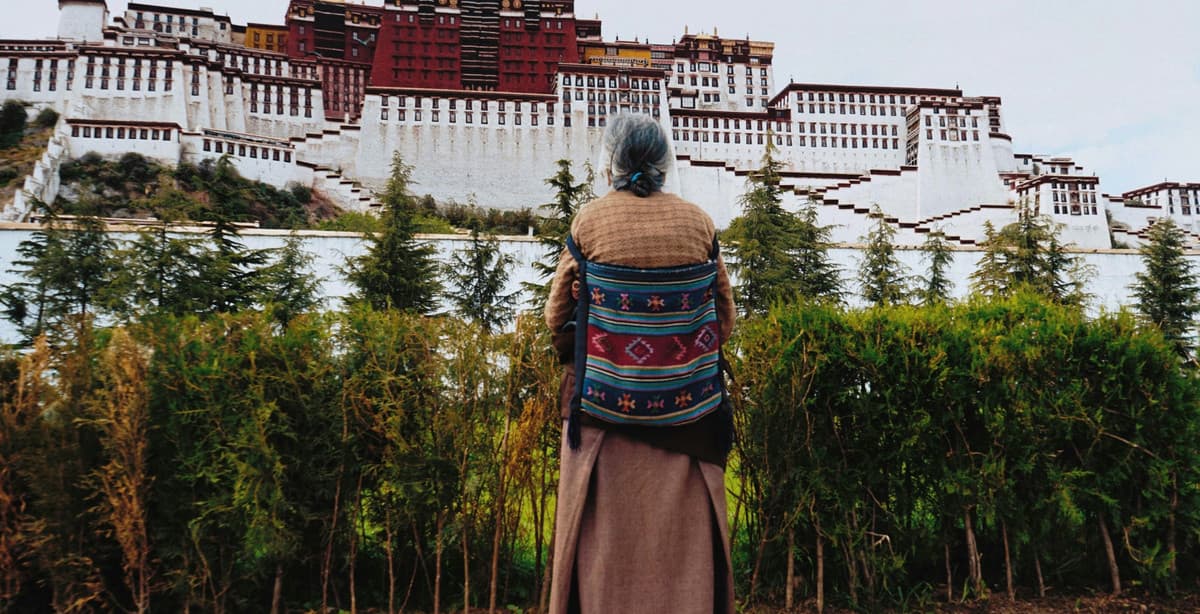
In-depth Tibet pilgrim explorer tour
Encompassing all of central and southern Tibet's most treasured destinations, this carefully paced journey begins with two full days in the sacred city of Lhasa, offering ample time to explore its most revered sites while acclimatizing comfortably to the altitude in the heart of the historic old town.
From here, an extraordinary overland expedition through the breathtaking Himalayan landscape unfolds, taking you to the fascinating monasteries of Gyantse and Shigatse and the humbling grandeur of Qomolangma Base Camp where the world's highest peak commands the horizon in spectacular fashion.
Along the way, the sight of devout pilgrims making their timeless journey to Lhasa adds a deeply moving and spiritual dimension to an already extraordinary trip of a lifetime.
Services
Included:
- 12 nights accommodation in double or twin rooms
- Private airport transfers in an air-conditioned car with an English-speaking driver
- Daily breakfast & select meals as per the itinerary
- Private land transfers as per the itinerary
- Activities & admission fees to sites as per the itinerary
- English-speaking guide on excursions
- Tibet travel permits
- Travel agency liability insurance
Excluded:
- International flights
- Single room supplement
- Any meals & drinks not mentioned in the itinerary
- China entry visa fees
- Excess baggage charges
- Medicines
- Personal expenses
- Tips & gratuities
- Tourist accident insurance
Optional:
- Speak to your local expert if there's an experience that you'd really love to include in your trip
Itinerary at a Glance
Lhasa, China
Welcome To Tibet!
Lhasa
Explore Serene Lhasa
Lhasa
Visit The Lovely Potala Palace
Lhasa
Be Amazed At The Ganden Monastery
Lhasa - Tsurphu Monastery - Namtso
Travel To Tsurphu Monastery
Namtso - Lhasa
Explore The Serene Namtso Lake
Lhasa - Gyangtse
Drive To Glorious Gyangtse
Gyangtse - Tingri
Pay Homage At Sakya Monastery
Tingri - Mt. Everest Base Camp
Head To Mt Everest Base Camp
Mt. Everest Base Camp
Watch The Sun Rise Over Mt Everest
Mt. Everest Base Camp - Samye Monastery
Marvel At Samye Monastery
Samye - Tsetang
Head To Tibet's Third Largest City
Tsetang
Farewell, Tibet!
Detailed Itinerary
Lhasa, China
Day 1: Welcome To Tibet!
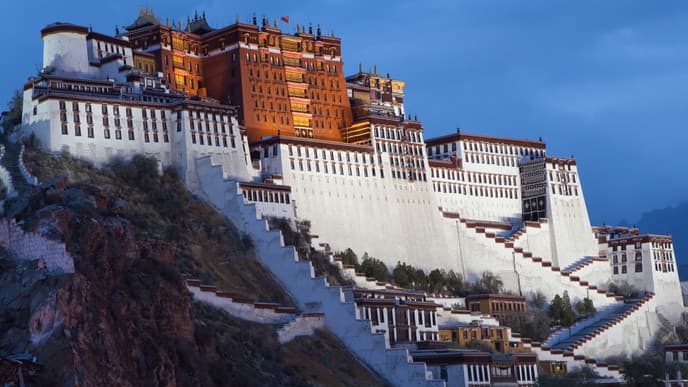
Welcome to Lhasa! Upon your arrival, you will be greeted by your guide and warmly welcomed with a pure white katak scarf (prayer scarf). Then drive to Lhasa, 100km away from the airport.
On the way, you may enjoy the highland view along the Lhasa River and stop occasionally for pictures of local villages. As you have just made a sudden ascent to 3,670 meters, transfer to the hotel for a good rest and drink plenty of water.
The rest of your time is free for relaxing and adjustment.
Lhasa
Day 2: Explore Serene Lhasa
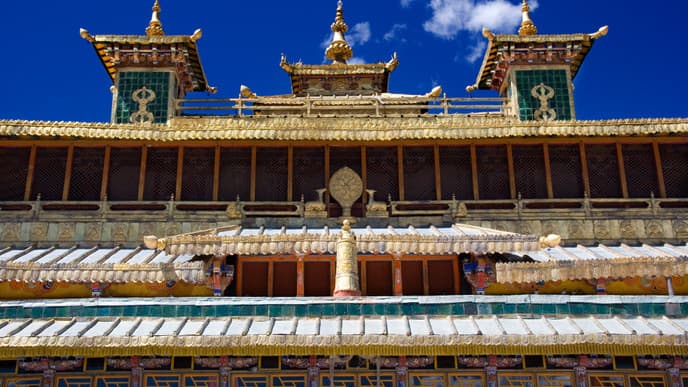
Visit Drepung Monastery, Sera Monastery, and Norbulingka. Drepung is about 8km west of central Lhasa, which was once the world's largest monastery with about 10,000 monks.
This day's sightseeing begins with these white monastic buildings piled up on the hillside. Walking up to the hill is a pleasant thing, an easy break from the solemn ambiance inside the halls and chapels. At the roof of hillside, you can have very good views of the whole of Lhasa city and the distant mountains. Sera Monastery sits at the foot of the mountains. One of the three main Gelupka monasteries in Lhasa, Sera is an important spiritual center for Buddhist monks.
"Norbu Linka" means beautiful gardens. This garden covers an area of 36 hectares and it is the annual vacation home for the 7th to the 14th Dalai Lama.
Lhasa
Day 3: Visit The Lovely Potala Palace
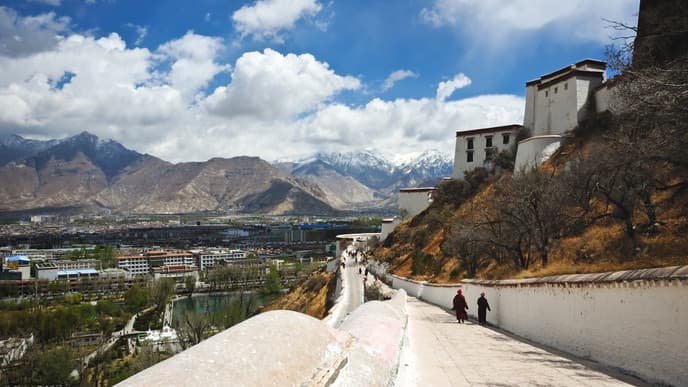
You will visit the Potala Palace, a landmark of Lhasa and spiritual symbol of Tibet. Here, you will join many pilgrims on your way to the top of a hill where this 13-story architectural wonder is perched.
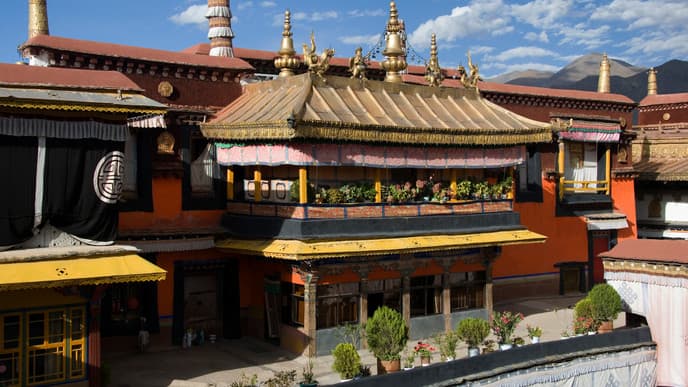
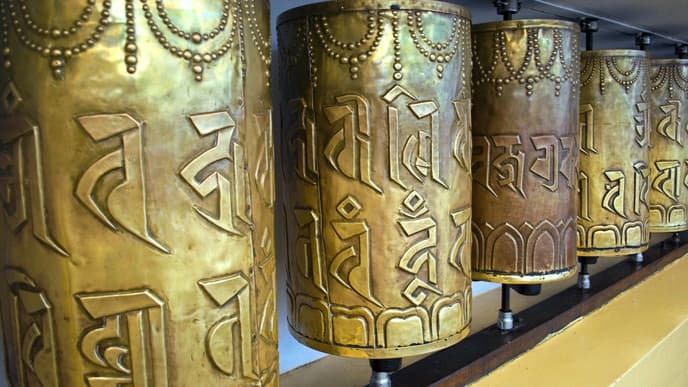
In the afternoon, visit the Jokhang Temple, the spiritual center of Lhasa. As you make the inner circuit around the courtyard, spinning numerous prayer wheels as you go, you will be swept up in the energy of the devout.
From the rooftop, you will get stunning views of the Potala, and the snow-capped peaks off in the distance. Around the Temple runs the Barkhor, a holy circuit which pilgrims undertake and a commercial market bustles. The rest of the time is left free for you to venture around the Bakhor market.
Lhasa
Day 4: Be Amazed At The Ganden Monastery
Ganden Monastery is one of the earliest and largest Buddhist monasteries in Tibet, famous for its Buddha Painting Unfolding Festival. It was founded in the early 15th century by Tsong Khapa, a well-known Tibetan religious philosopher. Forty-five kilometers away from Lhasa City, the monastery is located on Wangbur Mountain, on the southern bank of Lhasa River.
After arriving at Ganden, spend at least a half-day to explore the attractions in and around the ancient monastery, home to the earliest monastery of the Gelugpa sect of Tibetan Buddhism.
Although the monastery is mostly in ruins, it is a fascinating place. Pilgrims arrive in Ganden from all over Tibet to walk around the site of the monastery, and one can observe the rituals they perform on this ‘Kora’ around the monastery. Drive back to Lhasa.
Lhasa - Tsurphu Monastery - Namtso
Day 5: Travel To Tsurphu Monastery
After breakfast, you will have a travel explanation meeting and then your driver will take you to Tsurphu Monastery for the acclimatization. It takes about 2 hours, and the altitude will rise up to 4,480m.
Around 60km west of Lhasa, Tsurphu Monastery is the seat of The Karma branch of the Kagyu order of Tibetan Buddhism. It was built in the middle of the valley facing south with high mountains surrounding the monastery complex.
As the birthplace of the Reincarnation System of the Living Buddha, this over 800-year-old spiritual hub still pulsates with religious activities. After that, you will drive to Namtso Lake for the night.
Namtso - Lhasa
Day 6: Explore The Serene Namtso Lake
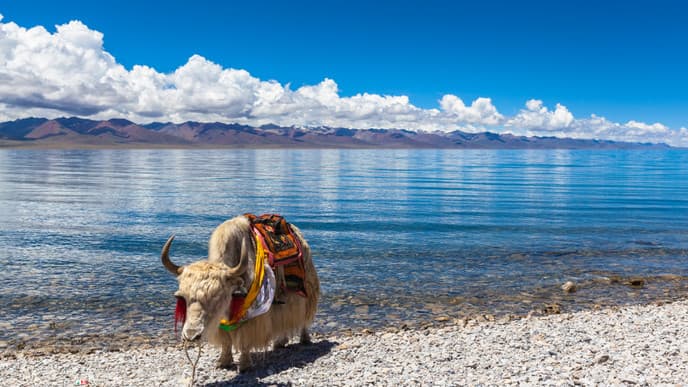
In the quiet morning, beat the cold and get up early to go to the lakeside of Namtso to appreciate the sunrise and beautiful scenery.
In Tibetan, Namtso means 'Heavenly Lake.' Namtso Lake, considered one of the three holy lakes in Tibet, is the second-largest saltwater lake in China and the highest lake in the world. As the sun rises, clouds lift from the mountains and the scene is bathed in golden sunshine. When the weather is clear, the water is a stunning shade of turquoise and you will be surrounded by magnificent views of the nearby Mount Nyenchen Tanglha range with peaks of more than 7,000m.
The wide-open spaces, dotted with tents of local nomads, are breathtaking. You may also walk along the lake or climb up the hill near the lake to explore the area. After visiting the lake, you will drive back to Lhasa.
Lhasa - Gyangtse
Day 7: Drive To Glorious Gyangtse
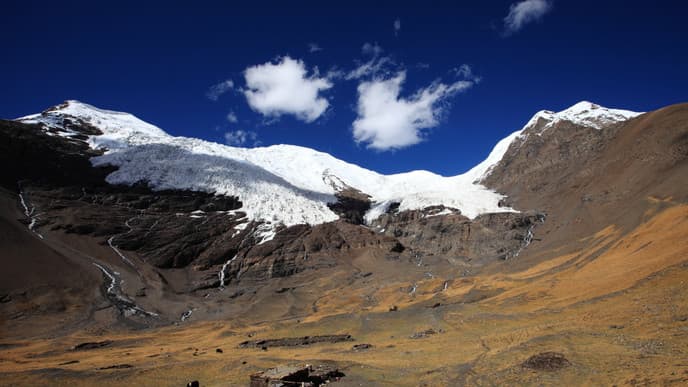
In the morning, drive up to Kampala pass (5,030m). You will have a glimpse of Yamdrok Tso Lake on the way and spectacular views of Holy Mount Nyenchen Tanglha in the distance, which are wonders of the day.
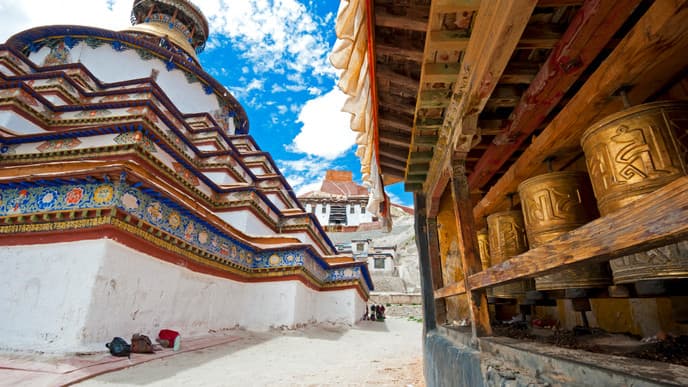
Then along the highway, drive to Gyantse and visit the famous Gyantse Kumbum. Gyangtse is very famous for its giant architectural stupa in Tibet. Pelkor Monastery was built when different religious sectors conflicted neck and neck in Tibet. So it occupies a stunning position in the history of Tibetan Buddhism and features a mixture of pagoda and monastery.
The most symbolic architecture in the monastery is the Kumbum Stupa, which is composed of nine layers of nearly 77 temple halls with numerous Buddha statues in halls and murals.
Gyangtse - Tingri
Day 8: Pay Homage At Sakya Monastery
Today you will be driving to Gyangtse then Tingri. This day can make you tired as you spend most of the day on the road driving (about seven hours).
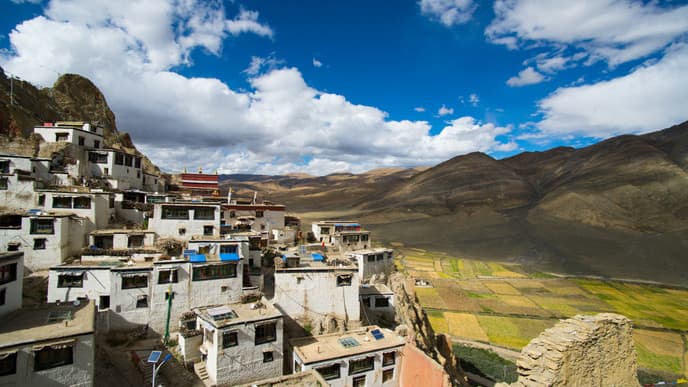
On the way, you will cross over Gyatsola Pass at 5,220m. You will also visit Sakya Monastery and see Mt. Everest far away. Located in Sakya County southwest of Shigatse, the Sakya Monastery is the principal monastery of the Sakyapa Sect of Tibetan Buddhism.
Tingri, or rather Lao Tingri, is the last stop before the Everest Base Camp Tour. Get some rest tonight!
Tingri - Mt. Everest Base Camp
Day 9: Head To Mt Everest Base Camp
Although it's just 100km from Tingri to Mt. Everest Base Camp, it takes about 5 hours since the cracked, winding roads demand much caution.
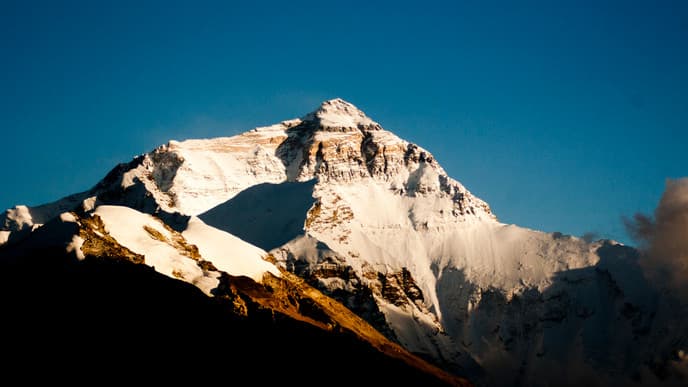
But the views are stupendous on a clear day and feature a huge sweep of the spectacular Himalaya ranges including its glorious peaks over 8,000km, Makalu (8,463m), Lhotse (8,516m), Everest (8,844m), Gyachung, and Cho Oyu, especially when you cross over the top of the Gawu la Pass (5,250m) on the way. When you finally get to Everest Base Camp, the first sight of the mighty Everest will leave you speechless. All the hardship you bear along the way will be worth it.
As the supreme point of the world, Mt. Qomolangma is also blessed with many beautiful and extreme wonders. This afternoon is left free for you to wander around the Rongphu Monastery.
Mt. Everest Base Camp
Day 10: Watch The Sun Rise Over Mt Everest
Today, drive from Rongbuk Monastery to Shigatse via Tingri, about 9 hours on the way.
In the morning, you can see the sunrise of Everest Peak if weather permits at the lodging area. Then you will visit the Rongbuk Monastery - the highest monastery with nuns and monks living together.
Finally, you will drive back to Shigatse.
Mt. Everest Base Camp - Samye Monastery
Day 11: Marvel At Samye Monastery
After breakfast, drive to Samye Monastery.
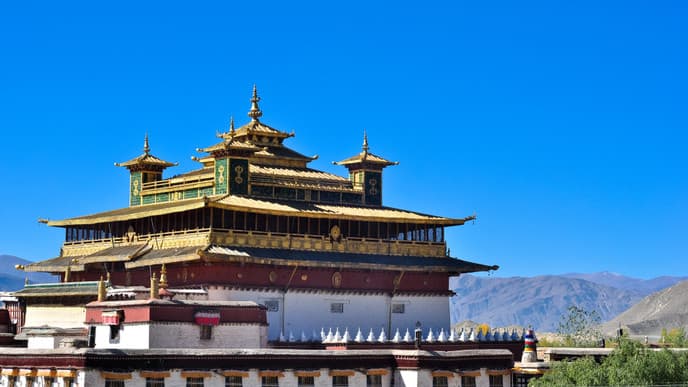
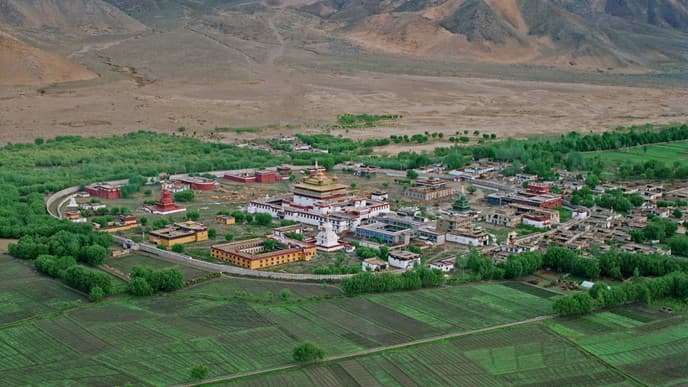
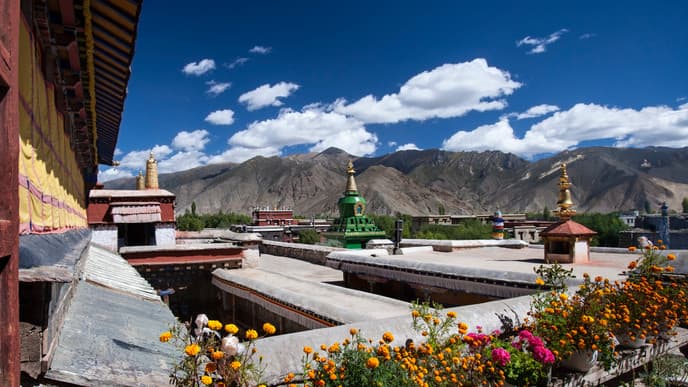
Samye Monastery is regarded as the first Buddhist Temple in Tibet. It was founded in 779 by King Trisong Detsen and located in the quiet piedmont area of the northern banks of Yarlung Zangpo River. Samye is also the first complete place with the three Buddhist jewels of Buddha, Dharma, and Sangha.
It has become a top destination for Tibetan Buddhists who will walk thousands of miles for weeks to finish their pilgrimage to this monastery. Today, you will also have a chance to enjoy a beautiful sunset view of the Yarlung Zangbo River.
Samye - Tsetang
Day 12: Head To Tibet's Third Largest City
Drive from Samye to Tsetang, which is the third-largest city in Tibet. Tsetang is known as “the cradle of Tibetan Civilization” for two reasons: first, its mild weather and fertile land conceived the great Tibet dynasty; second, it’s the birthplace of the first Tibetans who were said to be the offspring of a monkey and a demoness.
Today you will visit the Yumbulakang and Samye monasteries. According to a legend of followers of the Bon religion, Yumbulakang was erected in the second century B.C. for the first Tibetan king Nyatri Tsenpo, who was descended from the sky.
Yumbulagang became a shrine and under the reign of the 5th Dalai Lama, Ngawang Lobsang Gyatso, a monastery of the Gelugpa school.
Tsetang
Day 13: Farewell, Tibet!
After breakfast, drive to Lhasa Gongga Airport.
You can catch your flight home from here. Safe travels, and visit again soon!


