
Exploring South Korean culture and traditions
September 17, 2026
As distinctive as it is delicious, the food of Ethiopia is gaining new fans by the day, especially amongst vegans and vegetarians who are particularly well served. Traditional recipes make the most of simple, local ingredients and turn up the flavor using a tastebud-tingling blend of spices known as berbere. The most popular way for food to be served in Ethiopia is something akin to an Indian Thali, with lots of different spicy curries and accompaniments served together. This makes mealtimes a brilliant opportunity for trying a variety of flavor combinations and sampling several dishes in one go. Here we’ve outlined some of the cornerstones of Ethiopian cuisine to whet your appetite for an unparalleled foodie adventure.

This fiery, fragrant mix of up to 30 (but more traditionally 16-22) ground spices including chili, fenugreek, ginger, cardamom, paprika, nutmeg, coriander and cloves is one of the most important flavor factors in Ethiopian cooking.
Apparently most families have their own particular combination of spices, but the basic purpose is the same – to add a delicious base layer of fragrant spices along with the warming kick of chili to a wide variety of dishes. It is added to everything from stews to breakfast bread and honey, and is one of the classic tastes of the nation.

Ethiopians are faithful people, and the vast majority of Orthodox Christians follow the requirement to fast every Wednesday and Friday. Fasting in this context does not mean abstinence from all food and drink, but rather avoidance of all meat and animal products. So every restaurant makes an effort with enticing vegan dishes at least twice a week, and many cater for vegans every day.
Pulses, vegetables and grains are a big part of Ethiopian cuisine, and with the generous addition of spices there are some delicious vegan staples to tuck into. To try a selection, order a beyaynetu mixed platter.
Read more: Culture spotlight: the origins of modern Ethiopian culture

Every cuisine has a staple carbohydrate component to add bulk to meals, and Ethiopia is no different. You won’t get through a single day here without coming across injera, as it comes as standard with almost everything.
A giant, spongy, greyish pancake with a slightly sour flavor may not sound too appetizing, but it is a mighty useful addition to any meal. It is normally served as the base layer for the platter of varied ‘wats’ which are stews and curries, and the modus operandi is to tear off a piece of injera and use it to scoop up some stew in place of cutlery. Look out for the finest injera, which is pale and smooth and made of teff, a grain grown in the Ethiopian highlands.

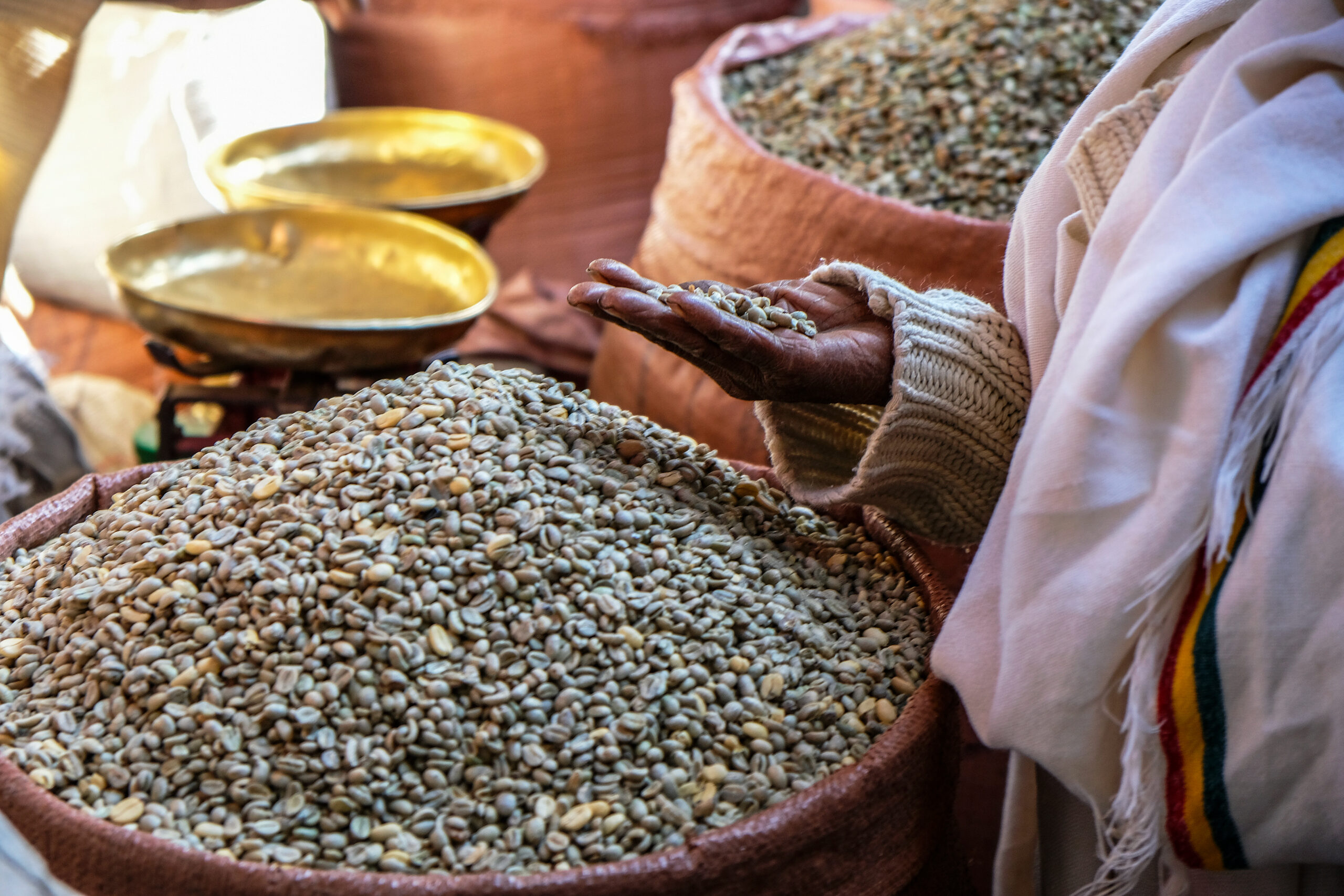
Luckily for all the caffeine lovers out there Ethiopia has a thriving coffee culture which, as the original home of the drink, it should have. If you take coffee with locals while you are in Ethiopia, you can expect quite a ceremony. The green beans are roasted from fresh over hot coals and when they begin to smoke and release their aroma the pan of roasting coffee is wafted around for everyone to enjoy.
At the same time, incense is added to burning coals in a special container, and the fragrance mingles with the scent of roasting coffee. When the beans are roasted, they are ground and added to the coffee pot where they are heated with water and served in small cups. Alongside the coffee, a sprig of rue is often served, which is an aromatic herb that you can steep in the hot coffee for a few seconds if you like, adding a slight citrus edge to the flavor.
Read more: The world’s top coffee-producing countries


Other than coffee, which is the nation’s fuel, there are a couple of other classic Ethiopian drinks that are worth trying:
Read more: A beginner’s guide to Ethiopia

If you wish to explore the wonders of Ethiopian cuisine in depth, our local experts in Ethiopia are perfectly placed to help. Reach out to them today to get started with planning your tailor-made journey.
Join our mailing list for travel inspiration, trip recommendations, and insights from our local experts.