An insider’s guide to Split, Croatia
October 5, 2026
Picture a trip to Italy, and you’ll likely imagine sparkling Mediterranean vistas, the sunny glint of an Aperol Spritz, colossal ancient ruins that ooze grandeur, and worldly artistic masterpieces such as the Sistine Chapel. Well, these iconic Italian sights are yours for the taking if you plan the perfect Amalfi Coast trip from Rome. Read on to start imagining it for yourself…
A tour of Rome and the Amalfi Coast offers Italy at its best: combining the capital’s ethereal ancient history, style and glitz, with the scenery and sea air of multi-colored Amalfi. You can chat to one of our locally-based travel experts in Italy to build this tour, but to start planning yourself, here are some of our top tips…
After flying into Rome, the heart of Italy, you can spend a few days in the capital before traveling the 270km (168 miles) to the Amalfi Coast. By car it takes three to four hours, and slightly longer by train and bus, around five hours. To break up the journey, going by car gives you the freedom to stop off in Pompeii to explore the fascinating yet tragic ruins of the famous volcanic eruption. Note there are tolls on the highway (autostrada), costing around €15-20 one way.
The Amalfi Coast is one of the most visited parts of Italy, and in recent years, the peak season can be somewhat marred by overtourism. To avoid the strongest crowds, try visiting on weekdays outside of July and August. There are fewer people throughout the shoulder seasons (April-May, September-November) and accommodation is cheaper, too.
We recommend taking at least a week for a Rome and Amalfi Coast itinerary – ideally, seven to 10 days. Wherever you go in Italy, it’s not a place to rush, if you can help it. Taking just over a week gives you the ideal opportunity to slow down and absorb the daily sensations of exploring this European gem.
First stop, Rome – one of the world’s most legendary capital cities. Richly layered, atmospheric and chic, and once home to one of ancient history’s most powerful empires, there’s a reason it sits at the top of so many travel bucket lists.

Rome’s sublime ancient ruins are its biggest draw, with an historic majesty that tells the story of its once dominant, imperial past. The most recognized showstopper is the Colosseum, where gruesome gladiatorial events were the main form of public entertainment from around 80-600 AD. There is always a queue to enter, but it’s worth the wait – it’s a surreal and memorable sensation standing in the wings of the 50,000 seater amphitheater, imagining the bloody spectacles that occurred before jeering crowds.
Right next door is the Roman Forum, a collection of crumbling ruins that formed the heart of ancient Rome’s political and social life. These days, its humble residents are dozens of stray cats.
It’s one of the Catholic world’s most important pilgrimage sites, but you don’t need to be religious to feel awe-struck in Vatican City. A small city-state, it’s incredible how many sublime structures are crammed into its 0.44 sq km of space.
The main square is where crowds gather, eager to cheer the Pope when he appears on the balcony of St Peter’s Basilica (of recent note in May 2025, when Pope Leo XIV, the first American-born pope in history, was inaugurated). Inside the Basilica is a jaw-dropping display of soaring vaulted ceilings, huge iconic effigies, and gold-lacquered shrines.
Of course, one of the jewels of Vatican City is the Sistine Chapel, where visitors are taken on a life-affirming journey through Renaissance art, as they move beneath Michelangelo’s immense ceiling frescoes. This is a crowd-pleaser, so try to visit early hours if you can to beat the hordes.

The Sistine Chapel isn’t alone in its artistic glory; Rome and Vatican City are a living gallery of Renaissance and Baroque masterpieces. As well as the plentiful Raphael and Michelangelo to admire at the Vatican Museums and Sistine Chapel, you can make your way to Piazza Navona, where Bernini’s Fountain of the Four Rivers is a vision in marble, framed by the aesthetic facade of the church of Sant’Agnese in Agone.
Just a short walk away there’s San Luigi dei Francesi, a gorgeous church that’s home to a trio of striking Caravaggio paintings. Elsewhere, Rome’s biggest private gallery, Galleria Doria Pamphilj offers an intimate collection of Renaissance and Baroque art – over 650 pieces – including works by Raphael, Caravaggio, Titian and Velázquez.
As the world knows, Italy and good food need zero introduction, and the capital is as grand a place as any to become acquainted with the country’s stunning gastronomy. Whether you’re in the mood for prosciutto-stuffed focaccia, a forkful of rich cacio e pepe or a zingy scoop of gelato, Rome serves up the goods at every turn.
Head to Campo de’ Fiori for a glut of seasonal fruit and cheeses, or swing by Mercato Centrale near Termini station, a modern food hall where you can sample everything from Sicilian arancini to Roman-style pizza under one roof. Testaccio Market is a local favorite known for its mix of traditional Roman produce and local street food stalls, while Trastevere is a laid-back neighborhood with lovely, ivy-covered trattorias.
Don’t forget dessert! Otaleg (“gelato” spelt backwards) is one of the best places for the creamy, icy treat – with exciting, offbeat flavors like fig and ricotta and cinnamon pear.
Though delightful food is simply everywhere in Rome, do some research before booking dinner or ask a local travel expert for recommendations – there are many expensive tourist traps, particularly around the big sights in the center.

To break up the journey from Rome, Pompeii makes for an enriching site to add to the Rome to Amalfi itinerary.
On the way to the coast, stop off at the famous ruins of Pompeii. This ancient Roman city, frozen in time by the eruption of Mount Vesuvius in 79 AD, is one of humankind’s best-preserved insights into everyday life of nearly 2,000 years ago.
Wander through remarkably intact streets, past villas with intricate mosaics and even graffiti still visible on the walls. From the amphitheater to the haunting plaster casts of residents, the site is both fascinating and sobering. A locally-guided tour is recommended, as it really brings the ruins to life.
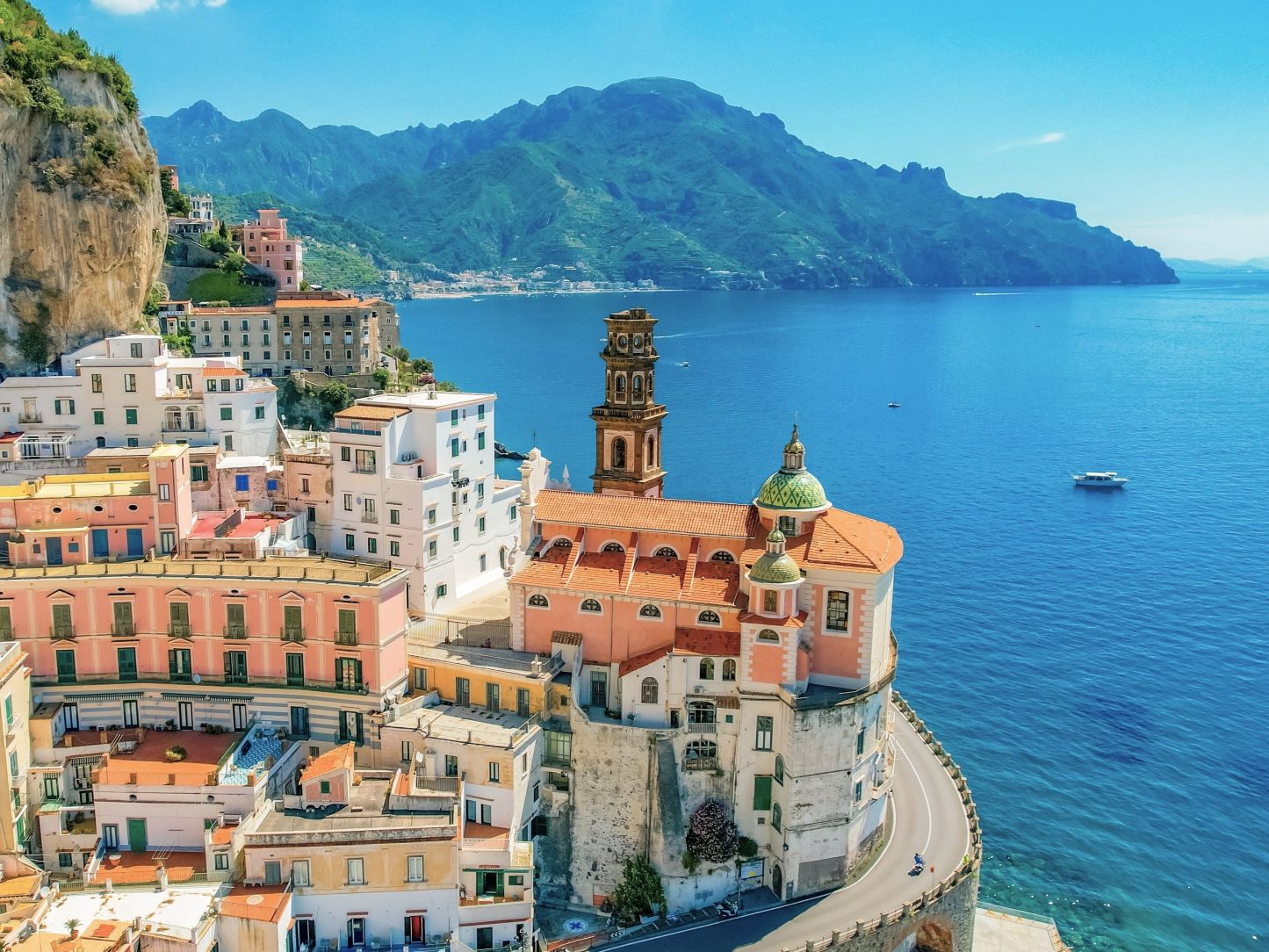
Onto the sublime Amalfi Coast, where a cascade of candy-colored houses cloak the cliff edges, and the sparkling Tyrrhenian Sea stretches out beneath. It’s often busy here, but good timing and preparation will unlock the magic of this cluster of coastal villages.
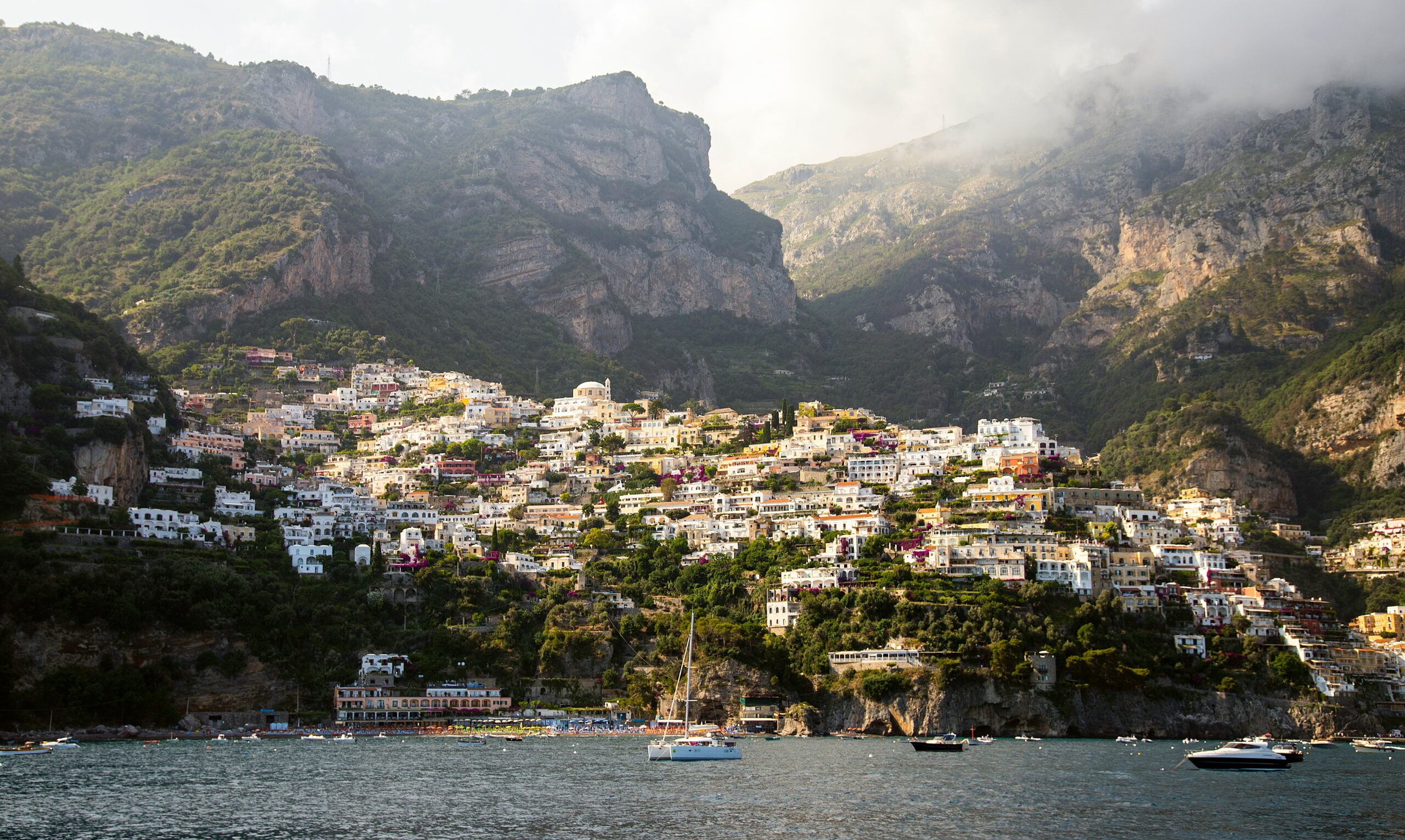
Two popular bases for a trip to Amalfi are Sorrento and Positano; both are exquisite, each with easy access to the other should you wish to day trip (the ferry between takes about 40 minutes). Sorrento is charming – blooming with scented lemon groves, cliffside cafés and the cobbled lanes of the Old Town. Sit with an espresso before stunning views, or take a dip at Marina Grande.
Positano is a photographer’s dream, with hot pink bougainvillea seemingly framing every shot. Pop into artisanal leather shops, grab a wine in one of the elegant trattorias, or sprawl out on the sands of Spiaggia Grande.
For a boat expedition straight out of a James Bond movie, you can’t beat an ocean adventure in Capri. The Mediterranean glitz of this dolce vita experience can’t be understated. Many float out to the Blue Grotto, a sea cave with water of such a glorious blue, as if the saturation were ramped right up. Back on land, designer boutiques and chic coffee shops abound, to sip a cappuccino and sit back like a true islander.
For walkers who want to take on the iconic cliffs by foot, the Sentiero degli Dei (translated, ‘the Path of the Gods’) is a legendary trail that winds high above the Amalfi Coast. The classic route runs from Bomerano, a quiet hamlet in the hills, to Nocelle, a tiny village just above Positano. The walk takes up to three hours, and the views are sublime; with terraced vineyards, wild flowers, wandering goats, and the ever-present shimmer of the sea.
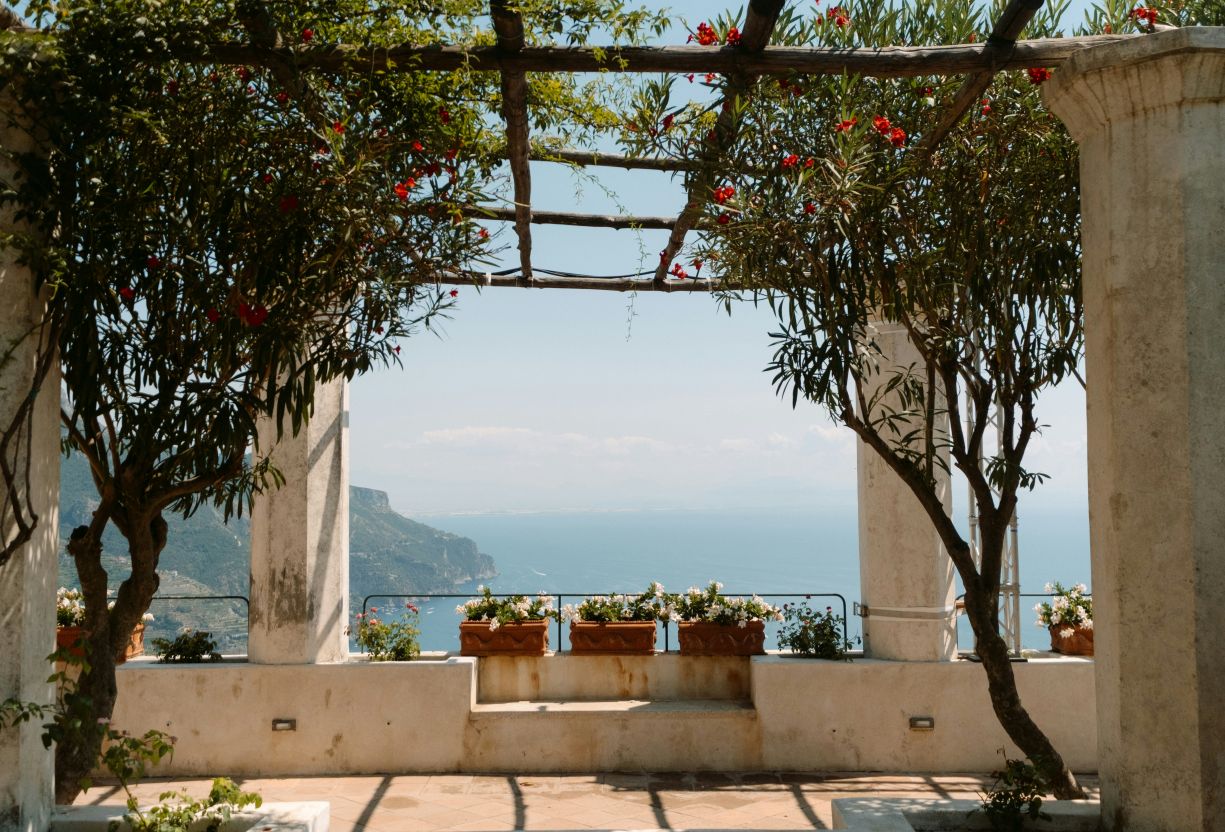
Meanwhile, Ravello is a peaceful hilltop town beloved for its artistic heritage and ethereal gardens. The Villa Rufolo and Villa Cimbrone offer flower-filled terraces and panoramic vistas that blend sky with sea. In the summer, classical music fills the air as the town becomes an open-air concert venue.
Take the hassle off your plate of planning the perfect Amalfi Coast trip from Rome: get in touch with one of our local travel experts in Italy. They’re based within the destination, with all the in-depth local knowledge needed to build you the itinerary of a lifetime, taking you on an epic Amalfi Coast trip from Rome.
Explore all featured destinations