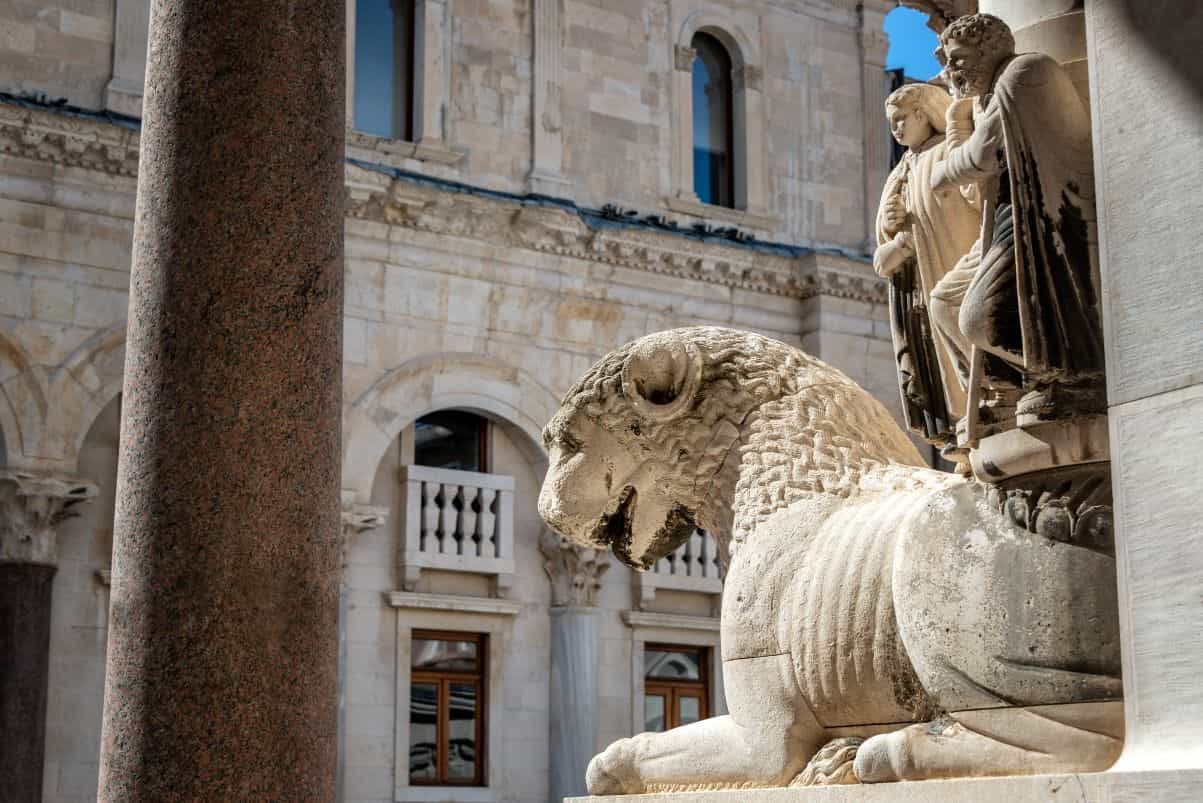
An insider’s guide to Split, Croatia
October 5, 2026
Tunisia – probably the most cinematic country you’re not thinking about. Most of us would be hard-pressed to point to the country on a map, let alone picture what it’s like. So let us help you out. Tunisia is what you get if you cross the Star Wars landscapes with vibrant North African medinas and a dash of Mediterranean style. It’s the northernmost country in Africa, just an hour’s flying time from Sicily and fringed by the Mediterranean Sea. The effect is a country with a dual personality: a distinct European aesthetic drifts gently through it, mingling with a deep Arabian culture and ancient Berber heritage. If you’re wondering, is Tunisia worth visiting? The short answer is yes – and then some. This beginner’s guide explores some of the best things to do in Tunisia.
As a vacation destination, Tunisia packs an astonishing range of experiences into a relatively compact country. Traveling in Tunisia you’ll find stunning coastlines with beautiful beaches and charming coastal resorts, whitewashed villages clinging to cliffs above the sea and iconic desert landscapes. Once part of the Roman Empire, it also has enough ancient sites to satisfy the most ardent history lovers.

The capital, Tunis, perfectly represents the fusion of North African and European culture. A modern metropolis and ancient city dating back centuries, it was once one of the greatest and wealthiest cities in the Islamic world and is still one of the most rewarding places to visit in Tunisia.
One of the top things to do in Tunisia is to visit the capital’s Medina, a UNESCO World Heritage Site and one of the best-preserved historic quarters in the Arab world. Wandering its narrow alleyways is less about ticking off landmarks and more about absorbing the atmosphere and haggling for a bargain.
The Marché Central is the place to grab some authentic harissa or just to see local life. Traders display fish, bread, olives and, in the spring, mounds of perfumed flowers. Then, away from the souks and markets, the city shifts character. Around the Ville Nouvelle you’ll find wide boulevards, pavement cafés, the ornate cathedral, and even an Art Nouveau theater reflecting Tunisia’s French colonial past.
Roman emperors, Phoenician traders and Byzantine rulers all left their mark on Tunisia, making it one of North Africa’s richest countries for archaeology, and many of its most impressive sites are surprisingly uncrowded.
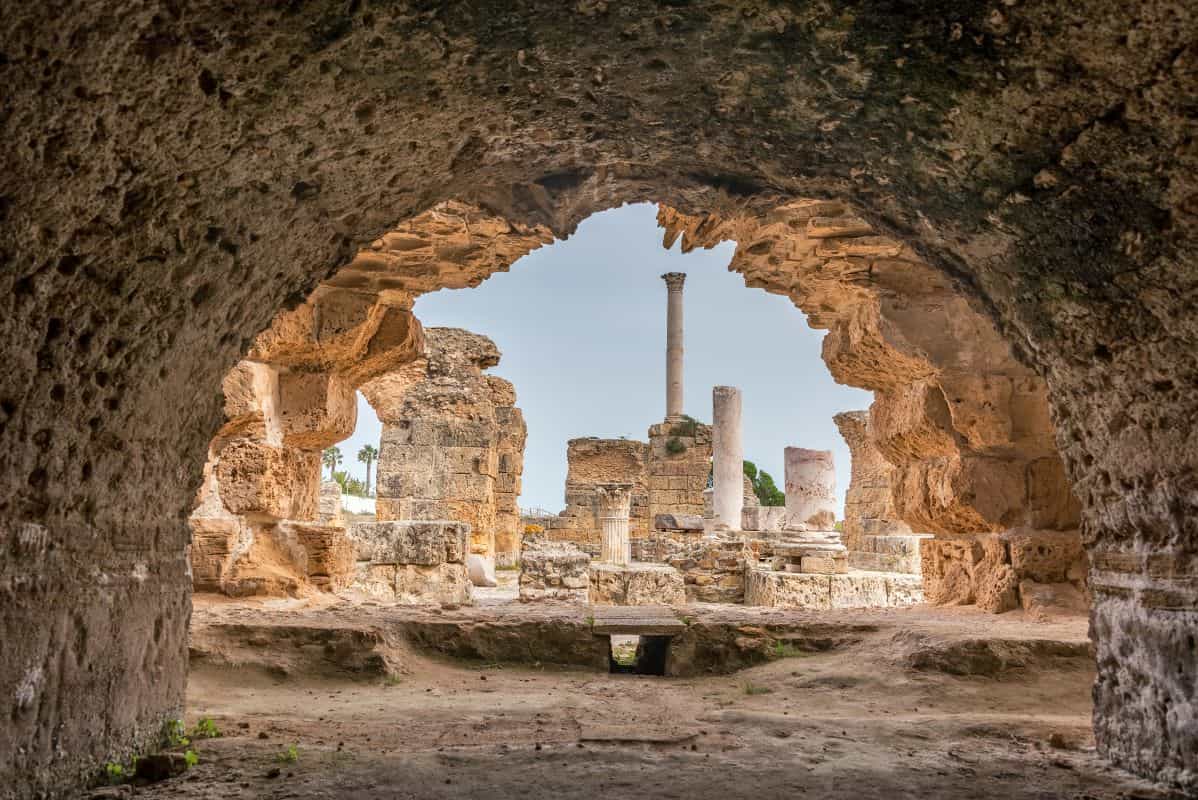
One of the best, just outside of Tunis, is Carthage, which once rivaled Rome as a center of ancient civilization, wealth and trade. You can visit the archaeological sites of Carthage on a single ticket and stroll its Roman baths, villas and archways while overlooking the sea.
You don’t have to be a history buff to be blown away by the extraordinary collection of Roman mosaics at the Bardo National Museum in Tunis, many of which were excavated from sites across the country. Seeing them before or after you’ve visited Carthage will highlight the artistic and cultural sophistication of Roman North Africa.
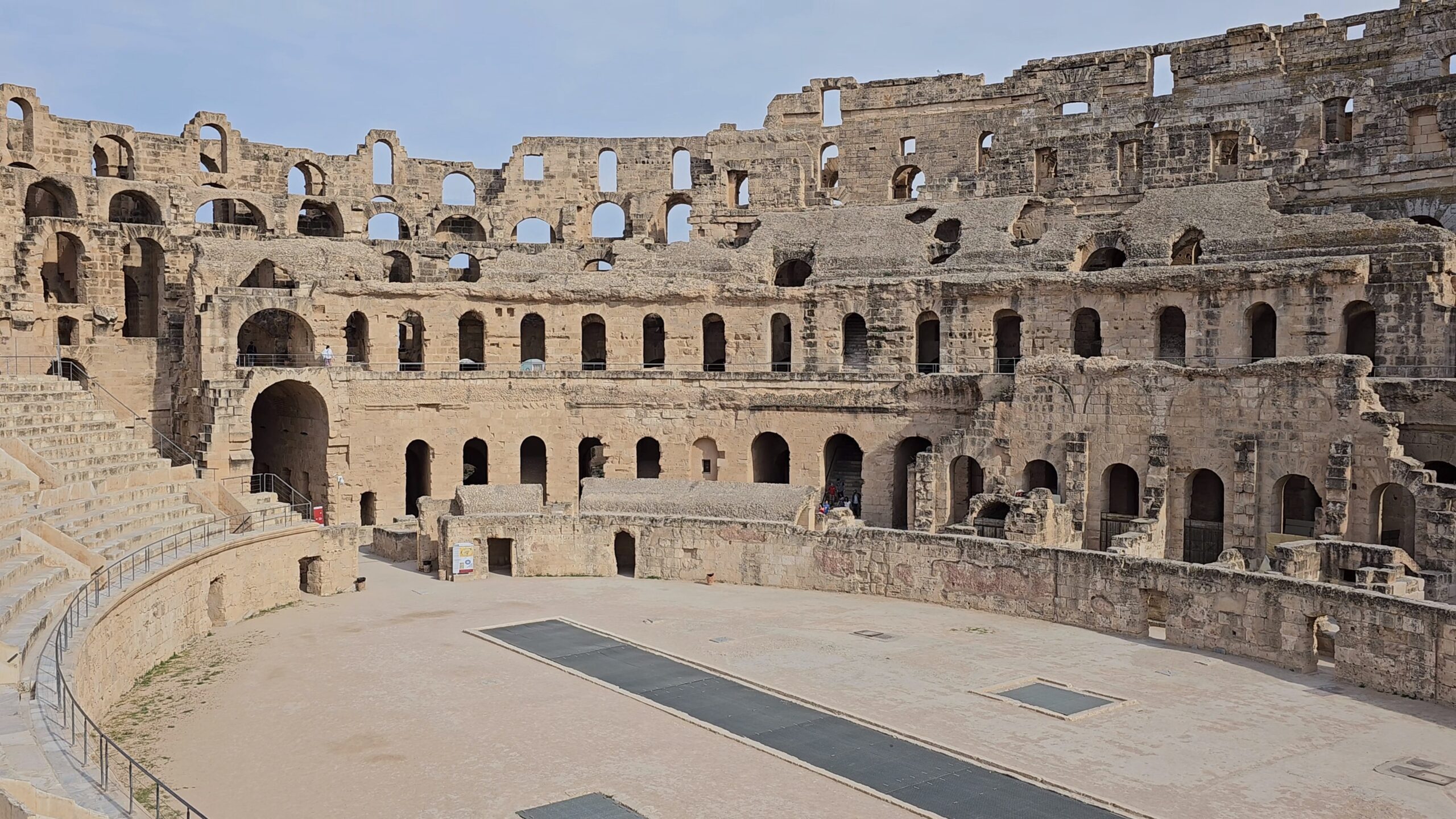
Further south, the El Djem Amphitheater is one of Tunisia’s most famous landmarks and one of the best-preserved Roman amphitheaters in the world. Once holding up to 35,000 spectators, it’s just as impressive as Rome’s Colosseum but receives a fraction of the visitors. You can take your time to explore, visiting its underground passages and climbing to the upper tiers, which gives a powerful sense of its scale and significance.
Read more: Experience Tunisia: hidden treasures away from the beaches
For panoramic views alongside your history, visit the Ribat of Monastir on the coast. It’s an impressive 8th-century fortress and part of Tunisia’s medieval defenses, with labyrinthine passageways, courtyards and towers with crenellated walls. It might amuse you to know that many scenes from Monty Python’s Life of Brian were filmed here!
Dougga feels worlds away. Set amid rolling hills and farmland, this Roman city is widely regarded as one of the best places to visit in Tunisia for history lovers. Temples, theaters, and bath complexes stand largely intact, surrounded by open countryside. Nearby, Bulla Regia reveals another side of Roman ingenuity, with underground villas built to escape the summer heat, their mosaics still striking today.
Southern Tunisia is a world shaped by sand, stone and sky, where the Sahara isn’t just a backdrop but a defining element, and where you’ll find some of the most memorable experiences and dramatic scenery in the country.
The gateway to the Sahara is Douz, and the place to go if you’re looking for fun things to do in Tunisia. Take a camel trek, go quad-biking or take a 4×4 excursion into the dunes, watching the landscape shift from palm groves to vast landscapes of sand. Spending a night under the stars, far from artificial light, is one of the most unforgettable things to do in Tunisia.
One of the most surreal experiences is crossing Chott el Djerid, a vast salt lake stretching across southern Tunisia. Heat and light create mirages that blur the horizon, giving the landscape an otherworldly quality, particularly at sunrise and sunset.
The desert is also home to distinctive architecture, such as in Matmata, where families still live in underground homes carved into the earth to escape extreme heat. Nearby, you can see ancient fortified ‘desert castles’ known as ksour, powerful examples of Berber architecture and adaptation to harsh environments.
Beyond the dunes, a chain of mountains, palm-filled valleys, rocky canyons and waterfalls create some of the most beautiful sights in Tunisia. These oases have supported communities for centuries and remain vital stops on desert routes. You can visit the palm-fringed oasis of Chebika, the historic village of Midès, and the turquoise-colored waterfall of Tamerza.
Read more: Discover Tunisia’s villages off the beaten track

Tunisia’s Mediterranean coastline stretches for hundreds of miles, dotted with lively resort towns and quiet fishing ports. One of the best places to visit in Tunisia – and one of the most photographed – is Sidi Bou Said, just north of Tunis. With its blue-and-white houses overlooking the sea, leafy streets and relaxed cafés, it’s long been a favorite with writers and artists. Just along the coast, you’ve time to combine it with arty La Marsa, where you can hit the beach in the late afternoon and watch the sun go down.
Just an hour apart you can choose between two popular beach towns, Sousse and Hammamet, both of which are also home to historic medinas, more of which later:
On Djerba Island, life slows down. Palm-lined beaches, traditional markets and a strong sense of cultural continuity define the island, which is also home to one of North Africa’s oldest Jewish communities. For a more low-key coastal experience, Bizerte offers fresh seafood, an atmospheric old port, and a distinctly local feel.
Read more: Touring Tunisia: Q&A with a local travel expert
Experiencing the medinas or souks is one of the best things to do in Tunisia, combining a real slice of life with a piece of living history. There are plenty of places to experience these vibrant markets, so don’t worry if you missed out in Tunis.
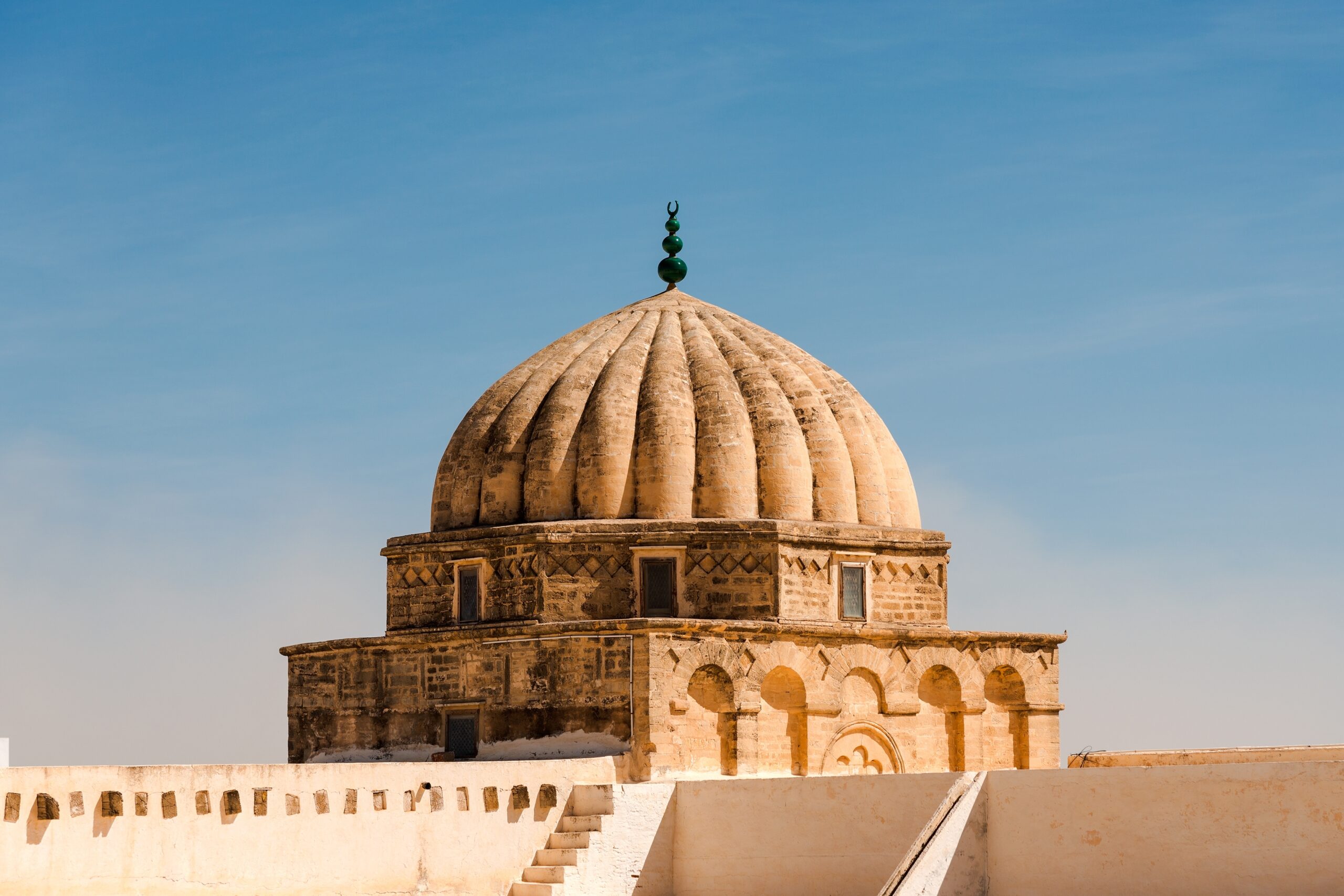
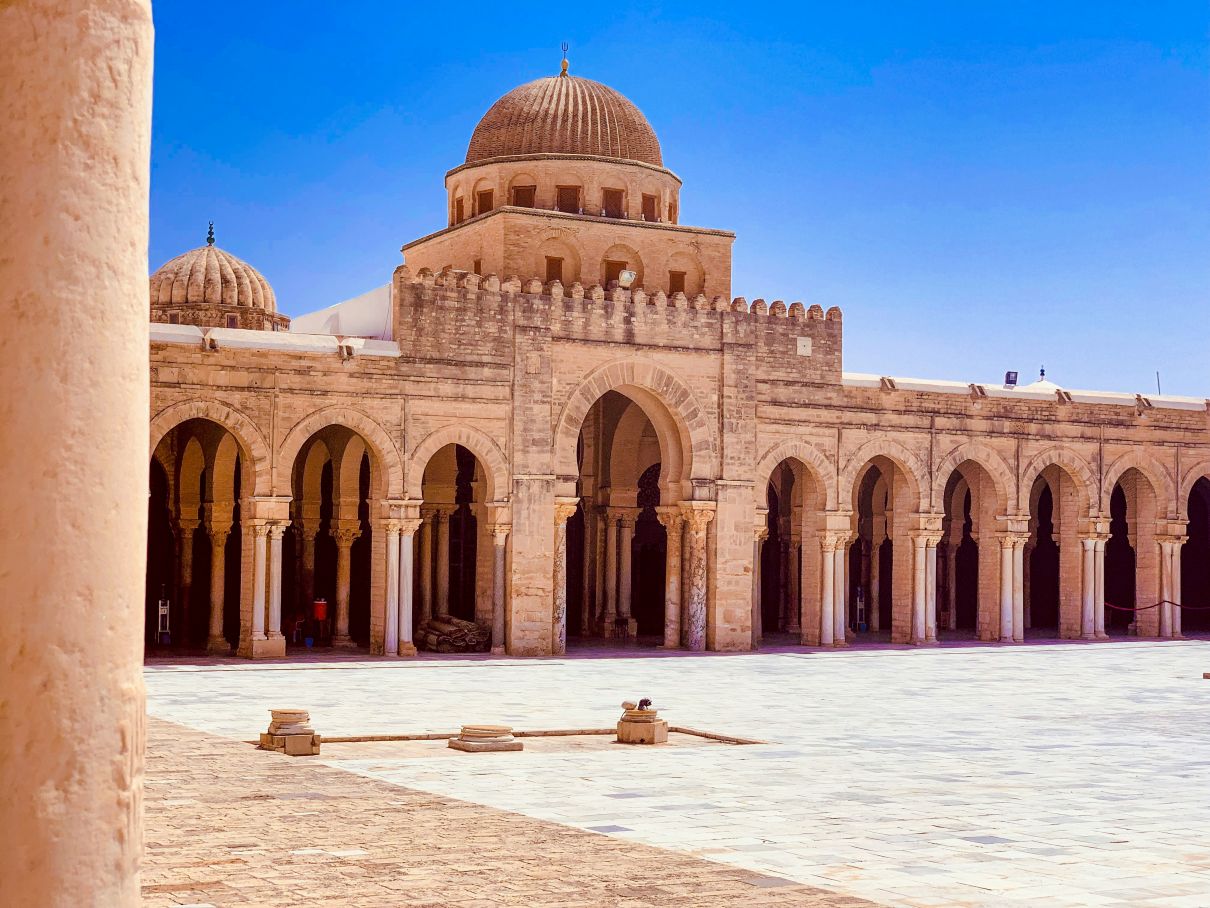
The beautiful 9th-century medina in Sousse is one of the most atmospheric and Nabeul is considered less touristy than many medinas in Tunisia. Kairouan is one of the best preserved, and the pace here feels slower. Be sure to take in the 9th-century Great Mosque, one of the most important religious buildings in the Islamic world.
Passing through monumental gates into the medina at Sfax, you’ll find one of the most authentic market experiences in the country. Here the focus is less about tourism and more about local people shopping for goods, making it an ideal place to observe traditional trades and daily life.
For some visitors the most important sights are less historical and more cinematic. Tunisia’s landscapes have long captured the imagination of filmmakers, most famously as locations for the Star Wars saga, now some of Tunisia’s top tourist attractions.
Fans can visit Ksar Hadada, a former Berber granary used as slave quarters in The Phantom Menace, and Ong Jmal, a remote desert site near Nefta where Luke Skywalker’s homestead once stood against a backdrop of endless sand. You don’t need to be a Star Wars aficionado to appreciate these locations and take in the picturesque quality of Tunisia’s powerful scenery.
Elsewhere, one of the most authentic things to do in Tunisia is to experience a traditional hammam, an ancient and immersive cultural experience dating back centuries and still a part of Tunisian daily life. Hammams, roughly translated as public bath houses, come in all forms – from smaller, traditional establishments with ornate Tunisian interiors, to modern luxurious spas with pools and beauty treatments. Try a traditional hammam experience and you’ll be steamed, exfoliated, cleansed and massaged, emerging relaxed and rejuvenated.
Ideally you’ll spend seven to 10 days in Tunisia, which gives you time to visit famous cultural landmarks, see the spectacular Tunisian landscapes, and get a flavor of Tunisian cities, coast and desert in a single itinerary.
Read more: The filming locations of Tunisia
Seize your chance to experience Tunisia‘s many natural, historical and cultural draws on a tailor-made trip, entirely planned by our locally-based, English-speaking travel experts. They’ll take care of all the finer details, so that you need not lift a finger. Get in touch with them today to start planning.
Explore all featured destinations