A beginner’s guide to Sardinia
May 28, 2026
There’s no shortage of wonders in India. The country’s many famous palaces collectively represent just one of them, but by any standard, that’s quite a bit of wonder. In this guide, we’ll examine certain famous palaces in India, scattered across the many corners of this idiosyncratic and unique nation, from Jaipur and Udaipur to Kerala, Kolkata, and other stunning cities. In the interest of novelty, several sites that make it to other “best royal palaces of India” lists aren’t featured here. But rest assured, every location we cover stands out for many special reasons.
Umaid Bhawan Palace is one of the “younger” landmarks on our list, having been constructed from 1929 to 1943.
This sprawling palace of Rajasthan’s former Jodhpur royal family ranks among the world’s largest private homes. Although the residence is off-limits and the site’s hotel portion is quite expensive, the remaining third is a museum and offers a fascinating window into the latter-era Maharajas of Jodhpur.
The gleaming golden sandstone architecture of Umaid Bhawan speaks to its historical significance, being a fusion of western and Indo-Saracenic styles. Beautiful flower gardens cover large shares of its 26-acre area, whereas the interior stands out for (among other things) its muralwork and woodwork.
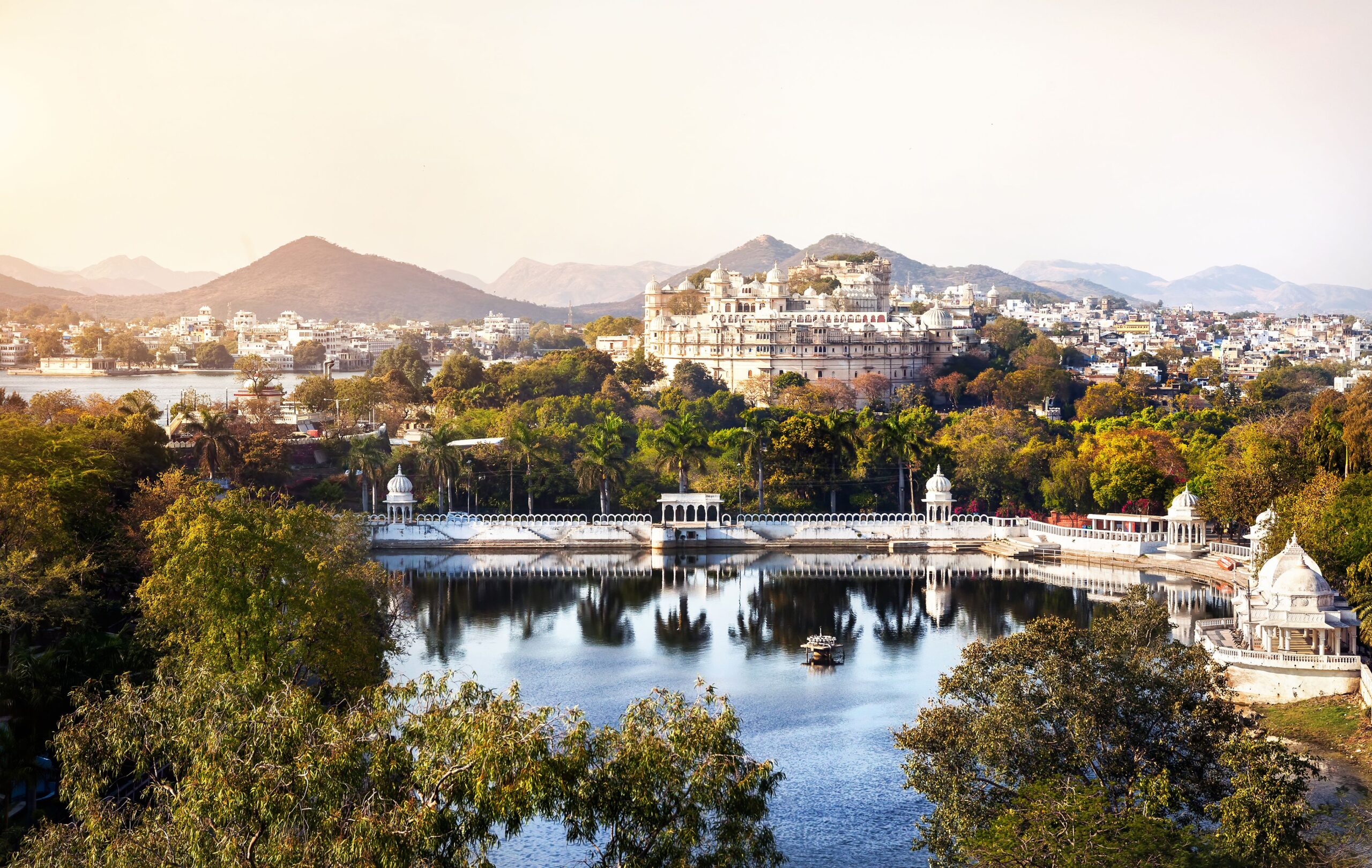
Another royal abode, this one much older (construction began in 1551 and only concluded a century later). Built atop an island in the man-made Lake Pichola, Jag Mandir served as a party venue and resort residence for the Sisodia royal family of the old Mewar kingdom.
The palatial site is divided into multiple distinct structures, so it can be a little tricky to navigate as a first-timer. The main eponymous palace is an undeniable must-see, with the remarkable towers at its corners and the colonnade at the entry pavilion making for particularly memorable sights. Overall, the Jag Mandir showcases an interesting blend between Hindu and Mughal architectural styles.
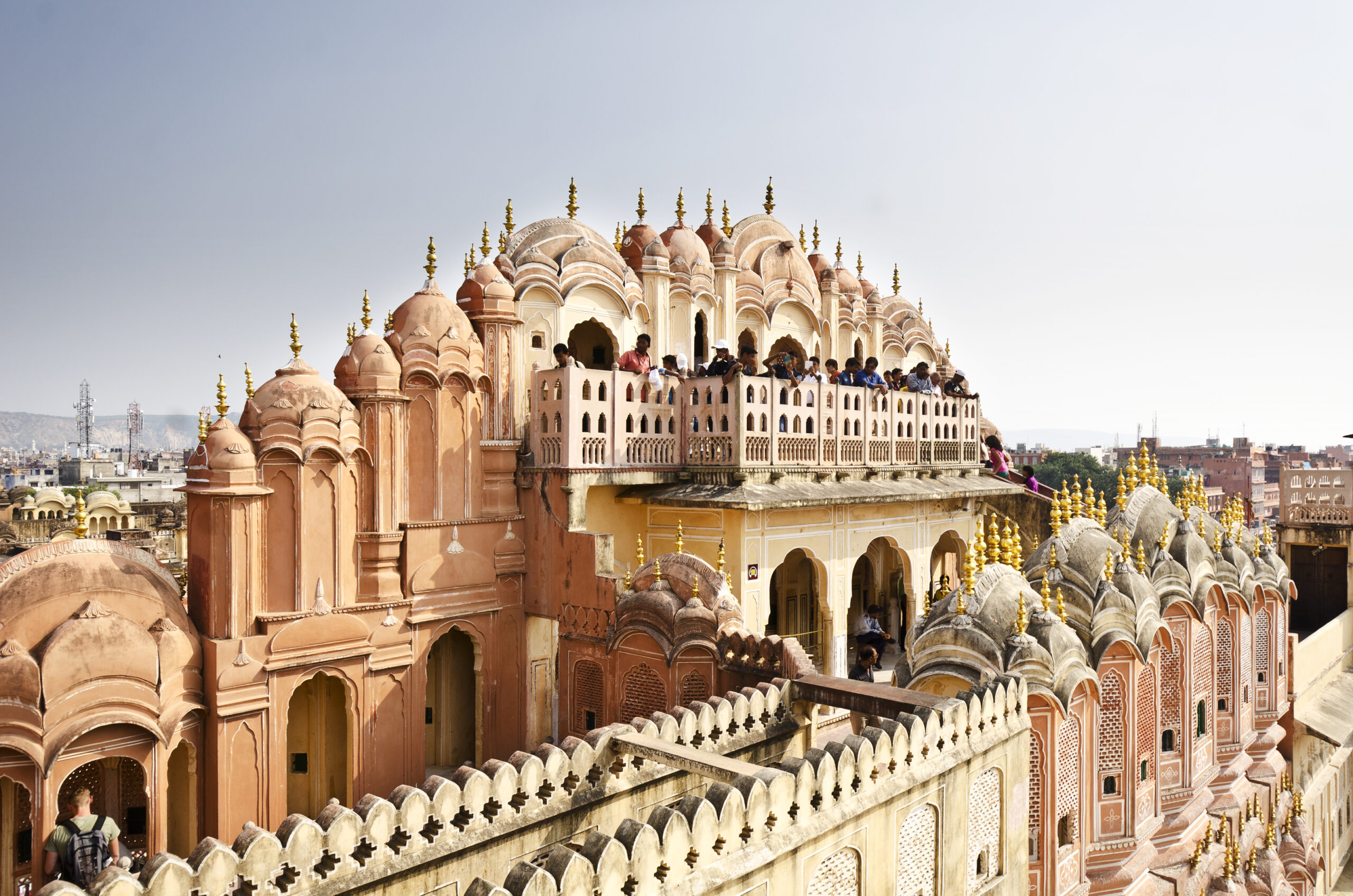
Though this site in Jaipur is technically on the edge of another royal palace in India (the City Palace), we feel it’s even more worthy of specific mention for its unique architecture. If nothing else was interesting about this castle save its eastern (technically rear) facade, that would be enough. (A total of 953 painstakingly carved niches comprise it, highlighted by bursts of red and pink sandstone amid the primary white stone.)
Inspired by the ruins of Khetri Mahal elsewhere in Rajasthan, Rajput Emperor Maharaja Sawai Pratap Singh spearheaded construction of the Hawa Mahal in 1799. As it was restored in 2006, it retains much of its original detail. Take a pause while exploring the interior of the palace’s main chamber and bask in an explosion of color from the multi-hued glasswork.
Read more: Get to know Rajasthan, India’s spiritual hub
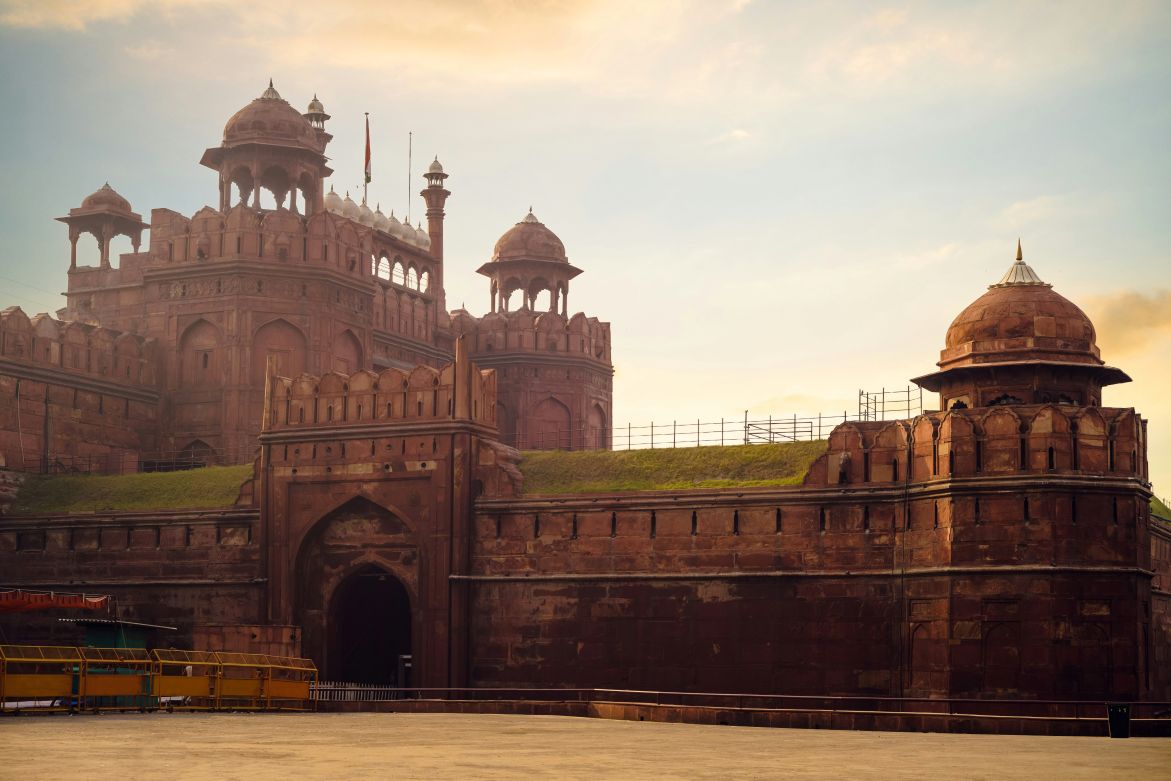
This 17th-century fort (and UNESCO Heritage Site) epitomizes the elegant visual aesthetic of the Mughal era, despite taking some influence from Islamic architecture of the time. From the moment you set eyes upon the Lahori Gate entrance, the Red Fort does nothing but keep your jaw dropped.
The Gate, where the flag of Indian independence still hangs on every celebration of that day, is a portal to a plethora of other structures and landmarks. Right inside the entrance lies the Chhatta Chowk market, where modern stores operate like craft vendor stalls of bygone eras. The imperial enclosure includes many buildings of bright white stone with remarkable columns and cupolas, like the Moti Masjid, Khas Mahal, and Rang Mahal.
Some areas of the Red Fort are in much better condition than others, with restoration efforts having only begun in the past decade.
Some Indian palaces built in the British Raj era (1858-1947) echo European styles rather than endemic architectural forms. The Jai Vilas Mahal in Gwalior stands out prominently as one of the former. Interestingly, it splits its styles between its three floors: Tuscan, Italian-Doric, and Corinth (in ascending order).
Opulence was the order of the day in Jayajirao Scindia’s life, as Gwalior’s last maharaja. (Over 300,000 gold leaves went into the Reception Hall of the Jai Vilas alone, for example.) This is even better reflected in the museum galleries that make up much of the palace, devoted to the Scindia family’s textile tapestries, silver buggy, Persian carpets, and the bedchambers of Scindia’s wife (the Maharini). A visit to the Jai Vilas thus doubles as a detailed window into colonial-era Indian history.
Mysore would be one of the most popular tourism hotspots in northern India even without its eponymous palace. But as an epicenter for the Hindu Dasara festival and an architectural wonder, the granite palace also known as Amba Vilas draws over three million visitors a year.
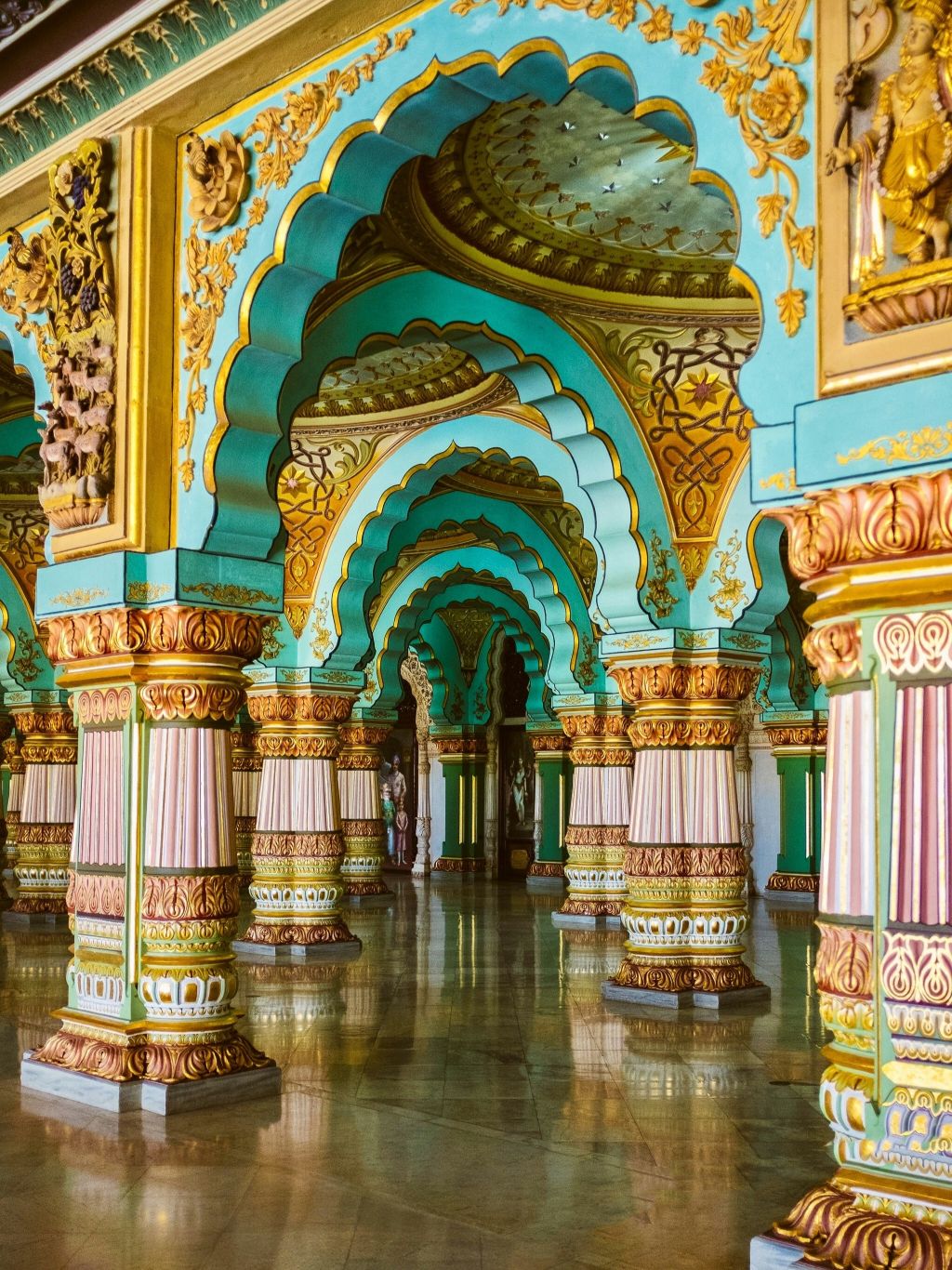
The structure’s bursts of pink amid the gray stone (at the top of the cardinal towers and various spots along the second-story facade) immediately catch the eye. Inside, the Islamic design elements of the palace’s Indo-Saracenic architecture (columns leading up turquoise arches) dominate the Audience Hall, while the Durbar Hall is known for its golden columns. Look up at any time and you may see stunning paintings on the ceiling, mostly of various Hindu iconography.
Visit India during Dasara to catch the palace lit up all over, along with plenty of folk art and traditional celebrations.
Read more: The essence of India: Q&A with a local expert
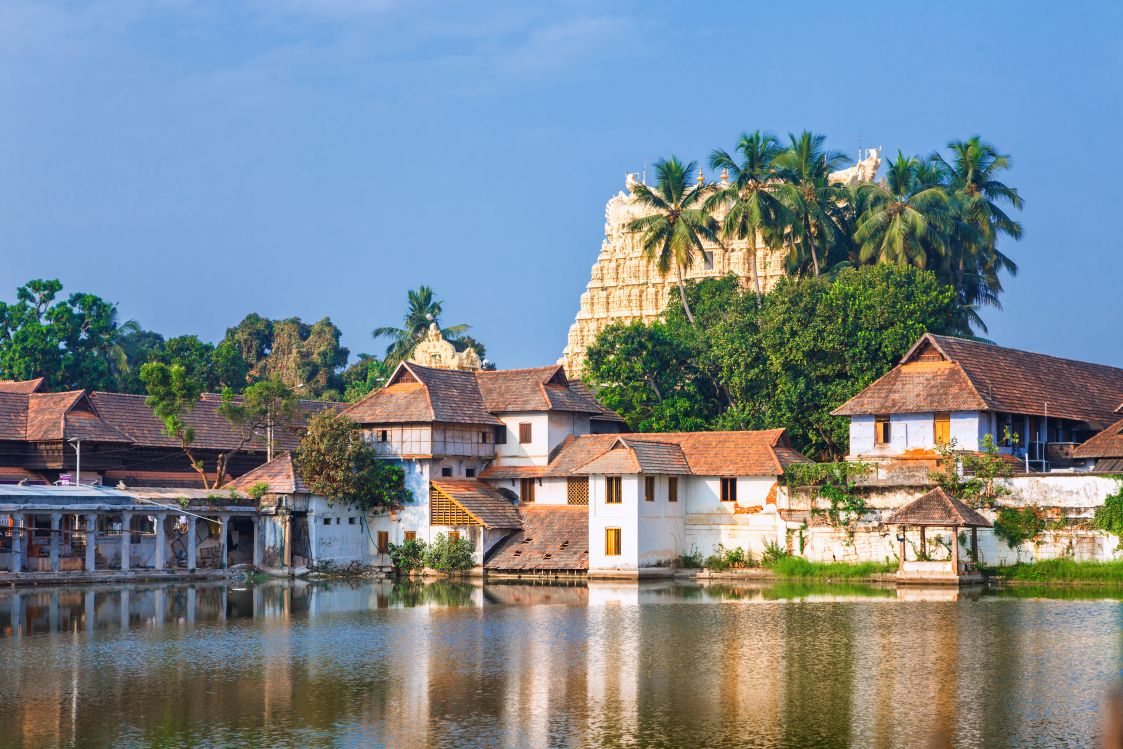
The Padmanabhapuram Palace of South India marks the onetime home of the Travancore dynasty that controlled (or supervised, in the Raj period) much of modern Kerala from 1729 to 1949. Unlike numerous sites on this list, it’s largely made of wood, a hallmark of traditional Kerala architecture. In fact, it’s the country’s biggest wood-and-granite palace and one of the biggest in all Asia, making it an exceptional site to explore on any trip to India.
Major structures like the central mansion, Thai Kottayam, and the Summer Palace all feature intriguing curiosities: a bedstead made of 64 different wood types, an interior courtyard in the nalukettu style, and a museum of Keralan antiques, respectively. The murals of Padmanabhapuram are among the best preserved examples of their kind in Kerala, while the intricacy of the woodwork throughout the palace is a sight to behold.
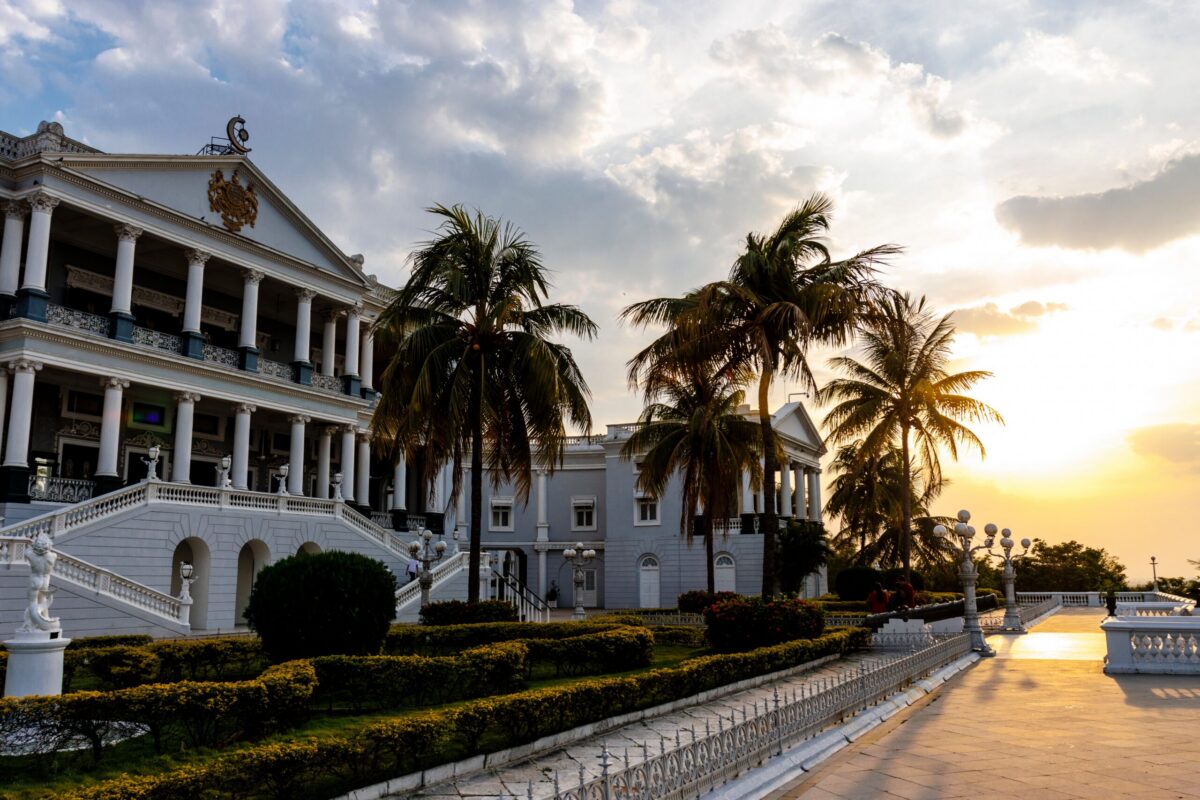
Upon this palace’s construction in the late 19th century, it was Hyderabad’s tallest building at about 160ft tall. Today, the city’s skyscrapers dwarf Falaknuma Palace, but they do nothing to diminish its splendor. The white marble structure sits on a hill overlooking downtown, giving a luxurious view (albeit one that clashes with the palace’s Raj-era architecture).
Falaknuma’s interior is also strongly UK-influenced. Its library roof and billiards tables are just three elements directly mimicking British landmarks (Windsor Castle and Buckingham Palace, respectively). Since 2010, the 32-acre palace has been open to the public as one of the Taj brand’s Indian palace hotels.
As this palace was built by two different dynasties of Tanjore leaders in two different eras, structures within the complex clash with one another. The Bell Tower (Maadamaaligai) dates back to the 15th century Nayaks and echoes Hindu styles of that period. By contrast, the Arsenal Tower, largely constructed in the mid-1800s by the Marathas, is much closer to Indo-Saracenic.
Visiting the palace that Tamil Nadu locals call Thanjavur Aranmanai gives you access to the Saraswathi Mahal Library and Rajah Serfoji II’s Memorial Hall. Along with many centuries-old artifacts of multiple eras, you’ll see vibrant paintings, sculpture, earthenworks, rare manuscripts, and much more.
As one of India’s most prominent Neo-Classical buildings, the Marble Palace is a relative rarity among the nation’s architecture (outside of Kolkata, which has several such sites) and objectively quite beautiful to behold. As a centerpiece of Raj-era grandeur, its legacy is far more complicated than its appearance. (Also, you’ll need advance permission from local tourism authorities before you can visit.)
It’ll likely be of greatest interest to lovers of Baroque art, as its collection of originals (including more than a few Rubens) is remarkable. The 126 marble types that went into its construction are arguably best seen in the floor inlays of the music room.
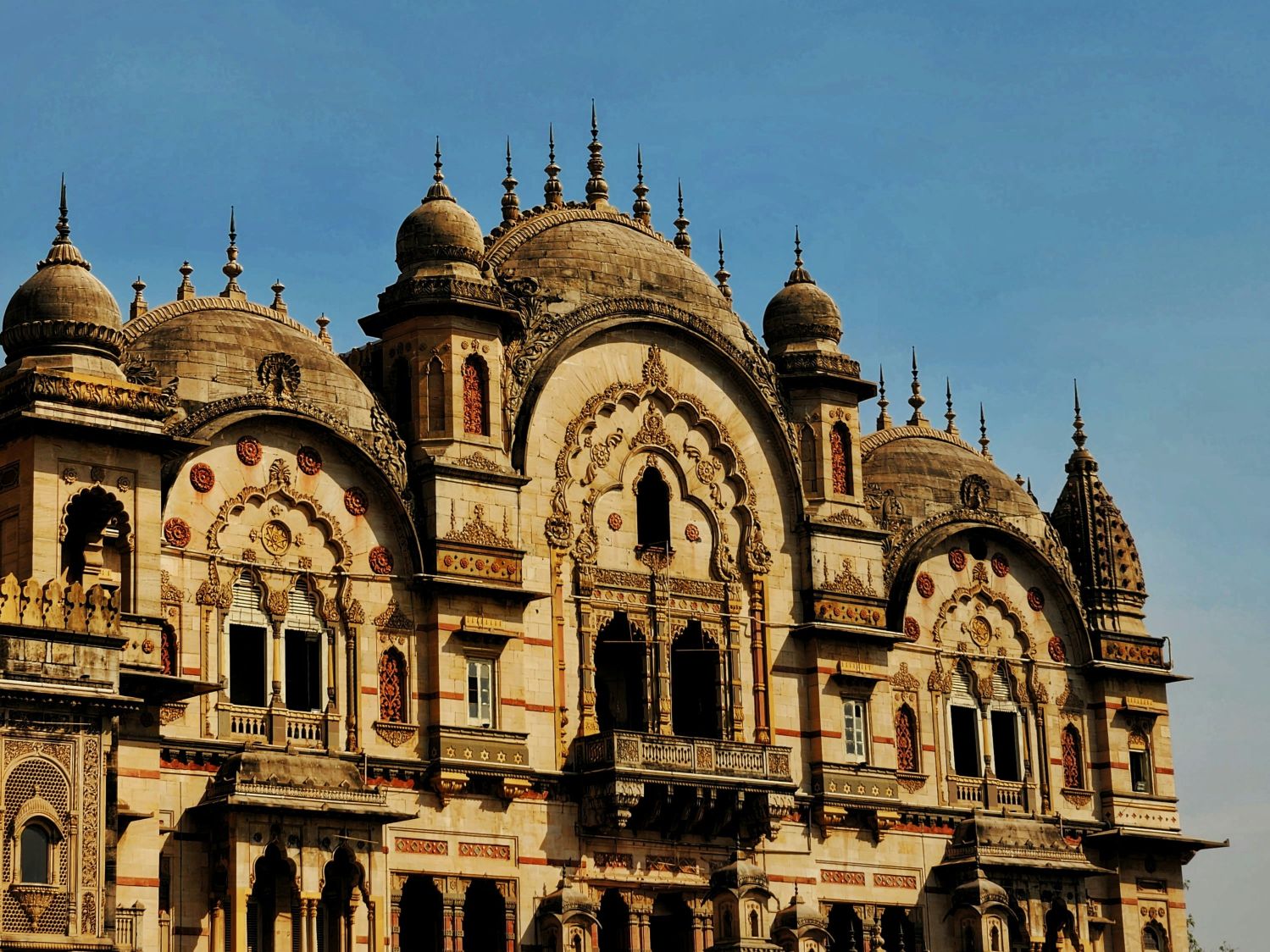
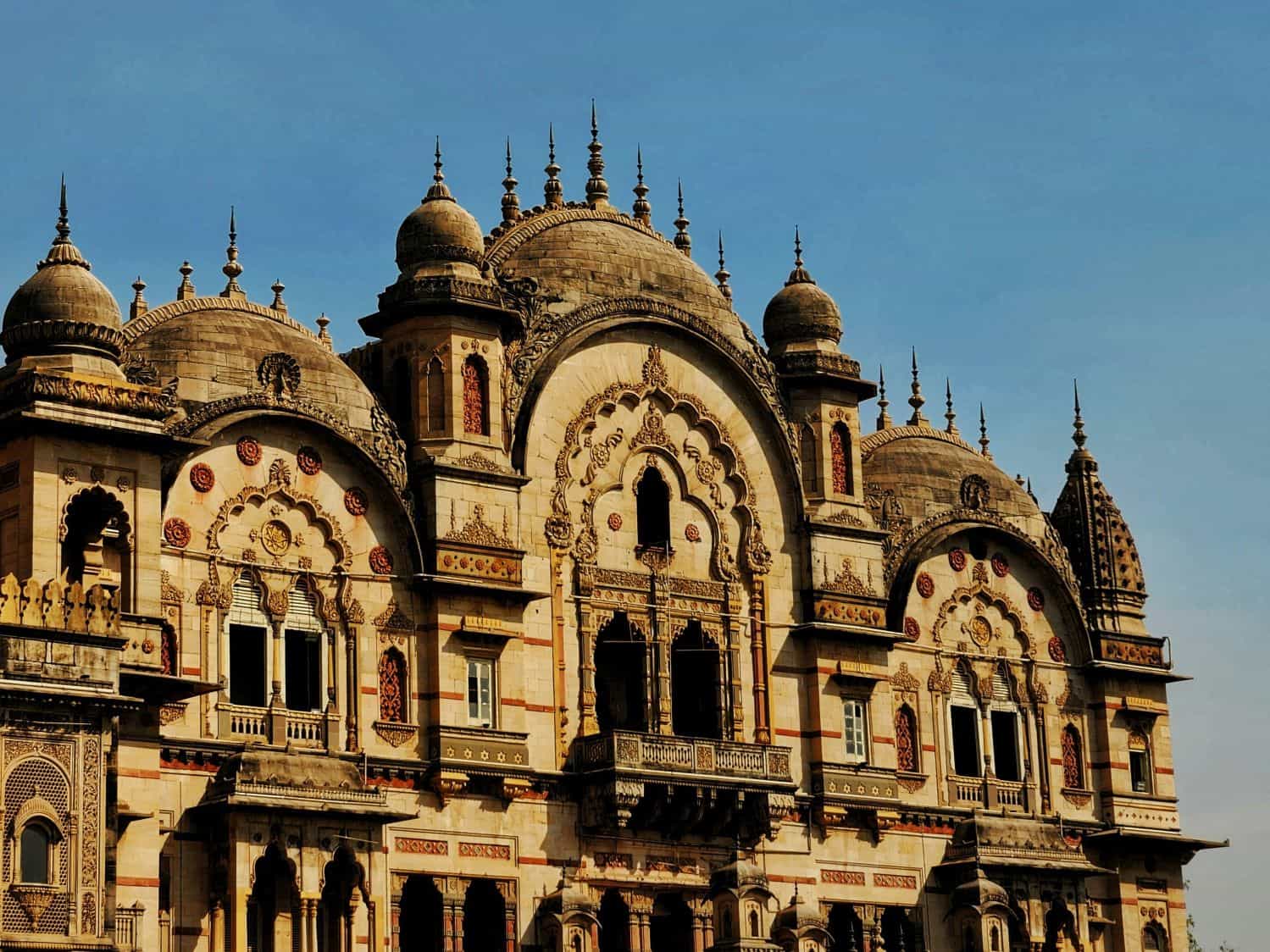
Costing over £6 million ($8 billion) in 1890 — which is more than £1 billion ($1.3 billion) today — Laxmi Vilas Palace is one of the costliest private residences ever built. It’s also the largest palace in India and the world, spread out over more than 500 acres.
The colossal stone palace complex is the ancestral home of the Gaekwad family. It showcases a later “revival” version of Indo-Saracenic architecture, with domed roofs reminiscent of Mughal structures as well as spired towers more akin to European styles.
Laxmi’s enormous grounds feature numerous attractions, including a banquet hall for private engagements, a full-size public golf course, the remnants of a former zoo (where peacocks still reside), the Maharaja Fateh Singh Museum, and much more. While you cannot explore the entire palace, the public portions include stained-glass windows, detailed mosaics, and rare paintings by Raja Ravi Varma.
While perhaps not the only Italian Renaissance-style major structure in India, Cooch Behar Palace occupies rarefied air. It’s one of this list’s newer palaces (built in 1887). The red and white stone that makes up the facade and gilded dome of the Durbar Hall give it a distinguished look under the golden sun of West Bengal. (The reverse side retains the palace’s original color — more of an orange-yellow hue.) The well-kept garden greenery gives a tranquility to the exterior.
Much of the interior is open to the public as a museum. Oil paintings, terracotta statues, well-preserved photographs, and many other artifacts document the lavish lifestyle of the Koch dynasty.
Read more: The ultimate India travel guide: how to plan your trip
Read more: When to visit India on vacation
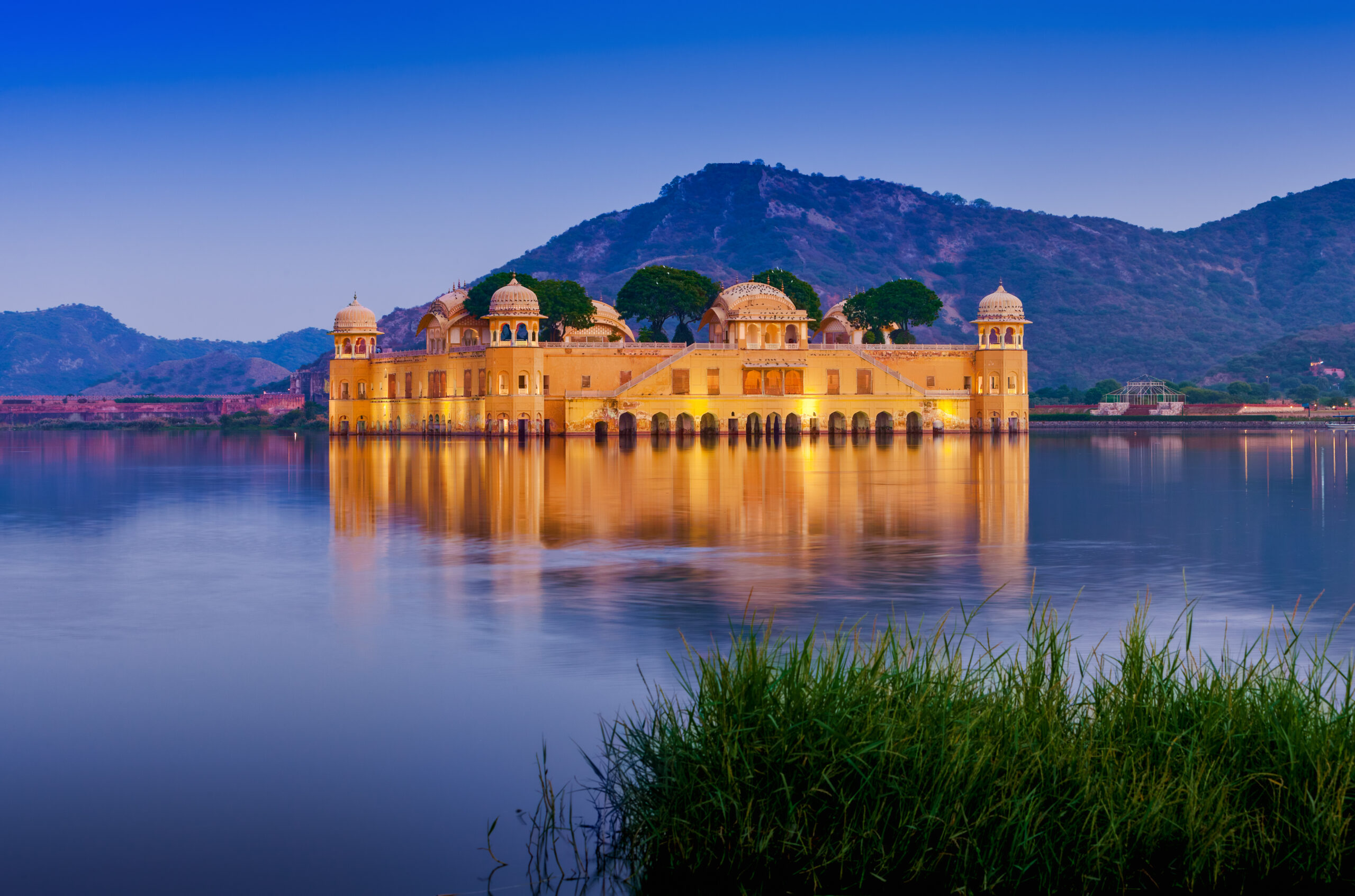
India is a massive country — in terms of size, significance, and so much more. That’s why planning the perfect expedition to any of the most famous palaces in India requires homegrown expertise. Our local agents come from all regions of India and can help you craft a historically fascinating and aesthetically satisfying vacation in India; simply reach out to them to get started.
Explore all featured destinations
Join our mailing list for travel inspiration, trip recommendations, and insights from our local experts.