Luxury tour of Bhutan's highlights
Get in touch with your spiritual side on this scintillating luxury tour of Bhutan's highlights. Over eight days, explore the most popular sites of Thimpu, Punakha, Phobjika, Paro and Haa, and travel in style with a range of extra special excursions along the way.
Go white-water rafting, watch a live archery match, take a helicopter ride over the Himalayas, take a natural hot stone bath, and get a taste of Bhutanese dinner and hospitality in a local family home. The rest of the time, stay in top-of-the-range accommodation in gorgeous natural surroundings with the aim to indulge mind, body and soul.
Services
Included:
- Accommodations in double or twin rooms
- Daily breakfast, lunch and dinner
- Airport transfers in air-conditioned car with English-speaking guide
- Private land transfers as per the itinerary
- Activities & admission fees to sites as per the itinerary
- English-speaking guide on excursions
- Bottled drinking water throughout the journey
- Visa fees
- Government SDF and all the taxes
Excluded:
- International flights
- Teas/coffees, drinks
- Tips & gratuities
- Room up-grades available at a supplement cost
- Specialized guides available on supplement cost
- Travel & medical insurance
- Activities available at extra cost (mountain biking, river rafting, etc)
- Any extra expenses not mentioned in the itinerary
Optional:
- Mountain flight
- Helicopter ride
Itinerary at a Glance
Arrival in Paro airport, transfer to Thimphu - Arrival in Paro airport, transfer to Thimphu - Tachogang Lhakhang
Thimphu
Cycling tour of Tango Monastery / Cheri base - Memorial Chorten - Buddha viewpoint
Thimphu
Transfer from Thimphu to Punakha - Transfer from Thimphu to Punakha - Chimi Lhakhang Hike
Punakha
Transfer from Punakha to Phobjikha (Gangtey) - Transfer from Punakha to Phobjikha (Gangtey) - Tour of Phobjikha (Gangtey)
Phobjikha Valley - Wangdue Phodrang
Transfer from Phobjikha (Gangtey) to Paro - Transfer from Phobjikha (Gangtey) to Paro - Walking Tour of Paro (includes Museum, Paro Dzong and Old Town)
Paro
Chelela Pass - Dzongdrakha Lhakhang - Haa valley excursion (incl Kila Gompa nunnery)
Paro - Haa
Transfer from Paro to Ramthangka - Transfer from Paro to Ramthangka - Tiger's Nest Temple - Taktshang Hike whole
Paro
Departure from Bhutan - transfer from hotel in Paro to Paro airport. - Departure from Bhutan - transfer from hotel in Paro to Paro airport.
Detailed Itinerary
Arrival in Paro airport, transfer to Thimphu - Arrival in Paro airport, transfer to Thimphu - Tachogang Lhakhang
Day 1: Thimphu
Arrival in Paro airport, transfer to Thimphu
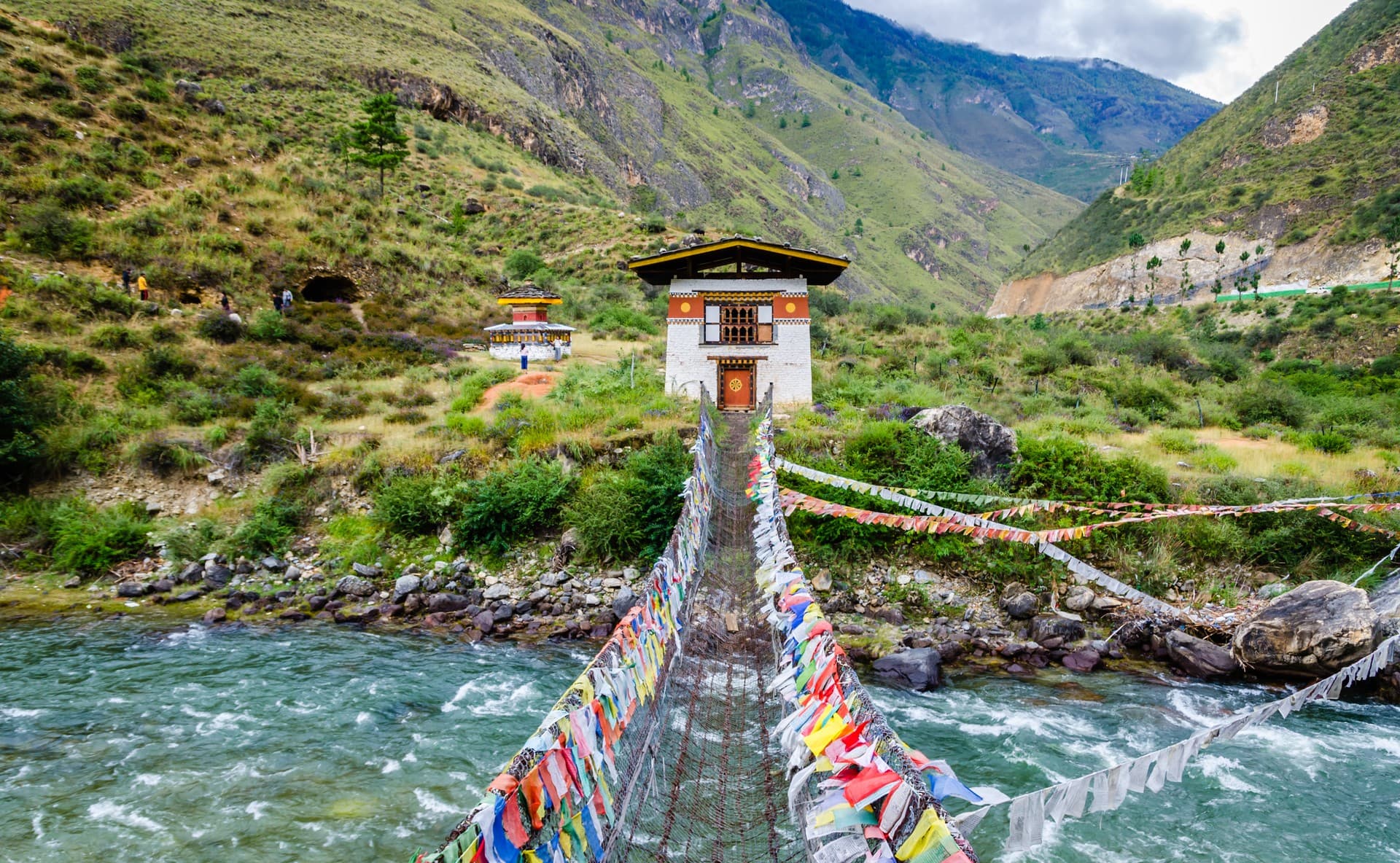
Other Transfer: On arrival in Paro International Airport, you will be received and transferred to Thimphu, capital city of Bhutan. En-route we will stop to visit an amazing temple - Takchongang Lhakhang, and Chuzom - the meeting point of two rivers (the Thimphu and the Paro).
Estimated travel time: 1 hour 30 minutes
Tachogang Lhakhang
Excursion: Tachogang lhakhang is located along Paro-Thimphu highway, just after Isuna village and before Chhuzom, on the base of a mountain across the Pa chu river. It was built in the early 15th century by the great iron bridge builder and Poet - Yogi Thangtong Gyalpo(1385-1464), who built many iron bridges throughout Bhutan and Tibet. The temple is privately run by the descendants of Thangtong Gyalpo.
Tachogang lhakhang is located along Paro-Thimphu highway, just after Isuna village and before Chhuzom, on the base of a mountain across the Pa chu river. It was built in the early 15th century by the great master architect and yogi Thangtong Gyalpo(1385-1464), who also built Dungtse Lhakhang in Paro and many iron bridges throughout Bhutan and Tibet. Tachogang means ‘temple of the hill of the excellent horse’. It is said that while Thangtong Gyalpo was meditating here, he had a vision of the spiritual horse Balaha-an emanation of Avalokiteshvara. He decided there upon to build a temple at this spot, in addition to one of his famous iron bridges later carried away by floods in 1969. A traditional style bridge with iron chains was restored in 2005. The temple is privately run by the descendents of Thangtong Gyalpo.
Chuzom (River Confluence)
Excursion: Chhuzom (Chhu means river and zom means join) is the place where Paro Chhu and Wong Chhu meet. For many traditional Bhutanese this confluence is considered the union of a father and mother river. Because Bhutanese traditions regards such a convergence of rivers as inauspicious, there are three chortens here to ward off evil spells in the area. Each chorten is in a different style – Bhutanese, Tibetan and Nepali. The upper reaches of Wong Chhu, above Chhuzom, are sometimes referred to as Thimphu Chhu.
Thimphu Market Tour
Excursion: Thimpu is the commercial hub of Bhutan, and offers intriguing contrasts of old and new. Visit the interesting weekend market, which runs Thursdays-Sundays. Vegetable vendors from different pockets of the country come to sell their products, in an enlightening insight into local Thimphu life.
Depending on flight arrival time, we can go on a tour of the city or you can relax at your hotel.
Cycling tour of Tango Monastery / Cheri base - Memorial Chorten - Buddha viewpoint
Day 2: Thimphu
Cycling tour of Tango Monastery / Cheri base
Excursion: Today enjoy an exhilarating cycling tour to Tango Monastery, and the base of Cheri Mountain. Once you reach the temple the trail passes through the beautiful cantilever bridge and forest, with lots of chances to see an array of birds and wild animals such as deer or goat. This is the monastery where the first monastic body was established in the Kingdom.
After a while exploring the monastery, head back to Thimphu by bike.
Note - Cycling is 30 USD per day - you can hike this tour instead without the extra cost.
Memorial Chorten
Excursion: This memorial structure forms an important historical landmark in Thimphu city. It was constructed by the revered Dung–se Rinpoche at the behest of the late Royal Grandmother (Ashi Phuntsho Chhodron) in 1974, in memory of her son - the third king Jigme Dorji Wangchuck, who died in 1972.
His remains are in Kuje Lhakhang in Bumthang, but people pay their respects to his photograph mounted on an altar inside. The Chorten has great significance in the religious life of the people, and symbolizes, as do all stupas, the levels of the Buddha’s mind and teachings.
The Chorten contains three chapels representing the main spiritual themes of the Nyingmapa school. The three storeys contain enormous three-dimensional Mandalas of meditational deitiesl excellent paintings and sculptures reflecting the devout faith of the Bhutanese. Occasionally a religious ceremony is performed here. People throng to offer fragrant incense, butter for the lamps and white scarves (Khadars), and to receive blessings from venerated Lamas.
Buddha viewpoint
Excursion: The tallest Buddha image - which will perhaps be the 8th wonder of the world - is being built in Kuensel Phodrang, a hill overlooking the Thimphu Valley. This is an attraction exclusively designed to commemorate the centenary and the coronation of the fifth king, Druk Gyelpo Jigme Khesar Namgyel Wangchuck, in 2008.
When it's finished, this Buddha will be an incredible work of extravagant architecture. The 169 foot bronze Buddha Dordenma image fits exactly on one acre of land, and is planned to have 17 storeys of different Lhakhangs (monasteries) within it, including the throne. These include three storeys within the throne - two each inside the lotus, waist, chest, face and shoulder and one each in the legs, neck and head.
The Lhakhangs will contain, among other things; 25,000 12in copper images of Buddha Dordenma gilded with gold; eight 10ft standing bodhisattvas; sixteen 6ft high Arahats; King Hashang (Maitreya Bodhisattva), Dharmata Tiger, Sutra Holder and the four direction kings. The third storey to the top will accommodate 100,000 eight inch statues of Buddha Dordenma. There will be a meditation hall inside the throne.
Live Archery Match
Excursion: Archery is the national sport of Bhutan and we were lucky to witness an Archery tournament in Thimphu‘s national Archery stadium of Changlimithang during our visit to Bhutan. Bhutanese love playing this sport with full vigour, enthusiasm and celebrations. The way Archery tournaments are played in Bhutan is quite different. Players would be in their national dress, make a lot of noise, even hoot opposition for missing targets and when target is hit, they do a slow dance to celebrate the hit.
Transfer from Thimphu to Punakha - Transfer from Thimphu to Punakha - Chimi Lhakhang Hike
Day 3: Punakha
Transfer from Thimphu to Punakha
Car Transfer: En-route we will enjoy a scenic drive on the way to Punakha. The drive passes through beautiful Dochula pass which is at 3150m high. 108 Druk Wangyel Chortens were built over the pass and honoured by the Queen Mother in 2003, making the pass one of the most visited in the area.
If the weather permits, we can enjoy a spectacular view of the highest mountains of Bhutan at a sight that stretches almost 180 degrees. After a photo break, we will continue our drive downhill from the pass.
Estimated travel time: 2 hours 30 minutes
Chimi Lhakhang Hike
Excursion: The Chimi Lhakhang, situated on a hillock in the centre of the valley, is dedicated to Lama Drukpa Kuenley, who in the late 15th century used humour, songs and outrageous behaviour to dramatise his teachings; and subsequently inherited the name, "Divine Madman".
This temple is also known as the Temple of Fertility. It is widely believed that couples yearning for a child will be blessed with one soon after visiting.
To get to the temple Chimi Lhakhang, it is about 30 minutes' walk across lush fields from the road, leads across picturesque rice paddies to the tiny settlement of Pana.
Distance Approx: 1/2KM
Time: 45 mins
Elevation: 1380m
Alternatives: Anybody can hike to Chimi Lhakhang
Punakha Dzong
Excursion: The gorgeous Punakha Dzong, with its stunning presence among a mountainous background, has played an important role in Bhutan's history. It is one of the country's most majestic structures and forms the centre of Tibetan Buddhism in this area.
Built strategically at the junction of Pho Chhu and Mo Chhu rivers in 1637 by Shabdrung Ngawang Namgyal, its initial purpose was to serve as the religious and administrative centre of the region. Damaged by four catastrophic fires and an earthquake, the Dzong has been fully restored over the years by the present King. It is now open for visitors during Punakha festival, and in summer months when the monk community moves to Thimphu.
White river rafting in Punakha
Excursion: The crystal clear rivers of Bhutan are one of the kingdom’s best kept open secrets. Fed by the glacial-melt of the Eastern Himalayas, six major rivers (Wang Chhu, Sunkosh, Puna Tsang Chhu, Mangde Chhu, Kuri Chhu and Dangme Chhu and their tributaries), have been scouted for rafting.
Our rafting guides are well trained and will do everything to ensure that you enjoy the adventure while minimizing the risks.
Transfer from Punakha to Phobjikha (Gangtey) - Transfer from Punakha to Phobjikha (Gangtey) - Tour of Phobjikha (Gangtey)
Day 4: Phobjikha Valley - Wangdue Phodrang
Transfer from Punakha to Phobjikha (Gangtey)
Other Transfer: Head to Phobjikha. En-route we will pass through Wangdue and Lawala pass in the black mountain region.
Estimated travel time: 3 hours
Tour of Phobjikha (Gangtey)
Excursion: Enjoy the freshness of morning breeze from Punatsangchhu river, making morning walks here particularly pleasant. After breakfast, we will escape to valley of black necked cranes and rhododendron called Phobjikha, also known as Gangtey.
We will stop over at Wangdue to see ruins of Wangdue Fortress which is currently under construction. Our scenic drive through the belt of Wangdue into Phobjikha takes us through the beautiful Pelela pass range to enter into the valley. Between May and June, stunning rhododendrons will greet you here, while November to February offers more chance of spotting the rare bird black necked cranes.
On arrival, we will visit Gangtey Gompa, the largest and the only monastery of the Nyingmapa sect in western Bhutan.
Gangtey Nature Trail
Excursion: The most beautiful and shortest of the existing nature trails in Bhutan. The trail hike starts from the mani (like a Chorten) stone wall to the north of the Ganagtey Gonpa and ends in Khewa Lhakhang. The hike takes about 90 minutes through the pine forest and small bamboo plants. You can see the Phobjkha valley so beautifully from this hike. It is one of the best hike places for nature lovers. During the winter months we can see endangered species of birds, such as Black Neck Cranes.
Distance Approx: 4.2KM
Time: 2 hours
Elevation: 2980m
Alternatives: Crane center for more information about Black Necked Cranes and Phobjikha valley with video show at the center.
Cooking class and dinner with local family
Excursion: We will visit/stay typical Bhutanese farm house and we will join them for our lovely dinner with their family. Also partake in a local cooking lesson, to get a real taste of what it's like to live out here in rural Bhutan.
Transfer from Phobjikha (Gangtey) to Paro - Transfer from Phobjikha (Gangtey) to Paro - Walking Tour of Paro (includes Museum, Paro Dzong and Old Town)
Day 5: Paro
Transfer from Phobjikha (Gangtey) to Paro
Other Transfer: Sit back for this relatively long journey back to Paro. The route will pass through Wangdue, Dochula Pass and finally crossing Thimphu.
Estimated travel time: 6 hours
Walking Tour of Paro (includes Museum, Paro Dzong and Old Town)
Excursion: Paro is a charming Bhutanese town, quickly developing, but still retaining its historic aesthetic of multi-coloured stores and shopfronts. The town is very walkable and enjoyable to explore in a leisurely fashion.
Visit the National Museum of Paro, the first of its kind which has a collection from natural history to religious paintings. Visit 17 century Paro Dzong (Fortress) on foot and continue walking through the oldest wooden bridge still in use.
In the evening, stroll around Paro's Old Town and peep into some local handicraft stores.
Chelela Pass - Dzongdrakha Lhakhang - Haa valley excursion (incl Kila Gompa nunnery)
Day 6: Paro - Haa
Helicopter ride over the Himalayas
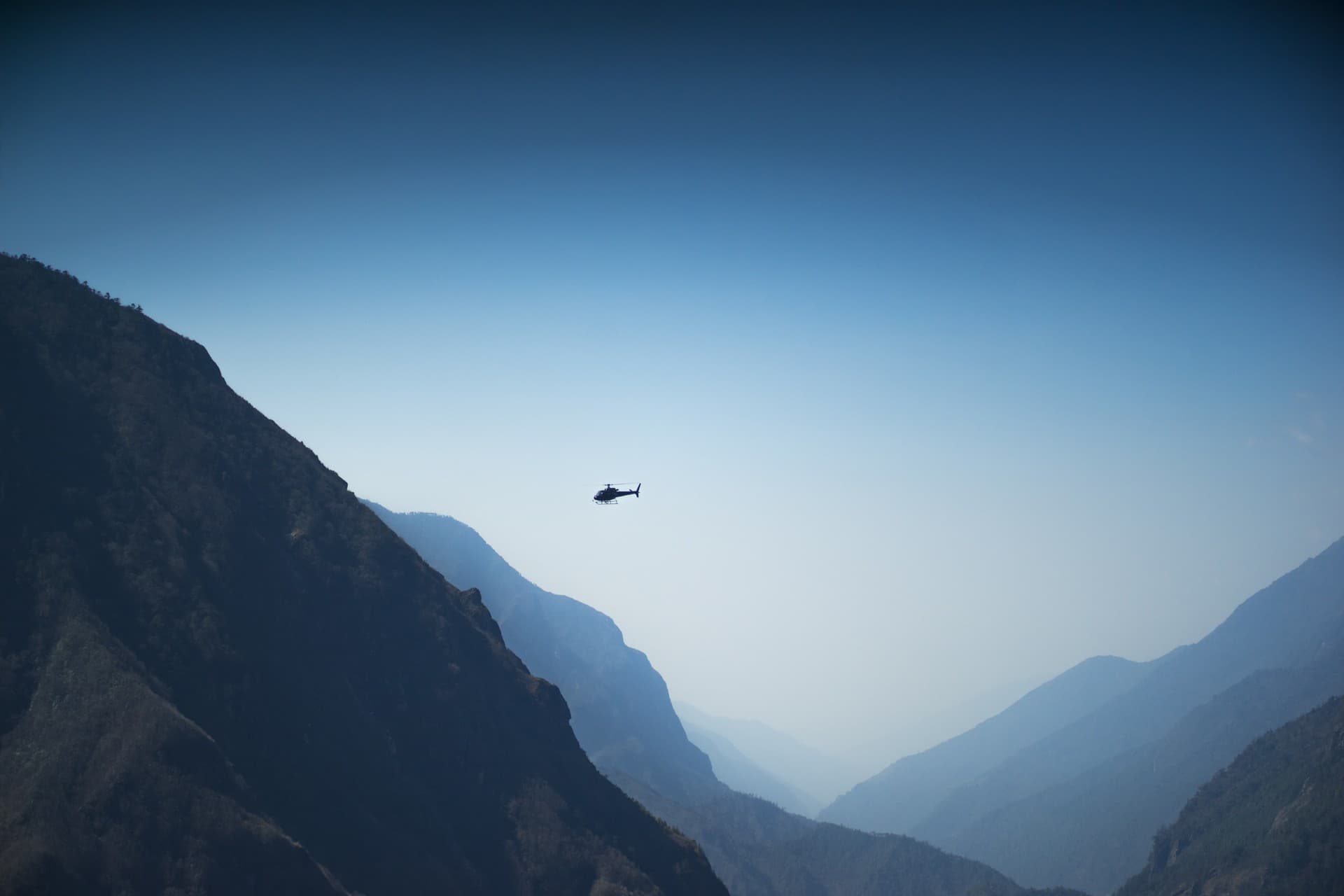
Excursion: Get set for an incredible helicopter ride over the mountains. In the morning we'll get the best views of the Himalayas, which you'll see from a unique perspective that you're sure to never forget.
Dzongdrakha Lhakhang
Excursion: Dzongdrakha is a cliff-side temple that located on the western side of the Paro Valley. Dzongdrakha rejoice an annual tsechu (festival) that takes place the day before and the day after the larger Paro Tsechu held at Rinpung Dzong close to the main city. The view of the settlement/village below is spectacular, especially in autumn.
Haa valley excursion (incl Kila Gompa nunnery)
Excursion: For this excursion, you will drive to Haa via Chele-la pass.
After driving through blue pine and rhododendron forest for 45 km, reach Chele-la pass (3988m). From this point one can have a superb views of Mount Chomolhari and Jichu Drake. This is a very good place to walk around for few minutes enjoying the view. Drive on to Haa, descending all the way for another 22 km (under an hour's drive), finally reaching Haa.
Stop for a picnic in stunning Haa valley, the perfect place to contemplate and appreciate Bhutan's sprawling natural scenery.
Next, visit Haa Dzong - presently occupied by military, but the view from outside is stunning. Nearby is the famous Monastery of Lhakhang Karpo (White Temple) followed by visit to Lhakhang Nagpo (Black Temple).
The central shrine in Lhakhang Nagpo is said to have no difference with that of Lhasa Jowo in Tibet. The construction of the Lakhang Karpo is believed to have been assisted by the locality. As a result the place came to be locally known as "Hay" meaning "surprise" which later became "Haa" due to the differences in interpretations and pronunciations of different people over time.
The three giant hills looming over the fringes of Haa valley were called "Me Rig Puen Sum" especially after the incidence of the Lhakhang Karpo construction. Today the three hills are popularly known as "Rig Sum Goenpa" signifying three deities - Jambayang Chana Dorji and Chenrizig.
Later, other Buddhist saints like Guru Rinpoche and "Machi Labdorn" came to the Jungney Drag in Haa and blessed the locality. The principal religion followed is Drukpa Kagyupa. After the arrival of Shabdrung Ngawang Namgyel, the chief guardian deity of Haa became Ap Chundu.
After your excursion in Haa, visit Kila Gompa nunnery - made of a few small temples built into the cliffside, and home to between 30 and 70 nuns.
Finally drive to Paro on the same route back. The drive will be under 3 hours.
Transfer from Paro to Ramthangka - Transfer from Paro to Ramthangka - Tiger's Nest Temple - Taktshang Hike whole
Day 7: Paro
Transfer from Paro to Ramthangka
Other Transfer: Be picked up in Paro for your journey to Ramthangka.
Estimated journey time - 45 minutes.
Tiger's Nest Temple - Taktshang Hike whole
Excursion: One of the most famous of Bhutan's monasteries, the splendid Tiger's Nest is perched on the side of a cliff, 900m above the Paro valley floor, and with its somewhat perilous appearance (it's perfectly safe) is considered iconic to local people.
It is said that Guru Rinpoche arrived here on the back of a tigress and meditated at this monastery and in the caves around it; hence its name, 'Tiger's Nest'. This site has since been recognized as a most sacred place and is visited by all Bhutanese at least once in their lifetime. A fire in 1998 severely damaged the main structure of building, but this Bhutanese jewel has since been restored to its original splendour. It is a truly stunning sight and a must-see on visiting this very sacred country.
The hike can feel difficult at first, but when in view of this gorgeous building you will hopefully feel the energy to carry on! The views are worth it.
Distance Approx: 7KM
Time: 4 hours total
Elevation: 3200m
Hot Stone Bath in Paro
Excursion: Hot stone bath is very famous in Bhutan, used by many Bhutanese and foreigners. This traditional Bhutan hot stone bath (doo-tsho) uses river rocks that therapists place in water where they crack and steam, releasing key minerals and relieving deep-set aches.
Still, many uses same technique to cure back aches, join pains and many other minor diseases.
Departure from Bhutan - transfer from hotel in Paro to Paro airport. - Departure from Bhutan - transfer from hotel in Paro to Paro airport.
Day 8:
Departure from Bhutan - transfer from hotel in Paro to Paro airport.
Other Transfer: Check out from hotel and transfer to Paro Airport for your onward journey.


