The best castles to visit in England
July 6, 2026
We’re sure you’ll agree: Italy is known for its historic beauty, glorious local food, and its world-renowned art scene. From its ancient Roman frescoes and grand Renaissance masterpieces, to its groundbreaking Baroque architecture, the art of Italy is extraordinarily rich, wide-reaching, and steeped in history. It’s not an exaggeration to say, Italy was at the center of the world’s most important artistic movements, which still resonate and have huge influence on world culture today. Join us on an artistic journey through Italy’s major art centers in this article, where you’ll find the perfect inspiration to take an art-led tour of Italy that will truly move you.

There’s more than enough art history in Italy to fill an encyclopedia – far too extensive for this humble article – but what we can explore are the key artists and movements that encapsulate the mood of Italy’s enduring art scene.
Firstly, the millennia-old art of ancient Rome long outlasted the Roman Empire itself, and still forms the backdrop of Rome today – think intricate mosaics and frescoes, grand statues, and monumental works of architecture like the Colosseum and Pantheon. After this, hundreds of years’ worth of medieval artistic expression brought Byzantine paintings and sculptures, golden and dazzling with religious imagery and iconography.
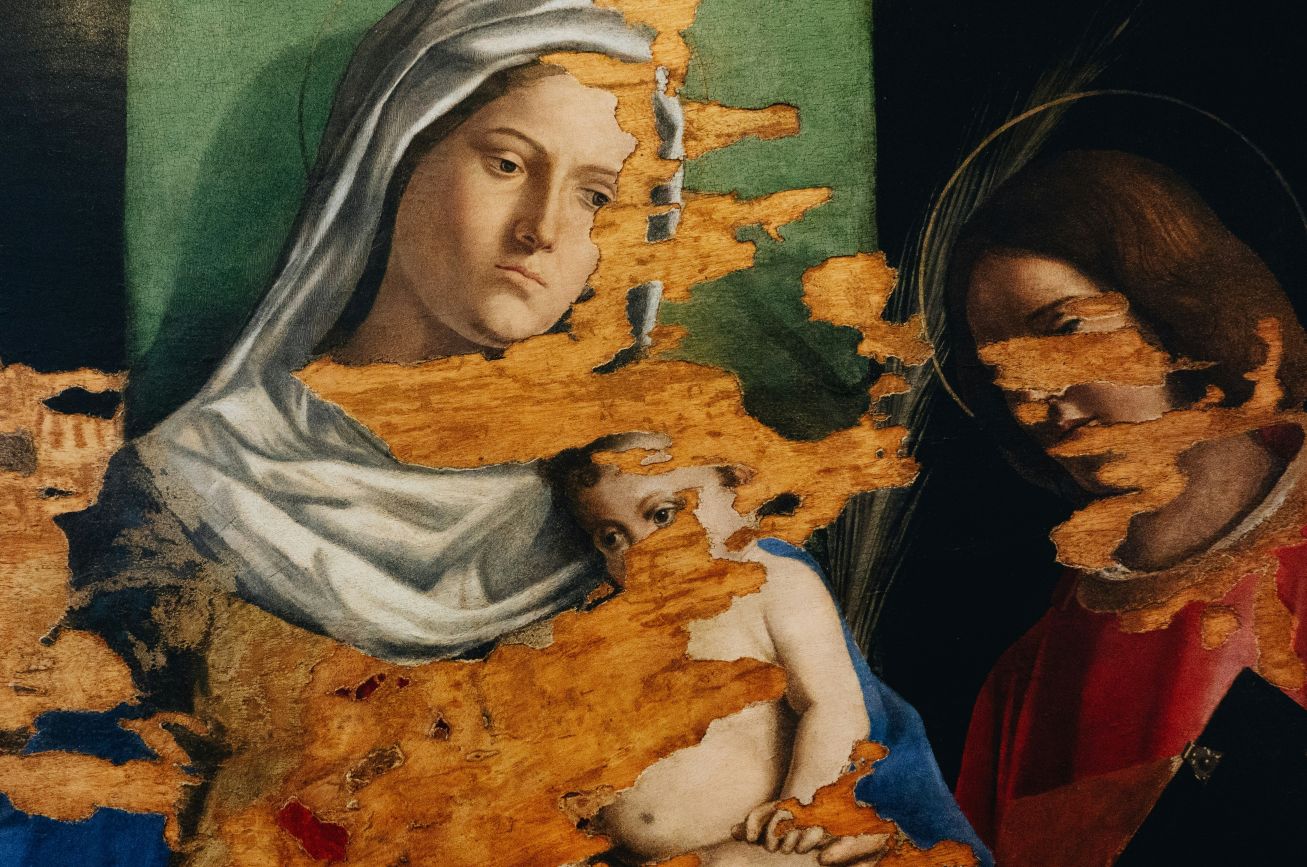
Then came the art Italy is arguably most famous for: the Renaissance Movement, which dominated the 14th-16th centuries and gave us the revered Italian artists Leonardo da Vinci, Michelangelo, Raphael, Botticelli and more. The human-centered emotion of Renaissance art was earth-shaking at the time, massively disrupting the art world and Western culture itself.

Later came the Baroque Movement (showcased with many breathtaking structures in Italy, like St. Peter’s Basilica in the Vatican, and Rome’s Church of the Gesù). Since then, more recent movements like Mannerism and Futurism have made their mark, but none quite like the Renaissance masters of the time.
These artistic influences permeate the scenery of present-day Italy, in the landmarks and buildings, the street life; forming an intoxicating blend of humankind’s creative achievements throughout history.
Read more: The 10 best things to do in Italy
It’s impossible to avoid the extraordinary art on a trip to Italy; the most-visited cities are almost defined by its presence. From Rome to Florence, Venice to Milan, there are masterpieces everywhere – in churches and cathedrals, sculptures scattered across gardens, fountains and town squares, in stunning works of architecture and of course, in countless museums housing world-renowned pieces. Here are some of the biggest art cities in Italy…

As you’d expect, Italy’s capital is overflowing with iconic artworks that tell Rome’s story. The city itself is a living museum of artistry. Justifiably most revered are the Vatican Museums, bursting with one of the world’s oldest most important art collections, and connected to Michelangelo’s Sistine Chapel, a bucket-list art experience that is worth waiting for.
Nearby, St Peter’s Basilica is a Baroque gem, full of pieces such as Michelangelo’s Pietà (a large sculpture of Mary and an adult Jesus) and Dome. Across the city, Caravaggio’s raw, dramatic paintings can be found tucked inside the San Luigi dei Francesi chapel, while Bernini’s Baroque sculptures such as Ecstasy of Saint Teresa, as well as his impressive fountains, can be found scattered across the capital.
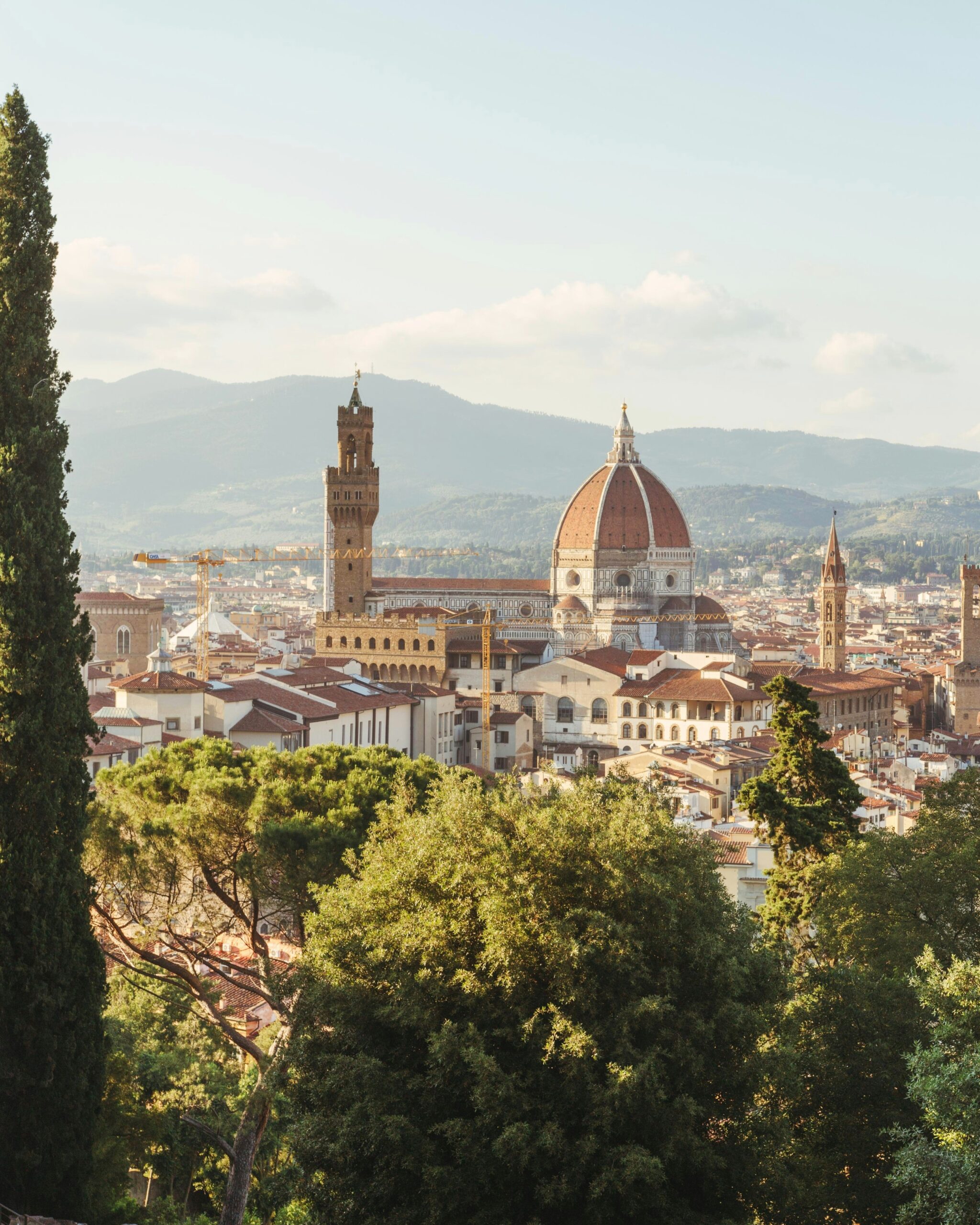
Florence, or Firenze, is oft-considered the birthplace of the Renaissance itself – one could easily spend a few days in Florence immersed in the spectacular art alone. The sight of the stunning Duomo at the heart of the city is enough to stir the creative inclinations of even the biggest art curmudgeon; then there’s the Uffizi Gallery, home to hundreds of masterpieces including Botticelli’s Birth of Venus and Primavera.
Michelangelo’s David, a groundbreaking and heroic sculpture, also resides in Florence; as does Perseus with the Head of Medusa, a striking 1500s bronze piece by Benvenuto Cellini (found among other artworks in the Loggia dei Lanzi, an open-air gallery in Piazza della Signoria).
Alongside these historic masters, local artists abound in the city, painting freely on canvases and pavements alike. As you wander the streets with gelato in hand, you’ll see why it’s often considered Italy’s most artful city.

With a sense of fragility and flow, you can understand why Venice, a city on water, inspired so much art. The Renaissance art of Venice is particularly intriguing in its differentiation from that of Rome and Florence.
While central Italian artists focused on line, proportion and anatomical precision (such as that of Da Vinci, Michelangelo), Venetian artists (notably Titian, Tintoretto, and Veronese), were all about color and atmosphere. They used a lot of oil in their work, and captured the movement of light – not surprising in a city of flowing canals and reflections.
You can see examples of this work in one of the world’s oldest art institutions, the Accademia Gallery. The Venice Biennale, is also a major contemporary art festival that celebrates the city’s legacy of experimentation.
Milan, as Italy’s fashion and design capital, has its own fair share of incredible artworks both old and new. It’s often recalled for Leonardo da Vinci’s mural The Last Supper, which despite its fragile state, remains one of the most studied paintings in the world. You can find it on the wall of Convent of Santa Maria delle Grazie, but beware that viewing spots are coveted.
What’s enjoyable about Milan’s art is its contrasts; Gothic showpieces like the Duomo exist alongside avant-garde installations in repurposed factories. The Pinacoteca di Brera is a more traditional dive into classic paintings, while Fondazione Prada and HangarBicocca showcase cutting-edge contemporary work in modern, industrial spaces. This diversity makes Milan a real must for art and culture lovers.
Read more: The best time to visit Italy: a seasonal guide

Alongside the big-hitters for art in Italy – Rome, Florence, Venice and Milan – there is art and creativity to be found all over the country, from Naples to Turin. Here are some lesser-known art spots in Italy to add to your itinerary…
Often overlooked by those zipping directly to Florence, Turin is slowly transforming its reputation as an industrial city into a visual art hub in its own right. The architecture in particular is mind-boggling, a combination of Baroque palaces, grand boulevards and more recent 20th-century design that’s a feast for the eyes if you’re aimlessly wandering.
Highlights include the lavish Palazzo Reale, the Palazzo Madama and the Mole Antonelliana, an eccentric, spired structure that now houses the National Cinema Museum.

In the south of Italy, Naples’ art is as playful and untamed as the city itself. There’s art in the churches, the crumbling facades, the alleyway shrines, the street murals of Madonna and Child. Caravaggio’s link to Naples is notable; after committing a murder in Rome, he escaped here and created some of his darkest, most memorable works (e.g. The Seven Works of Mercy, housed in the Pio Monte della Misericordia).
For a day of art that fuses the traditional and modern, you can peruse the collections in Gallerie d’Italia or the Capodimonte Museum, then wander the subway stations, adorned with pieces by local artists. Finally, don’t miss the Veiled Christ in the Sansevero Chapel Museum, a jaw-dropping 16th-century piece in marble that’s truly atmospheric.
So many visitors to Italy skip Bergamo, but it’s truly underrated, with so much to offer art lovers. This medieval hilltop town has Venetian walls that are UNESCO-protected, and the views are beautiful and sprawling. In this respect, the town itself seems like a work of art. Then there are the notable Renaissance pieces in the Accademia Carrara – works by Botticelli, Bellini, Mantegna and Raphael are here, all displayed in a serene, light-filled space.
Just across the road, there’s the GAMeC (Gallery of Modern and Contemporary Art) so you can enjoy the contrasts of old and new in easy proximity. In the medieval Città Alta, art spills into the streets with the ornate Colleoni Chapel, with its richly sculpted pink and white facade, and stunning frescoes by Tiepolo. A final tip: the nearby Santa Maria Maggiore church doesn’t look much from the outside, but the interior is glorious.

While indulging in a wonderful trip to Como, take a break from lakeside wine-sipping and boating to experience the local artistry of silk-weaving. The Museo della Seta (Silk Museum) is the perfect place to discover the town’s silk legacy, from silkworm farming to loom weaving to pattern design.
Though it’s an historic practice, the city is still respected for its generations of artisanal silk-weaving; many of the world’s top fashion houses including Gucci, Hermès, Chanel and Armani still source their silk from Como.
Read more: The highlights of Italy: top tips from a local expert
To go on your own art tour of Italy, chat with our local travel experts. They’re based within the destination, with all the in-depth knowledge needed to build the art-led Italy itinerary you’ve dreamed about.
Explore all featured destinations
Join our mailing list for travel inspiration, trip recommendations, and insights from our local experts.